Showing posts with label Today in History. Show all posts

Friday, January 8, 2021

Today in History: The Battle of New Orleans 1815

 Today in history is the Battle of New Orleans victory of US Major General Andrew Jackson’s army against overwhelming odds of the British army under Major General Sir Thomas Pakenham on January 8, 1815. The battle took place 18 days after the signing of the Treaty of Ghent which formally ended the War of 1812 on December 24, 1814 as news of the treaty had not yet reached the armies in the US. Despite a large British army with advantages in numbers, training and experience, the American forces defeated a poorly executed assault in a little more than two hours. What events led to the battle? What occurred during the battle for the Americans to win overwhelming odds? How was the battle remembered and memorialized? 

Major General Pakenham was ordered to continue the war even if he heard rumors of peace. This order was given under the impression that the US would never ratify a treaty and the war would continue. The British hoped to take New Orleans in order to separate Louisiana from the US. The British would send 11,000-14,450 troops to the area (State of Louisiana). Pirate Jean Lafitte warned the Americans of this plan (Editors, 2019) as 60 British ships anchored in the Gulf of Mexico, east of Lake Pontchartrain and Lake Borgne by December 14, 1814. The much smaller American force, appropriately 3,500-5,000 men (State of Louisiana), set up a fortilla of five gunboats which prevented the British access to the lakes as Jackson hastened to the city and set up defenses by December 1, 1814 (Lohnes, 2021). After a brief attack, British soldiers were able to establish a garrison east of New Orleans. General John Keane decided to camp at the Villere Plantation and wait for reinforcements. Major Gabriel Villere escaped his home and warned Jackson of the British army's positions. Due to this information, the American forces were able to fortify the Rodriguez Canal which came to be known as Line Jackson. 

The American forces were Tennessee and Kentucky frontiersmen, Louisiana militia, New Orleans businessmen, Free Men of Color, Choctaw Indians, pirates, sailors and US Marines (American Battlefield Trust). They were able to create three lines of defenses, firmly entrenching themselves at the canal. The British battle plan was to attack against the 20-gun west bank, then use the guns for their frontal assault. Early morning on the 8th, Pakenham gave the orders for the attack.The main attack began in darkness and heavy fog. When the fog lifted, British neared the American mainline. However, Lt. Colonel Thomas Mullions, the British commander of the 44th (East Essex) Regiment of Foot, forgot the ladders and facines needed to cross the 8 foot deep and 15 foot wide canal and scale the fortifications. The British forces soon fell into confusion and the American forces were able to push back the British forces until they retreated. The Battle Of New Orleans would be over in approximately two hours. The final causality numbers have been up for debate for many years since the numbers. The official numbers state that the Americans suffered approximately 60 casualties while the British suffered over 2,000. 

The Battle of New Orleans had no influence on the outcome of the war as the treaty was signed weeks before and the British turned their attention to Europe as a renewed war with France brewed when Napoleon escaped Elba and was restored to power in February 1815. However, it had historical significance in the years to come. The victory helped elevate national pride which suffered during the war (Editors, 2019). Jackson’s political reputation would be built on the victorious battle and glorified his heroic image. The Battle of New Orleans would also be the last armed engagement between the United States and Great Britain (Editors, 2019). When I was in high school, my US history teacher played Johnny Horton’s 1959 song The Battle of New Orleans as part of his lesson. Written by Jimmy Driftwood, a principal in Arkansas, wrote the song with the hopes to engage the students in history. The song was set to the melody of a well-known American fiddle tune, “The 8th of January,” it told the story of the battle in a light and comical tone. It has been recorded and performed by many artists, the most famous is Johnny Horton’s version which would be a number hit in 1959. 

In conclusion, the Battle of New Orleans had no effect on the outcome of the War of 1812; however, it helped elevate national pride at a time when Americans had suffered losses at the hands of the British. News of the victory in New Orleans and the treaty ended the war would reach the American people around the same time leading to a greater sense of national identity. It would also help build the reputation of Andrew Jackson, leading him to the presidency in 1828. It is also another example of when sheer numbers do not always lead to victory. Poor planning, poor communication and a costly frontal assault led to the defeat of the British Army. 


References


American Battlefield Trust (no date). New Orleans

Chalmette Plantation. American Battlefield Trust. https://www.battlefields.org/learn/war-1812/battles/new-orleans. Retrieved January 7, 2021. 


Editors (July 28, 2019). The Battle of New Orleans. History. A&E Television Networks. https://www.history.com/this-day-in-history/the-battle-of-new-orleans. Retrieved January 7, 2021. 


Lohnes, Kate (January 1, 2021). Battle of New Orleans United States-United Kingdom [1815]. Britannica. www.britannica.com/event/Battle-of-New-Orleans-United-States-United-Kingdom-1815. Retrieved January 7, 2021. 


State of Louisiana (no date). The Battle of New Orleans. Louisiana State Museum. https://www.crt.state.la.us/louisiana-state-museum/online-exhibits/the-cabildo/the-battle-of-new-orleans/index. Retrieved January 7, 2021. 


Tuesday, March 12, 2019

Today in History: Coca-Cola bottled for the first time!


In 1994, I became an accidental collector of Coca-Cola memorabilia. I bought a Coca-Cola bottle with the Argentinean flag on in during the 1994 World Cup. I have since amassed a large collection. So, when I was research events in history, I learned that March 12 marks the anniversary of Coca-Cola bottled first time in 1894. The famous drink was first sold in soda fountains for 5 cents a glass. It was created by Dr. John S. Pemberton, an Atlanta pharmacist in 1886. Pemberton created the flavored syrup which was added to carbonated water to create the soda we know today.


John Stith Pemberton was born July 8, 1831 in Knoxville, Georgia. He earned his medical degree from the Reform Medical College of George in Macon, Georgia at the age of 19. His main talent was chemistry. He married Ann Eliza Clifford in 1853 and their only child, Charles, was born in 1854. Pemberton would serve in the Civil War with the Third Cavalry Battalion of the Georgia State Guard, a component of the Confederate Army. He would earn the rank of lieutenant colonel. After becoming addicted to morphine from a battle wound, he began seeking alternative painkillers. His first recipe was called “Dr. Tuggle’s Compound Syrup of Globe Flower” which the main ingredient was derived from the buttonbush, a toxic plant common in Alaska. He began experimenting with coca and coca wines, creating Pemberton’s French Wine Coca which contained the extracts from kola nuts and damiana, an ingredient common in traditional Mexican liqueur.


In response to the Atlanta and Fulton County temperance legislation in 1886, Pemberton set out to create a non-alcoholic alternative to his French Wine Coca. What he created became Coca-Cola as it was derived from coca leaves and kola nuts. Pemberton’s business partner and bookkeeper, Frank M. Robinson, is credited with naming the beverage. Drugstore soda fountains were popular at the time as carbonated water was thought to be good for overall health. Pemberton would claim that his drink would cure several diseases including morphine addiction, indigestion, nerve disorders, headaches and impotence. Pemberton’s recipe called for 5 oz of coca leaf per gallon of syrup (approximately 37 g/l) which means that Coca-Cola once contained an estimated 9mg of cocaine per glass. A typical dose or “line” of cocaine contained 50-75 mg. A later recipe claimed to have one-tenth of Pemberton’s recipe and the coca leaf would be removed completely from the recipe in 1903. Prior to his death in 1888, Pemberton would sell the majority of his business interests to Asa G. Candler, an Atlanta businessman, who expanded the distribution of Coca-Cola beyond Atlanta.


The Biedenham Candy Company in Vicksburg, Mississippi would begin bottling it in 1894. Joseph A. Biedenham oversaw the bottling works. Hutchinson bottles were the original bottles. Coca Cola bottles would go through several redesigns before coming to the later hobble-skirt design, we know today, in 1915. Biedenham would send Candler a case, who thanked him but took no action as he wanted to focus on fountain sales. It wasn’t until two attorneys, Benjamin F. Thomas and Joseph B. Whitehead, obtained the exclusive rights to bottle Coca-Cola and Chattanooga, Tennessee became the site of the first Coca-Cola bottling company in 1899. By 1909, nearly 400 plants were in operation. Most of them were family owned and some were only in operation during hot weather months when the demand was high. By the 1920s, with over 1,000 bottling plants in the US, bottle sales were surpassing fountain sales. During the 1920s and 1930s saw international expansion. By the beginning of World War II, Coca-Cola would be bottled in over 44 countries.


In conclusion, Coca-Cola began as a “cure” for various ailments and became a cultural phenomenon. A product enjoyed around the world. From its humble beginnings with a pharmacist trying to ease his pain, to becoming a product being recognized worldwide, Coca-Cola is an American story of ingenuity and genius marketing. First, being popular at the local pharmacy counter and then bottling it for nationwide distribution. Coca-Cola has remained popular since its creation. It is usually first in many markets with its main competitor, Pepsi, in a close second and second to Pepsi in other markets. Here’s to the first bottling of Coca-Cola!

References
The Coca-Cola Company. www.coca-colacompany.com/our-company/history-of-bottling. Retrieved March 9, 2019
Wikipedia. www.en.wikipedia.org/wiki/John_Stith_Pemberton. Retrieved March 4, 2019

Thursday, January 10, 2019

Today in History: Thomas Paine's Common Sense is published


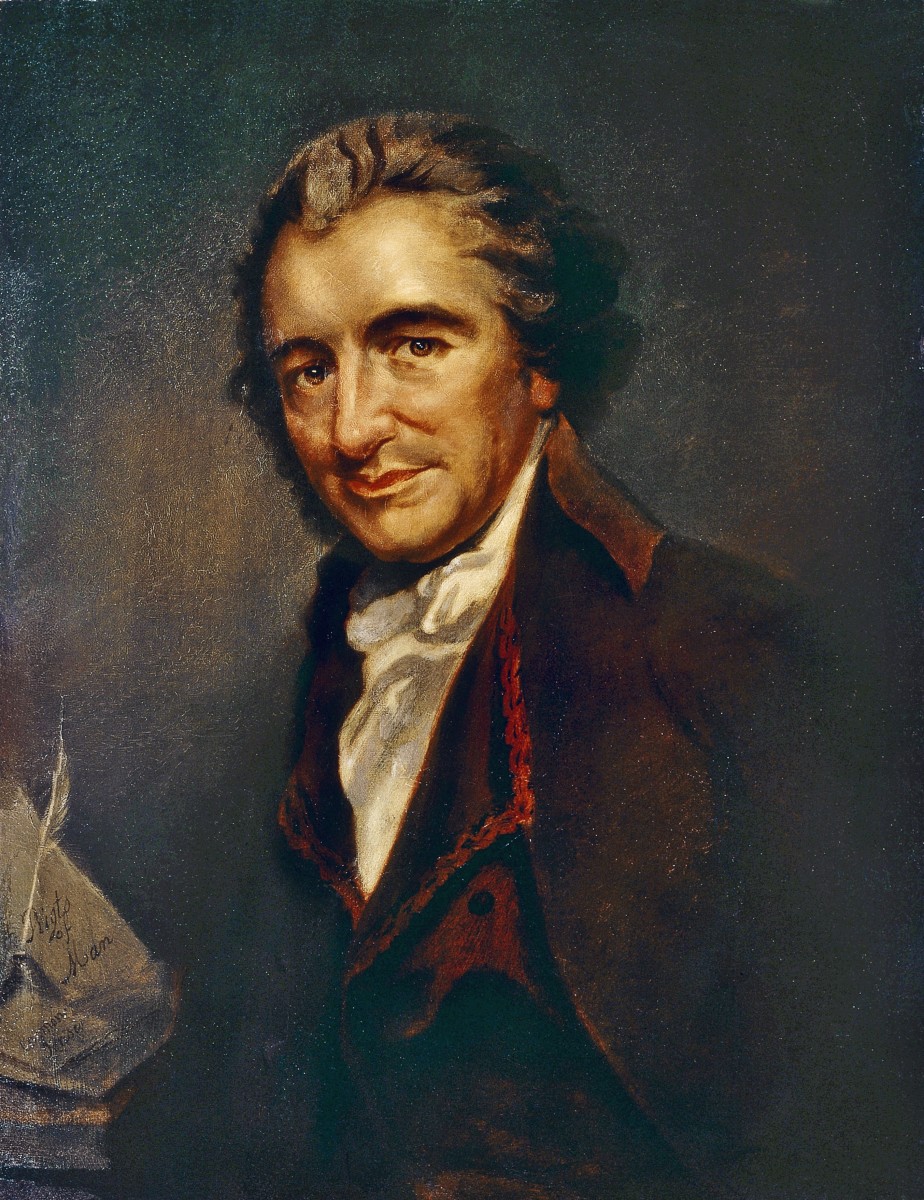
As many people who know me know I love history. Today in history a very important pamphlet was published. A pamphlet which helped open the door to revolution even wider. A pamphlet which helped bring the call for revolution to all the people. Common Sense was published today in 1776 by Thomas Paine. It was required reading in my college US history course which I still have a copy of it in my personal library. Paine is known for being a philosopher, political theorist and revolutionary. He is one of the Founding Fathers and authored two influential pamphlets.  Who was Thomas Paine? What was Common Sense and why is it historically significant?


Thomas Paine was born February 9, 1737 (O.S. January 29, 1736) in Thetford, Norfolk, Great Britain. He migrated to the colonies in 1774 with the help of Benjamin Franklin. After the American Revolution, he lived in Paris for most of the 1790s and was deeply involved in the French Revolution. He wrote Rights of Man (1791), a pamphlet in defense of the French Revolution against its critics. His attacks on Edmund Burke, an Irish conservative writer, led to a trial and conviction in absentia in England in 1792 for the crime of seditious libel. He became notorious for his pamphlet, The Age of Reason, which advocated deism, promoted reason and free thought. He argued against institutionalized religion in general and Christianity in particular. In 1802, he returned in the US, where he died on June 8, 1809 in Greenwich Village, New York. Only six people attended his funeral as he had been ostracized for his ridicule of Christianity. After his death, Paine’s body was to be buried in New Rochelle as per his will. However, the Quakers would not allow him to be buried in their graveyard. His remains were buried under a walnut tree on his farm. In 1819, an English agricultural radical journalist, William Cobbett, dug up his bones and brought them back to England. However, it never happened, and they remained in Cobbett’s possession until his death in 1835 and the bones were later lost. No one knows for sure what happened to his bones, but various people have claimed to have all or some of his remains.


Common Sense helped crystallized sentiment for the fight for independence. It was published anonymously “by an Englishman” and was an immediate success. One hundred thousand copies were sold in three months and during the war, it would sell 500,000 copies. The pamphlet would attack the monarchy, essentially King George III. Originally the colonial resentments originally directed primarily against the king’s ministers and Parliament. Paine would make the claim that the king was solely responsible and while not expressing any original ideas, Common Sense employs rhetoric as mean to arouse resentment of the Crown. For example, he argued “That the King it not to be trusted without being looked after; or in other words, that a thirst for absolute power is the natural disease of monarchy.” The pamphlet has two main points: 1) independence from England and 2) the creation of a democratic republic. He used two ideas in his arguments. First, Scottish Common Sense Realism which states that man has the innate ability to perceive common ideas and this process is inherent with judgment. Pain used this to argue that ordinary people can make sound judgments on major political issues. Second, Continental Enlightenment which states that common sense could refute the claims of traditional institutions like the monarchy.


Common Sense is historically significant as it was used as a weapon to delegitimize the monarchy and overturn the prevailing conventional wisdom. He also used a writing style to take complex ideas and make them understandable for the average reader of the day. He wrote in the language of the people, quoting the Bible to further his arguments. Even though he was not religious, Paine knew his readers were. For example, he references Judges 6 when Gideon led the Israelites against the oppressive Midianites. The pamphlet was a catalyst for the colonist to declare war as the Declaration of Independence would be signed six months later and many of the pamphlet’s senitments would be the basis of many premises in it. For example, Paine would also state that government at its best is a necessary evil and at its worst was intolerable. The Declaration of Independence would state “Government, laying its foundation on such principles and organizing its powers in such form, as to them shall seem most likely to effect their Safety and Happiness.” Paine would argue that community was dependent on both the strength of the government and the happiness of the governed. Common Sense, among other philosophical thoughts of the day, highly influenced the Declaration of Independence.


In conclusion, today we celebrate the 243-year-old pamphlet which brought the argument for revolution to the masses. Thomas Paine was able to take an argument for revolution and present it in a way that the common man could understand it. And understand it they did. Common Sense helped give one of the final pushes to revolution. It gained popularity during the war and has remained an important document in our country’s history. If you haven’t read it, I recommend that you do. You can find the full text free on the internet. It is a quick read and well worth it.