Showing posts with label 1776. Show all posts

Tuesday, January 6, 2026

Tom Paine's War: the man and the pamphlet that gave a voice to the American Revolution

Tom Paine’s War: The Words that Rallied a Nation and the Founder of Our Time by Jack Kelly. The Declaration of Independence is often seen as the American Revolution’s defining document. However, one man’s words in two essays which would appeal to Americans and fuel their fighting spirit. Thomas Paine was a recent immigrant and self-taught writer who saw beyond the simple fight against taxes and representation. His pamphlet “Common Sense” convinced Americans that the king had no divine right to rule over them and they could rule themselves which led to the Declaration of Independence. Paine would also enlist in the militia and witness the army defeats. It would be as he walked with the retreating troops that he wrote “The American Crisis,” which became the rallying cry to fight another day. 

As the 250th anniversary of the American Revolution is approaching, Tom Paine’s War is an eye opening exploration into one man’s contribution to the founding of the nation. While I was aware of “Common Sense,” as I read and studied it in school and in college; however,  I knew very little about the man who wrote it, especially his life after the war. Tom Paine’s War is more than a biography of Thomas Paine. It is a intertwining of one man’s arrival to a country already fighting and his observations helped put into words what Americans were feeling and willing to fight for with the details of the battles won and lost. Overall, I found Tom Paine’s War to be insightful and intriguing. If you enjoy American history, I highly recommend Tom Paine’s War. 


Tom Paine’s War: The Words that Rallied a Nation and the Founder of Our Time 

is available in hardcover, eBook and audiobook


Friday, April 9, 2021

Valcour: an excellent book about a little known but important event in American History

Valcour: The 1776 Campaign That Saved the Cause of Liberty by Jack Kelly is a look into the little known battle which helped continue the Revolution. At the front, Benedict Arnold, a man who fought with valor and courage, before he became known as the traitor to the American cause. During the summer of 1776, a British incursion in the north from Canada loomed. In response, a heroic defense was mounted. Under the direction of Philip Schuyler, underrated general and Alexander Hamilton’s future father-in-law, Horatio Gates, an ambitious former British officer, and the notorious Benedict Arnold, the Patriots constructed a small fleet of gunboats on Lake Champlain in northern New York. As an experienced sea captain, Arnold was able to devise a strategy that confounded their overconfident opponents. They would confront the full might of the British Royal Navy in a three-day battle near Valcour Island. Their effort surprised the arrogant British, who were forced to call off their invasion. At the core of Valcour is the story of people. In the early days of the Revolutionary War, the Patriots endured one defeat after another, with America’s Independence hanging in the balance. Two events would help turn the tide: Washington’s bold attack on Trenton on December 26, 1776 and the Battle of Valcour Island on October 11, 1776.  

I love history, especially American history. So when I got the opportunity to read about the Battle of Valcour Island, a battle I knew nothing about, I jumped at the chance. Jack Kelly weaves a history account that is as wild and suspenseful as the American wilderness that flowed and captivates as you read about the crucial and least known campaign when the scrappy navy of the young nation took on the British and their mighty sea power. I loved learning more about Benedict Arnold before he became the infamous traitor we all know him as. Mr Kelly describes him as a paradox of history as the reasons for his decision to betray his nation have been left up to debate and conjecture. Although Mr Kelly does present situations and attitudes that would certainly have contributed to Arnold’s turn. I also enjoyed hearing about the place names which memorialize the battle’s events and keep the memory alive of this important event. I also enjoyed and was humbled by the stories of the men who fought the battle, whose names don’t appear in the history books. Without their sacrifice and courage under almost certain failure, the fight for American Independence would have ended before it truly began. I highly recommend Valcour, an excellent account of the crucial battle. 


Valcour: the 1776 Campaign that Saved the Cause of Liberty is available in hardcover, eBook and audiobook. 


Thursday, January 10, 2019

Today in History: Thomas Paine's Common Sense is published


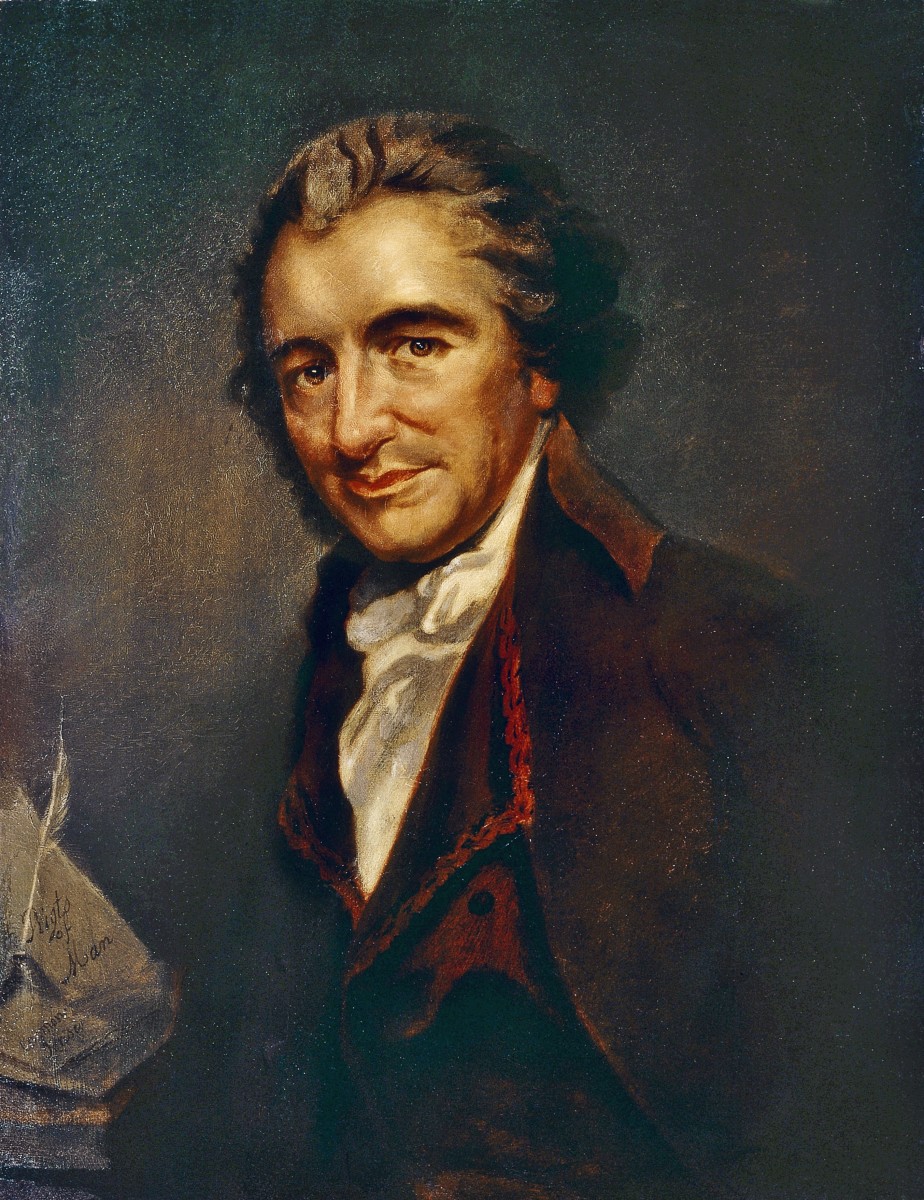
As many people who know me know I love history. Today in history a very important pamphlet was published. A pamphlet which helped open the door to revolution even wider. A pamphlet which helped bring the call for revolution to all the people. Common Sense was published today in 1776 by Thomas Paine. It was required reading in my college US history course which I still have a copy of it in my personal library. Paine is known for being a philosopher, political theorist and revolutionary. He is one of the Founding Fathers and authored two influential pamphlets.  Who was Thomas Paine? What was Common Sense and why is it historically significant?


Thomas Paine was born February 9, 1737 (O.S. January 29, 1736) in Thetford, Norfolk, Great Britain. He migrated to the colonies in 1774 with the help of Benjamin Franklin. After the American Revolution, he lived in Paris for most of the 1790s and was deeply involved in the French Revolution. He wrote Rights of Man (1791), a pamphlet in defense of the French Revolution against its critics. His attacks on Edmund Burke, an Irish conservative writer, led to a trial and conviction in absentia in England in 1792 for the crime of seditious libel. He became notorious for his pamphlet, The Age of Reason, which advocated deism, promoted reason and free thought. He argued against institutionalized religion in general and Christianity in particular. In 1802, he returned in the US, where he died on June 8, 1809 in Greenwich Village, New York. Only six people attended his funeral as he had been ostracized for his ridicule of Christianity. After his death, Paine’s body was to be buried in New Rochelle as per his will. However, the Quakers would not allow him to be buried in their graveyard. His remains were buried under a walnut tree on his farm. In 1819, an English agricultural radical journalist, William Cobbett, dug up his bones and brought them back to England. However, it never happened, and they remained in Cobbett’s possession until his death in 1835 and the bones were later lost. No one knows for sure what happened to his bones, but various people have claimed to have all or some of his remains.


Common Sense helped crystallized sentiment for the fight for independence. It was published anonymously “by an Englishman” and was an immediate success. One hundred thousand copies were sold in three months and during the war, it would sell 500,000 copies. The pamphlet would attack the monarchy, essentially King George III. Originally the colonial resentments originally directed primarily against the king’s ministers and Parliament. Paine would make the claim that the king was solely responsible and while not expressing any original ideas, Common Sense employs rhetoric as mean to arouse resentment of the Crown. For example, he argued “That the King it not to be trusted without being looked after; or in other words, that a thirst for absolute power is the natural disease of monarchy.” The pamphlet has two main points: 1) independence from England and 2) the creation of a democratic republic. He used two ideas in his arguments. First, Scottish Common Sense Realism which states that man has the innate ability to perceive common ideas and this process is inherent with judgment. Pain used this to argue that ordinary people can make sound judgments on major political issues. Second, Continental Enlightenment which states that common sense could refute the claims of traditional institutions like the monarchy.


Common Sense is historically significant as it was used as a weapon to delegitimize the monarchy and overturn the prevailing conventional wisdom. He also used a writing style to take complex ideas and make them understandable for the average reader of the day. He wrote in the language of the people, quoting the Bible to further his arguments. Even though he was not religious, Paine knew his readers were. For example, he references Judges 6 when Gideon led the Israelites against the oppressive Midianites. The pamphlet was a catalyst for the colonist to declare war as the Declaration of Independence would be signed six months later and many of the pamphlet’s senitments would be the basis of many premises in it. For example, Paine would also state that government at its best is a necessary evil and at its worst was intolerable. The Declaration of Independence would state “Government, laying its foundation on such principles and organizing its powers in such form, as to them shall seem most likely to effect their Safety and Happiness.” Paine would argue that community was dependent on both the strength of the government and the happiness of the governed. Common Sense, among other philosophical thoughts of the day, highly influenced the Declaration of Independence.


In conclusion, today we celebrate the 243-year-old pamphlet which brought the argument for revolution to the masses. Thomas Paine was able to take an argument for revolution and present it in a way that the common man could understand it. And understand it they did. Common Sense helped give one of the final pushes to revolution. It gained popularity during the war and has remained an important document in our country’s history. If you haven’t read it, I recommend that you do. You can find the full text free on the internet. It is a quick read and well worth it.

Tuesday, July 1, 2014

Declaration of Independence: the document that started it all

As the Fourth of July weekend approaches, people are preparing for a long weekend of BBQs, fireworks and fun in the sun. I’ve been thinking how to celebrate the Fourth and its significance in our lives. I decided to write about a document that started it all. The reason we celebrate our country’s independence on July 4: The Declaration of Independence. The British colonies in America declaring independence from Great Britain was the first of its kind and the Declaration of Independence would heavily influence future declarations.


During my research, I found some fascinating facts about the Declaration of Independence:
  • Independence was officially declared on July 2, 1776
  • The Declaration of Independence was commissioned by the Continental Congress. A five man committee was appointed to write this very important document. Those men were Thomas Jefferson, who would become known as the “author,” Benjamin Franklin, John Adams, Robert Livingston, and Roger Sherman. Robert Livingston would later refuse to sign the declaration as he felt it was too soon to declare independence.
  • 8 of the 56 signers were born in Great Britain
  • The oldest signer was Benjamin Franklin at 70 and the youngest was Edward Rutledge at 26
  • One signer, Richard Stockton, would later recant his signing of the Declaration and would pledge his allegiance to King George III
  • The Declaration would list 27 grievances against King George III of Great Britain who had ignored the needs and desires of his subjects: the colonies.
  • On July 4, 1776, the final draft of the Declaration was approved and it wasn’t officially signed until August 2, 1776
  • The first public reading of the Declaration was July 8, 1776 in Philadelphia.
  • When news of the Declaration of Independence reached New York City, a riot broke out
  • Both Thomas Jefferson and John Adams, men who helped draft and sign the Declaration of Independence, would die on July 4, 1876, the 50th Anniversary.
  • During WWII, the Declaration as well as the Constitution were moved from public display and held at Fort Knox, Kentucky
  • Of the 200 original printings, only 26 are known to still exist. One sold at auction for $8 million in 2000.
  • There is something written on the back of the Declaration of Independence. It simply says “Original Declaration of Independence dated 4th July 1776.” It is thought to be a label as it was probably rolled up for storage.

HAPPY 4TH OF JULY, EVERYONE!!!!!