Showing posts with label bitterness. Show all posts

Friday, July 30, 2021

Michal: the story of love turned into bitterness

Michal was the daughter of Saul and David’s first wife. She was a woman of strong emotions who often found herself unable to control the important circumstances of her life. She was a woman who could think and act quickly when it was needed, but she would also lie when under pressure and allowed herself to become bitter. She would find herself ensnared in the drawn out battle between her father and her husband, which would leave her bitter and resentful. She would, for a time, share a passionate love with her husband. It is the only time in the Bible that a woman is described as loving a man (1 Samuel 18:20). But that love would turn cold. What is her story? How did she turn from a woman in love to one who hated her husband? What lessons can we learn from her story? 


Her story is short, spanning decades but two main details are known about her. Her love for David and later her resentment toward him. She loved David since he was a shepherd boy who felled the mighty Goliath. There are two parts to Michal’s story. In Part 1, she is a woman in love. She helps him escape from her father’s pursuing army. Lies to her father’s guards to buy him time. In Part 2, she is queen as David is now king. She is horrified as she watches, from a window, as her husband dances and leaps as the Ark of the Covenant is brought into the city of Jerusalem. Her love has turned to loathing. She confronts him, telling him that a king should not act in such a way. David responds that he danced for the Lord and no one else (2 Samuel 6:21-22). The distance between them grew and their silence thickened like ice. The Bible’s last statement on Michal says she spent the rest of her life alone and childless (2 Samuel 6:23).


At the heart of her story is worship. Worship can take several forms in prayer, song, dancing and musical instruments. For many people, there are only right ways to worship. The person who sings off key with tears rolling down their face is truly worshipping as the person who sings perfectly and subdued. But what many people forget is that at the center of worship is the heart and a life dedicated to God. God makes it clear he won’t be satisfied with only the forms of worship, because that is not the focus. If a person’s heart is not for God, then their worship is meaningless, empty. True worship, whether it is dancing wildly as David did, or the person singing off-key, is a joyful noise to the Lord (Psalm 100:1-2). Michal’s contempt for David’s worship shows her own lack of true dedication to the Lord. She was content to be a critical spectator rather than a true worshipper. It may also be jealousy that if David had such love and devotion for the Lord, she may have thought he didn’t love her. Maybe she wanted that love all to herself. 


Michal is an example of how quickly life’s unexpected turns can make us bitter, if we do not guard our hearts with care. Bitterness will make a bad situation worse. What fueled Michal’s bitterness? Was it because she was a mere pawn in the battle between her father and her husband? The Bible doesn’t speak if she had any faith, did she go through the motions like her father? Whatever the reason, Michal grew to be more like her father than David. Like her father, her heart for David went from love to hate. She was a victim; but being a victim doesn’t excuse her behavior. Even victims have choices. The power to choose the attitude of our hearts. We are not responsible for all that happens to us, but we are responsible for how we respond. The Bible doesn’t tell us why Michal remained childless. Was it because God didn’t allow her to conceive? Or is it possible that the coldness between them, resulted in David setting her aside for one of his other wives that would follow? 


In conclusion, Michal was a woman driven by love and bitterness. She helps the man she loves escape the murderous intent of her father but later becomes bitter toward the same man. She despised David, in her eyes, for his wanton worship. The heart behind worship is more important than the method of worship. Whether someone is dancing in the streets or singing off-key, as long as the heart is filled with love and appreciation for the Lord, it is pleasing to him. This concept is what Michal misses. Maybe she wasn’t a woman of faith. She may not have believed as David did. Whether way, Michal lives out her life alone, possibly forgotten. The main lesson from her story is we control how we respond to life’s circumstances. We either play the victim and sulk or we rise to the challenge and learn to move forward. 


Thursday, April 29, 2021

Naomi: a story of grief, bitterness and God's faithfulness

When the image of a mother-in-law is brought up, many think of the wicked woman who makes her daughter-in-law’s life miserable for daring to marry her precious son. Naomi was not that mother-in-law. In the book of Ruth, Naomi is a woman who knew loss and suffering. She suffered famine in Judah that she and her husband went to Moab. There their two sons married Moabite women. Soon, she would suffer again as she would lose her husband and her two sons. After suffering this threefold tragedy, she refused to hide her sorrow or bitterness. She even changed her name to Mara, meaning “bitterness.” She fixated on her circumstances, past and present, which led to hopelessness. She blamed God for taking away her husband and sons and punishing her for her sins. Despite her bitterness, God was working in her life, to restore her faith and joy. It is only through her daughter-in-law, Ruth, does she find happiness and hope again. What is her story? How does famine play into her story? What is the lesson can we learn about God? 

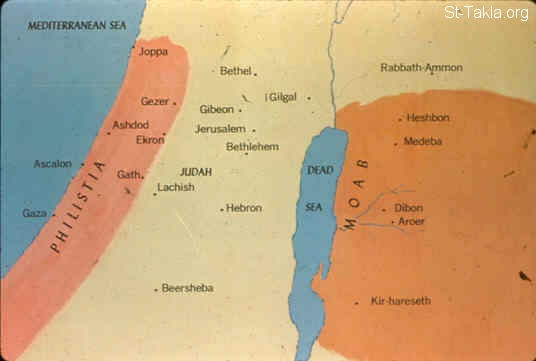
Naomi’s story begins with a little history. Moab was a country to the east of Judah. The Moabites were said to be descendants of Abraham’s nephew, Lot. Famine had spread across Judah. Naomi and her husband, Elimelech, had left the famine in Judah for the abundance in Moab, along with their two sons, Mahlon and Kilion. Their sons would each marry a Moabite woman, Ruth and Orpah. In time, Elimelech and his sons would die, leaving Naomi and her daughters-in-law without much hope for their survival. When word reached Moab that abundance had returned to Judah, Naomi and her daughters-in-law prepared to leave. Eventually, Naomi would urge each woman to return to her own people. Orpah would return; however, Ruth refused to leave Naomi. In Ruth 1:16-18, Ruth vowed to never leave Naomi, stating “where you go, I will go.” When they entered Bethlehem, many people asked if it really could be Naomi? She answered, “Don’t call me Naomi. Call me Mara because the Almighty Lord has made my life very bitter” (Ruth 1:20). Naomi couldn’t see past her suffering as she felt her tragedies were punishment for her sins. Little did she know that a new life and a new hope was in store, but more about that next month as I will examine the story of Ruth. 

Famine is a common occurrence in the Bible. There are three types of famine. First, natural occurring famines. Palestine has two rainy seasons: October through November and March through April. If rain doesn’t fall during these periods, droughts are common and famine often results. Famine occurs when hail or insects destroys the food supply or invading armies devastate crops. Second, judgement. God also uses famine for his purpose. In Deuteronomy 28:21-24, famine was the result of disobedience. In the New Testament, famine will be a part of God's coming judgment (Matthew 24:7, Revelation 6:8). Third, spiritual famine. Amos 8:11 states that days are coming when a famine will spread through the land, not one of food or water but of words of the Lord. Famines of the heart are much deeper than just a bad day. Where we have lost sight of joy and peace in our lives. We search in vain for God’s presence and guidance. How do we break a famine of the heart? Be willing to confess our failures through honest confession. Am I withholding forgiveness? Am I holding on to bitterness or pride? Coming to God and confessing our sins reconnects us with the power of Christ. 1 John 1:9 says “If we confess our sins, he is faithful and just and will forgive us our sins and purify us from all unrighteousness.” When we face a personal famine, we need to turn to the One who can take the famine away. 

God is faithful to restore fullness to an empty life. Naomi, like many of us, had trouble recognizing God’s goodness and his faithfulness. Through the anguish of losing her beloved husband and sons, she received the loving care and devotion of Ruth. Psalm 71:20 says God will restore our lives. Numbers 23:19 says “God is not man, that he should lie, or a son of man, that he should change his mind. Has he said, and will he not do it? Or has he spoken, and will he not fulfill it?” God is faithful to the promises to those who love him. In her grief, Naomi, like many of us, loses sight of this promise. Despite her bitterness, God was working in Naomi’s life, just as he works in our lives. We may not see it for different reasons but he is still there. When God promises something, we know it will come to pass. He is not one to change his mind or forget. Romans 8:28 says “We know that for those who love God all things work together for good, for those who are called according to his purpose.” God is wholly to you and other believers who love and follow him. His faithfulness is not dependent on your works. All that is required is a willing and open heart. 

In conclusion, the story of Naomi is about grief, bitterness and God’s faithfulness. Naomi lost her faith in God and lost sight to his faithfulness. She faced physical famine and a famine of the heart. We often lose sight of God in our lives when circumstances seem the darkest. Times may be dark, but God is always faithful. God didn’t walk away from Naomi because she blamed him for her woes, but continued to work to restore fullness to her life. One of my favorite quotes is from Harry Potter and the Goblet of Fire (2000) in which Albus Dumbledore tells Harry, “Dark times lie ahead of us and there will be a time when we must choose between what is east and what is right.” As we face dark and difficult times, we must choose to either focus on God and his faithfulness or focus on our desperation. It isn’t easy to focus on God when the world seems to fall apart but knowing that God is with me as I live through the difficult times helps lift the spirit.