If you haven’t heard of the Netflix sensation film KPop Demon Hunters, you probably have been living under a rock. It has been everywhere since it exploded on the scene in 2025. It follows the story of Rumi, Mira and Zoey as the demon hunters who fight the evil minions of their ruler with their swords and their songs. Everyone knows the songs, “Golden” and “Soda Pop;” as they got the greatest play, however, in my opinion, there aren’t even the best songs. KPOP Demon Hunters has been a global phenomenon and a sequel was announced in March 2026 with a slated 2029 release date. There have been mixed reviews from Christian perspectives. Some have enjoyed it and seen Christian perspectives in the story while others vehemently stated that this movie was to be avoided at all costs. I decided to watch it one day and make a decision for myself. What is the story of the movie? What are the themes? What are my thoughts and Christian perspective?
Long ago, demons preyed on humans by feeding their souls to their ruler, Gwi-Ma. Eventually, three women rose up and became demon hunters and used their singing voices to create a magical barrier called the Honmoon. To maintain the Honmoon, new trios of hunters would rise up with the ultimate goal would be to strengthen the Honmoon into the Golden Honmoon, a final, permanent seal to banish the demons for good. Fast forward to the present day, The K-Pop girl group, Huntrix, composed of Rumi (voiced by Arden Cho, Ejae provides her singing voice), Mira (voiced by May Hong, singing voice provided by Audrey Nuna) and Zoey (voiced by Ji-young Yoo, singing voice provided by Rei Ami), are the latest demon-hunting trio. Rumi hides a secret. She is half-demon, a face only known to her and Celine, a former hunter who raised Rumi after the death of her mother. Her demonic patterns are becoming more and more widespread and she fears her secret coming out. In the demon world, Gwi-Ma is angry at his demons’ failures when Jinu (voiced by Ahn Hyo-seop, singing voice provided by Andrew Choi) suggests fighting the Huntrix at their own game and creates a boy band, the Saja Boys. The plan immediately begins to work as the fans turn to the new band, weakening the Honmoon as well as the bonds between the girls. When everything seems bleak, Rumi decides to publicly interrupt the Saja Boys’ performance with her own song which helps bring Mira and Zoey back to her. Reunited, the Huntrix fights the demons and ultimately defeats Gwi-Ma and creates a new Honmoon.
There are themes of power in community and friendship, overcoming cultural pressures, and resilience. Some have seen Rumi coming public with her demon patterns as an allegory for coming out in the LGBTQ+ community. They cite the themes of identity, secrecy and self-acceptance. And while I can see how they could see that allegory in the movie; however, these themes are unique to the LGBTQ+ community. While the movie is not explicitly Christian, as JRR Tolkien showed us with the Lord of the Rings, a movie does not have to explicitly preach the gospel to contain a good Christian message. The song, “Your Idol,” is a warning against sin and discusses the dynamics of devotion, obsession and control. The narrator presents himself as an irresistible savior with temptations and seduction. “I”m the only one who’ll love your sins/Feel the way my voice gets underneath your skin.” My favorite song is “What It Sounds Like,” It is a song of acknowledgment of one’s imperfection and brokenness: “So we were cowards, so we were liars/So we're not heroes, we're still survivors/The dreamers, the fighters, no lying, I'm tired.” Romans 3:23 says, “for all have sinned and fall short of the glory of God.” While Satan wants to use our darkness, our past, our sins to keep us weak, Romans 8:28 reminds that “And we know that in all things God works for the good of those who love him, who have been called according to his purpose.” We can be broken, but made whole by God and find the strength to stand up and fight against evil.
I have seen this movie several times, both with my daughter and by myself, and I have loved it. First, none of the good guys in the film are demons. Demons are not the heroes of the story. They are the villains and they are defeated in the end. While Rumi is half demon, she is ashamed of her demon side and eventually overcomes it. I see it as Rumi overcoming and breaking familial patterns that were not of her making. She chooses to overcome this brokenness to fight back. Our family’s past, even our heritage is not our fault; however, we can rise above the scars and be better people than our ancestors. Second, several key creators and contributors involved, including songwriters and voice actors have expressed a Christian faith. In South Korea, Christianity is the largest organized religion with approximately 23-31% of the population. Third, in my experience, just because something is “Christian made” doesn't mean it is biblically sound. In the same vein, just because something isn’t labeled “Christian” doesn’t mean it does not contain biblical truths. Unfortunately, when something is labeled as Christian, it automatically limits the audience.
In conclusion, I find that Christians will often push aside any thought of demonic forces. We do not want to think about or talk about demons. We refuse to face the fact that there is an enemy who hates us because God loves us. Ephesians 6:12 says, “For we do not wrestle against flesh and blood, but against principalities, against powers, against the rulers of the darkness of this age, against spiritual hosts of wickedness in the heavenly places.” Do not be afraid of this story because it has demons. If you feel the conviction to stay away from this story, then please do so. However, do not criticize those who do not have that same conviction and watch this movie and enjoy it. Overall, I do not feel KPOP Demon Hunters is a movie to stay away from. While it is not, in general, a Christian movie, I can see Christian themes and the opportunity to have discussions about God, demons and spiritual warfare we may experience in our lives.
When the image of a mother-in-law is brought up, many think of the wicked woman who makes her daughter-in-law’s life miserable for daring to marry her precious son. Naomi was not that mother-in-law. In the book of Ruth, Naomi is a woman who knew loss and suffering. She suffered famine in Judah that she and her husband went to Moab. There their two sons married Moabite women. Soon, she would suffer again as she would lose her husband and her two sons. After suffering this threefold tragedy, she refused to hide her sorrow or bitterness. She even changed her name to Mara, meaning “bitterness.” She fixated on her circumstances, past and present, which led to hopelessness. She blamed God for taking away her husband and sons and punishing her for her sins. Despite her bitterness, God was working in her life, to restore her faith and joy. It is only through her daughter-in-law, Ruth, does she find happiness and hope again. What is her story? How does famine play into her story? What is the lesson can we learn about God?
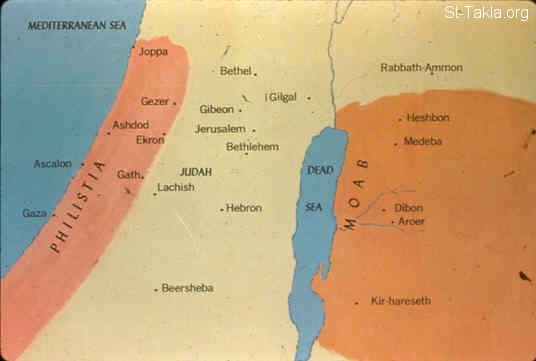
Naomi’s story begins with a little history. Moab was a country to the east of Judah. The Moabites were said to be descendants of Abraham’s nephew, Lot. Famine had spread across Judah. Naomi and her husband, Elimelech, had left the famine in Judah for the abundance in Moab, along with their two sons, Mahlon and Kilion. Their sons would each marry a Moabite woman, Ruth and Orpah. In time, Elimelech and his sons would die, leaving Naomi and her daughters-in-law without much hope for their survival. When word reached Moab that abundance had returned to Judah, Naomi and her daughters-in-law prepared to leave. Eventually, Naomi would urge each woman to return to her own people. Orpah would return; however, Ruth refused to leave Naomi. In Ruth 1:16-18, Ruth vowed to never leave Naomi, stating “where you go, I will go.” When they entered Bethlehem, many people asked if it really could be Naomi? She answered, “Don’t call me Naomi. Call me Mara because the Almighty Lord has made my life very bitter” (Ruth 1:20). Naomi couldn’t see past her suffering as she felt her tragedies were punishment for her sins. Little did she know that a new life and a new hope was in store, but more about that next month as I will examine the story of Ruth.
Famine is a common occurrence in the Bible. There are three types of famine. First, natural occurring famines. Palestine has two rainy seasons: October through November and March through April. If rain doesn’t fall during these periods, droughts are common and famine often results. Famine occurs when hail or insects destroys the food supply or invading armies devastate crops. Second, judgement. God also uses famine for his purpose. In Deuteronomy 28:21-24, famine was the result of disobedience. In the New Testament, famine will be a part of God's coming judgment (Matthew 24:7, Revelation 6:8). Third, spiritual famine. Amos 8:11 states that days are coming when a famine will spread through the land, not one of food or water but of words of the Lord. Famines of the heart are much deeper than just a bad day. Where we have lost sight of joy and peace in our lives. We search in vain for God’s presence and guidance. How do we break a famine of the heart? Be willing to confess our failures through honest confession. Am I withholding forgiveness? Am I holding on to bitterness or pride? Coming to God and confessing our sins reconnects us with the power of Christ. 1 John 1:9 says “If we confess our sins, he is faithful and just and will forgive us our sins and purify us from all unrighteousness.” When we face a personal famine, we need to turn to the One who can take the famine away.
God is faithful to restore fullness to an empty life. Naomi, like many of us, had trouble recognizing God’s goodness and his faithfulness. Through the anguish of losing her beloved husband and sons, she received the loving care and devotion of Ruth. Psalm 71:20 says God will restore our lives. Numbers 23:19 says “God is not man, that he should lie, or a son of man, that he should change his mind. Has he said, and will he not do it? Or has he spoken, and will he not fulfill it?” God is faithful to the promises to those who love him. In her grief, Naomi, like many of us, loses sight of this promise. Despite her bitterness, God was working in Naomi’s life, just as he works in our lives. We may not see it for different reasons but he is still there. When God promises something, we know it will come to pass. He is not one to change his mind or forget. Romans 8:28 says “We know that for those who love God all things work together for good, for those who are called according to his purpose.” God is wholly to you and other believers who love and follow him. His faithfulness is not dependent on your works. All that is required is a willing and open heart.
In conclusion, the story of Naomi is about grief, bitterness and God’s faithfulness. Naomi lost her faith in God and lost sight to his faithfulness. She faced physical famine and a famine of the heart. We often lose sight of God in our lives when circumstances seem the darkest. Times may be dark, but God is always faithful. God didn’t walk away from Naomi because she blamed him for her woes, but continued to work to restore fullness to her life. One of my favorite quotes is from Harry Potter and the Goblet of Fire (2000) in which Albus Dumbledore tells Harry, “Dark times lie ahead of us and there will be a time when we must choose between what is east and what is right.” As we face dark and difficult times, we must choose to either focus on God and his faithfulness or focus on our desperation. It isn’t easy to focus on God when the world seems to fall apart but knowing that God is with me as I live through the difficult times helps lift the spirit.
After a recent conversation with a friend of mine, I wanted
to right about many misquoted Bible verses as well as sayings that are not in
the Biblical. I found some phrases which were taken out of verses but removed
portions of the verse that it doesn’t give the full message of what the verse
is trying to convey. Some verses aren’t Biblical at all but since the phrase
references God, many people are lead to believe that they appear in the Bible. I
have chosen a few out of the many I found online. These are the most common
verses or phrases that I found across the board.
The Lion shall lay
down with the lamb. This phrase doesn’t not actually appear in the Bible.
The closet verse is Isaiah 11:6 which says “The wolf will live with the lamb,
the leopard will lie down with the goat, the calf and the lion and the yearling
together; and a little child will lead them.” Despite the misquotation, the
image is still the same. While saying the lion will lay down with the lamb is
technically wrong, the image is still powerful and conveys the same message as
Isaiah 11:6. The once predators will be at peace and live in harmony with the
once prey. It is a time when nature will return to its intended balance and
harmony. The time of Christ’s second coming and his established earthly
kingdom.
Money is the root of
all evil. This is a bad misquotation of 1 Timothy 6:10 which says “For the
love of money is a root of all kinds of evil. Some people, eager for money,
have wandered from the faith and pierced themselves with many griefs.” When
this verse is quoting many people leave out certain key words: love, a, and
kinds. Greed can lead to all kinds of trouble. However, money itself is not the
root of all evil. Money is a necessity of life. We need it to live, eat, pay
for our homes and clothes. If you go to the previous verse, verse 9 states
“People who want to get rich fall into
temptation and a trap and into many foolish and harmful desires that plunge
men into ruin and destruction {emphasis mine).” Money should be handled
respectfully and carefully.
Spare the rod, spoil
the child. This is a paraphrase of Proverbs 13:24 which says “Whoever
spares the rod hates their children, but the one who lives their children is
careful to discipline them.” This phrase has been the justification for physical
discipline. However, the verse is not stating that a parent has the right to
beat their child into submission. The verse states that discipline is a
nurturing guidance for child. Without correction, children grow up to be adults
without a sense of right or wrong. The phrase was actually coined by Samuel
Butler, a 17th century British poet in a satirical poem Hudibras: “What medicine else can cure
the fits/ Of lovers when they lose their wits?/ Love is a boy by poets
styled/Then spare the rod and spoil the child.” In the poem, a love affair is
compared to a child, and spanking is mockingly applauded as a way to make the
love grow stronger.
All things work
together for good. This phrase is taken from Romans 8:28 “And we know that
in all things God works for the good of those who love him, who have been
called according to his purpose.” God works in all things for our good, not
just isolated occurrences. When evil occurs in our lives, God is able to turn
every situation into a good. We may not see the good until much later. God is
not working to make us happy or make all things right. He does it to fulfill
his purpose and for those who love him. Also this promise isn’t for everyone,
the verse specifically states it is for those who are called according to his
purpose. Those who have received Jesus and been touched by the Holy Spirit.
Those who love him and trust in him.
God works in
mysterious ways. There is no actual verse which states this and there are
several verses that allude to this idea. For example, Isaiah 55:8 “For my
thoughts are not your thoughts, neither are your ways my ways.” Another example
is Romans 11:33-34 “Oh, the depth of the riches of the wisdom and knowledge of
God! How unsearchable his judgments, and his paths beyond tracing out! Who has
known the mind of the Lord? Or who has been his counselor?” In both verses, the
authors are telling believers that we cannot know why events happen the way
they do for we do not think the way he does. Where this phrase originated from
has been debated; however, one source is thought to be a hymn written by
William Cowper in 19th century "God moves in a mysterious ways;
His wonders to perform; He plans His footsteps in the sea, and rides upon the
storm."
Pride comes before the
fall. This phrase is taken from Proverbs 16:18. However, it is a bad
paraphrase as it takes out the middle of the verse. The verse actually says “Pride
goes before destruction, a haughty spirit before a fall.” Destruction is the
end result of pride. A haughty spirit is the sense of arrogance, superiority
and being disdainful. Pride and a haughty spirit leads to an over sense of
self-confidence and the feeling that one does not need God. This attitude leads
to carelessness and eventual destruction and fall. In contrast, Proverbs 15:33
states “The fear of the Lord teaches a man wisdom and humility comes before
honor.” So it is not just pride which leads to the fall, it is a haughty
spirit. Pride isn’t necessarily a bad thing; however, when pride is boastful,
self-centered, and blinds you to your own faults and limitations can lead to
very bad results.
God helps those who
help themselves. It is a phrase that emphasizes the importance of
self-initiative and action. This phrase doesn’t appear in the Bible at all. The
phrase originated in Ancient Greece and is illustrated in the fable Hercules and the Waggoner as well as
Ancient Greek drama. However, there are verses which have been used to support
the claim that the idea of this phrase is in the Bible. One example is 2
Thessalonians 3:10, Paul writes “For even when we were with you, we gave you
this rule: ‘If a man will not work, he shall not eat.’” Paul is speaking
against laziness and skirting responsibility. Paul is telling them and us to be
responsible and get back to work. I think using this verse to support the
phrase is a bit of a stretch.
Cleanliness is next to
godliness. This phrase does not originate from the Bible. In my research, I
found claims that the phrase originated from an ancient Babylonian and Hebrew
proverb; however, I’ve been unable to find proof to this claim. It was first
used in English by Sir Francis Bacon in Advancement
of Leaning (1605) where he said “Cleanliness of body was ever deemed to
proceed from due reverence to God.” It was further popularized by John Wesley
in a 1778 sermon. The Bible does not speak to outward cleanliness with a
connection to godliness. In Matthew 7:18-23, Jesus makes it clear that it is
man’s hearts that are unclean. Many of the online responses and comments I came
across seem to interpret the phrase as cleansing in the body, mind and in
spirit through physical washing, meditation and confession. It’s not a bad
phrase to live by; but it’s not in the Bible.
In conclusion, it is very easy to take a verse from the
Bible and turn it into a catchy, feel good phrase that makes everyone warm and
fuzzy. As we’ve seen with a few of the phrases I’ve highlighted, taking key
words or phrases from the verse removes the whole picture of the main message. People
misquote phrases all the time, especially with a certain phrase being repeated
for centuries, it becomes a part of our lexicon. However, what astonishes me is
that many of these phrases are quoted by people who claim to have Biblical
knowledge. If you are going to quote anything, the Bible or another’s work,
make sure you understand the context in which it is given. It makes a world of
difference in some cases.