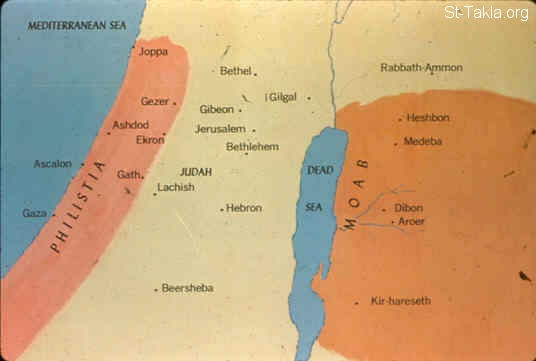
When the image of a mother-in-law is brought up, many think of the wicked woman who makes her daughter-in-law’s life miserable for daring to marry her precious son. Naomi was not that mother-in-law. In the book of Ruth, Naomi is a woman who knew loss and suffering. She suffered famine in Judah that she and her husband went to Moab. There their two sons married Moabite women. Soon, she would suffer again as she would lose her husband and her two sons. After suffering this threefold tragedy, she refused to hide her sorrow or bitterness. She even changed her name to Mara, meaning “bitterness.” She fixated on her circumstances, past and present, which led to hopelessness. She blamed God for taking away her husband and sons and punishing her for her sins. Despite her bitterness, God was working in her life, to restore her faith and joy. It is only through her daughter-in-law, Ruth, does she find happiness and hope again. What is her story? How does famine play into her story? What is the lesson can we learn about God?
Naomi’s story begins with a little history. Moab was a country to the east of Judah. The Moabites were said to be descendants of Abraham’s nephew, Lot. Famine had spread across Judah. Naomi and her husband, Elimelech, had left the famine in Judah for the abundance in Moab, along with their two sons, Mahlon and Kilion. Their sons would each marry a Moabite woman, Ruth and Orpah. In time, Elimelech and his sons would die, leaving Naomi and her daughters-in-law without much hope for their survival. When word reached Moab that abundance had returned to Judah, Naomi and her daughters-in-law prepared to leave. Eventually, Naomi would urge each woman to return to her own people. Orpah would return; however, Ruth refused to leave Naomi. In Ruth 1:16-18, Ruth vowed to never leave Naomi, stating “where you go, I will go.” When they entered Bethlehem, many people asked if it really could be Naomi? She answered, “Don’t call me Naomi. Call me Mara because the Almighty Lord has made my life very bitter” (Ruth 1:20). Naomi couldn’t see past her suffering as she felt her tragedies were punishment for her sins. Little did she know that a new life and a new hope was in store, but more about that next month as I will examine the story of Ruth. Famine is a common occurrence in the Bible. There are three types of famine. First, natural occurring famines. Palestine has two rainy seasons: October through November and March through April. If rain doesn’t fall during these periods, droughts are common and famine often results. Famine occurs when hail or insects destroys the food supply or invading armies devastate crops. Second, judgement. God also uses famine for his purpose. In Deuteronomy 28:21-24, famine was the result of disobedience. In the New Testament, famine will be a part of God's coming judgment (Matthew 24:7, Revelation 6:8). Third, spiritual famine. Amos 8:11 states that days are coming when a famine will spread through the land, not one of food or water but of words of the Lord. Famines of the heart are much deeper than just a bad day. Where we have lost sight of joy and peace in our lives. We search in vain for God’s presence and guidance. How do we break a famine of the heart? Be willing to confess our failures through honest confession. Am I withholding forgiveness? Am I holding on to bitterness or pride? Coming to God and confessing our sins reconnects us with the power of Christ. 1 John 1:9 says “If we confess our sins, he is faithful and just and will forgive us our sins and purify us from all unrighteousness.” When we face a personal famine, we need to turn to the One who can take the famine away. God is faithful to restore fullness to an empty life. Naomi, like many of us, had trouble recognizing God’s goodness and his faithfulness. Through the anguish of losing her beloved husband and sons, she received the loving care and devotion of Ruth. Psalm 71:20 says God will restore our lives. Numbers 23:19 says “God is not man, that he should lie, or a son of man, that he should change his mind. Has he said, and will he not do it? Or has he spoken, and will he not fulfill it?” God is faithful to the promises to those who love him. In her grief, Naomi, like many of us, loses sight of this promise. Despite her bitterness, God was working in Naomi’s life, just as he works in our lives. We may not see it for different reasons but he is still there. When God promises something, we know it will come to pass. He is not one to change his mind or forget. Romans 8:28 says “We know that for those who love God all things work together for good, for those who are called according to his purpose.” God is wholly to you and other believers who love and follow him. His faithfulness is not dependent on your works. All that is required is a willing and open heart. In conclusion, the story of Naomi is about grief, bitterness and God’s faithfulness. Naomi lost her faith in God and lost sight to his faithfulness. She faced physical famine and a famine of the heart. We often lose sight of God in our lives when circumstances seem the darkest. Times may be dark, but God is always faithful. God didn’t walk away from Naomi because she blamed him for her woes, but continued to work to restore fullness to her life. One of my favorite quotes is from Harry Potter and the Goblet of Fire (2000) in which Albus Dumbledore tells Harry, “Dark times lie ahead of us and there will be a time when we must choose between what is east and what is right.” As we face dark and difficult times, we must choose to either focus on God and his faithfulness or focus on our desperation. It isn’t easy to focus on God when the world seems to fall apart but knowing that God is with me as I live through the difficult times helps lift the spirit.
Showing posts with label Naomi. Show all posts
Thursday, April 29, 2021
Thursday, February 28, 2019
Proverbs 31:10-31 The Wife of Noble Character: a model to inspire to
Proverbs has a lot to say about women. It is often said that
the Bible portrays women, the ideal woman, as a servant. It just isn’t so. The
book ends with a picture of a woman with strong character, great wisdom, many
skills and great compassion. Proverb 31:10-31 shows that the ideal woman is an
excellent wife and mother and so much more. As you read the verse, you will
realize that her appearance is never mentioned. She is not described as thin,
fat, tall, short, beautiful or average. Because her physical appearance doesn’t
matter, regardless of what society says, which is why the section is often
titled “The Wife of Noble Character.” So, I looked through the Bible to find
examples of women who, in part, fit these characteristics.
The ideal woman is valuable (verse 10) and trustworthy
(verse 11). She brings her family good, not harm, for all her days (verse 12).
She’s industrious and she works with eager hands (verse 13). She’s a business
woman who imports products for her family’s meals (verse 14). She’s diligent as
she gets up early and provides food for her family and others (verse 15). She’s
entrepreneurial as she “considers a field and buys it” and “out of her earnings
she plants a vineyard” (verse 16). She is wise with money and only purchases
quality goods. As I read these verses, I was reminded of Lydia in Acts
16:14-15. She was a businesswoman opened her home to Paul as he began his
ministry. Another woman is Priscilla (Acts 18), along with her husband, Aquila,
worked as a successful tentmaker and helped Paul’s ministry. Priscilla is an
example of a wife who works as a partner with her husband and not as a servant
for him.
The ideal woman works hard and strong at her tasks (verse
17). She is attentive to her business (verse 18) and she is a hard worker
(verse 19). She is compassionate as she “opens her arms to the poor and extends
her hands to the needy” (verse 20). She is confident (verse 21) and elegant
(verse 22). She is admirable and her husband is admired in part because of her
(verse 23). Ruth wasn’t afraid of hard work. She married one of Naomi’s sons
and when he died, she decided to remain with Naomi and return with her to her
home in Bethlehem (Ruth 1:4-19). As a widow, she would have been poverty
striven, taken advantaged of or ignored. She gave up the possibility of
security of another husband in her home of Moab, to take care of Naomi. She
went to the fields during harvest and gathered grain left behind by the
harvesters (Ruth 2:7). It was there she caught the eye of Boaz, who owned the
field where she was gathering grain (Ruth 2:3). She later married Boaz (Ruth
4:13) and is know her for love of her mother-in-law, Naomi and her kindness to
others.
The ideal woman is a capitalist as she “makes linen garments
and sells them,” supplying “merchants with sashes” (verse 24). She is dignified
(verse 25). She is wise and gives faithful instruction (verse 26). She is
watchful (verse 27). She is honored by her family (verse 28) as she surpasses
many of the other noble women (verse 29). She fears the Lord (verse 30) and
acclaimed (verse 31). One woman I see in these verses is Hannah in 1 Samuel
1-11. She was fervent in worship and effective in prayer as she turned to the
Lord with her troubles. 1 Samuel 1:10 says that “in bitterness of soul, Hannah
wept much and prayed to the Lord.” She brought her problem to God with honesty
and devotion. Another woman I see in these verses is Abigail in 1 Samuel
25:14-28 when she was wise enough to know that her husband, Nabal, had greatly
insulted the new king and set out to correct the situation. She gathered food
and wine for King David and his men and sought forgiveness for her husband’s
rudeness. Because of her wisdom, Abigail saved many men’s lives and promoted
peace.
In conclusion, the Wife of Noble Character isn’t a model to
imitate but an inspiration to be all you can be, to learn from her perseverance,
integrity, and resourcefulness. The Book of Proverbs begins with the command to
fear the Lord. Proverbs 1:7 says “The fear of the Lord is the beginning of
knowledge, but fools despise wisdom and discipline.” It ends with the picture
of a woman who fills this command. Proverbs 31:30 says “Charm is deceptive, and
beauty is fleeting; but a woman who fears the Lord is to be praised.” When you
read this verse, remember it is not about being perfect. While many of the
women I mentioned did not fit every verse, they were examples of women who did
their best. It is about living life with purpose, diligence, and caring for
your loved ones the best way you know how with the Lord’s guidance and
direction.
Subscribe to:
Posts (Atom)