Showing posts with label Civil War. Show all posts

Thursday, October 10, 2024

A Sound Among the Trees: a story of one house and the three women tied to it's history

A Sound Among the Trees by Susan Meissner is the story of one house lost in time and the line of women who share in its heritage of loss. Susannah Page came to Holly Oak as a young bride. Rumored to be a Union spy during the Civil War and viewed as a traitor to her Virginian roots. Her great-granddaughter, Adelaide, is the current matriarch of Holly Oak, doesn’t believe that the ghost of Susannah haunts the halls of the mansion. When Marielle Bishop marries into the family, it doesn’t take her long to firmly believe that the house brings misfortune to the women who live there. Marielle now must shift through the rumors and superstitions to discover the truth and make peace with her own sacrifices she made for love. 

I love Susan Meissner’s books. She has introduced me to the dual timeline historical novels where someone in the present finds a way to make peace with their past by learning about another event of the past. This is what I expected A Sound Among the Trees to be. I had a hard time connecting with any of the characters especially Adelaide who seemed bitter. It was slow getting to the part of Susannah’s story that it was a let down. I would have liked to see more of Susannah’s point of view and not just letters from the area. This is the first time I have read a Susan Meissner novel and felt disappointed. She is still one of my go-to authors, unfortunately, this book fell flat for me. 


A Sound Among the Trees is available in paperback, eBook and audiobook


Wednesday, August 21, 2024

Wild, Beautiful and Free: a poorly executed retelling of Jane Eyre

Wild, Beautiful and Free by Sophfronia Scott is the story of one woman’s journey. Born the daughter of an enslaved woman and a Louisiana plantation owner, Jeannette Bebinn, is raised with her white half sister. When her father suddenly dies, she finds herself on her own at twelve years old. She is denied her inheritance by his vindictive wife and sold into slavery. All on her own, away from everything and everyone she knows. Jeannette faces injustices due to her mixed race. Escaping from enslavement, she travels, going from place to place, searching for purpose, love and a place in a country recovering from the Civil War. In a world which tells her that she doesn’t belong, Jeannette must decide whether she will bend to the expectations of the world or embrace her true self. 

With its beautiful cover and intriguing premise, I looked forward to reading this story. However, from the opening prologue to the closing chapter, I struggled to get into Wild, Beautiful and Free. It felt so flat. There were so many deep themes of death, freedom, identity, purpose and yet the only time Jeannette shows any real emotions is when she falls in love? I really, really wanted to like this book. It is beautifully written with great descriptions and settings and yet, I couldn’t connect with Jeannette. I was shocked to learn this story was supposed to be a retelling of Charlotte Bronte’s Jane Eyre. As Jane Eyre is one of my favorite classic novels, I did not see that connection at all! Unfortunately, I do not recommend Wild, Beautiful and Free


Wild, Beautiful and Free is available in hardcover, paperback, eBook and audiobook


Monday, January 23, 2023

Brotherless Night: one woman's journey through civil war

Brotherless Night by V.V. Ganeshanathan is the story of one woman’s journey through a thirty year civil war. Jaffna, 1981, sixteen year old Sashi wants nothing but to become a doctor. She wants to follow the path of her grandfather and older brothers. She has come to believe the medical mantra of “do no harm,” she studies harder and longer than anyone else. As she is ready to enter university, a vicious civil war rages on the island of Sri Lanka. Her dreams take her on a different path than she ever imagined as she watches those she loves and cares for get swept up in the radical political ideologies and the consequences of those beliefs. When she realizes that both sides are willing to commit atrocities, she finds herself on a dangerous path. Sashi finds herself asking: does anyone go through life without doing harm to others? 

Brotherless Night is set in the early years of the Sri Lankan civil war. I was intrigued by this period of history that I was not aware of. Sri Lanka, an island off the coast of India, is home to diverse cultures, languages and ethnicities which have led to conflicts. Brotherless Night is a compelling read with the heartbreaking choices that many had to make for the life they felt they deserved. While the outside world may have seen them as unworthy and expendable, through Sashi’s eyes, readers see people trying to do what is right and others taking extreme measures to have a place in the world. The author writes sweeping, lyrical descriptions of the people as they fight this battle, as one quote stood out to me and stuck in my mind as I read: “Divided by colonial power, ancestral angers and bullheaded pride.” I recommend Brotherless Night


Brotherless Night is available in hardcover, eBook, and audiobook. 


Tuesday, May 5, 2020

El Cinco de Mayo: a look into its surprising origins


El Cinco de Mayo: An American Tradition by David E. Hayes-Bautista is a historical, societal and political look into the origins of the popular holiday, Cinco de Mayo, as an American invention and not one transplanted from Mexico. Knowledge about the history and origins of the holiday had been lost in time as many celebrated with no real understanding why it was celebrated in the first place. Maybe people incorrectly assume Cinco de Mayo came to America with the immigrants after WWII. Mr. Hayes-Bautista witnessed spectacular celebration of Cinco de Mayo in the US in 1960s at the height of the Chicano movement and almost no celebrations in Mexico during the same decade. He set out to find out way and focused his book on the development of Cinco de Mayo in the US. What he discovered was a socially and deliberately constructed holiday in response to the events and changes around Latinos living in California during the Civil War.


Cinco de Mayo is a celebration commemorating the First Battle of Puebla on May 5, 1862. The United States had been at civil war since April 1861. Napoleon III, the Emperor of France, took advantage of the US’s inability to enforce the Monroe Doctrine (1823) and began an invasion of Mexico. The French lost the First Battle of Puebla but continued to occupy Mexico for another five years. So why is the First Battle of Puebla still commemorated by Latinos in California and the US as whole today? Because a network of Latino groups in California known as the juntas patrióticas mejicanas (Mexican Patriotic Assemblies) helped create and maintain a public memory of the day. The juntas used the Cinco de Mayo to encourage support defense of freedom and democracy for the US and Mexico. The juntas eventually ended after WWII but their influenced continued as the Latino communities grew and Cinco de Mayo became a day to help highlight trends and problems in their communities. By 1986, the true meaning and origins behind the holiday was truly lost in public memory. “One of the great traditions that has come to the United States from Mexico is the celebration of the Cinco de Mayo” (William Davila, then president of Vons grocery stories, 1994).


Growing up in California and having the Latino influence in my life, I was aware Cinco de Mayo referred to the Battle of Puebla; however, I was not aware of the depth of the holiday or its true origins. As Mr. Hayes-Bautista states, “It did not seem to occur to anyone that the commemoration of the first battle of Puebla might have originated in California.” Cinco de Mayo is a genuine American holiday. Created in California and echoed in Oregon, Nevada and eventually across the nation. It originated in devotion to basic American values of freedom and democracy. El Cinco de Mayo is a great and detailed book as it explores the origins and growth of the Cinco de Mayo. I now have a new understanding and greater appreciation for the holiday. Cinco de Mayo is as American as Thanksgiving and should be celebrated by all. I highly recommend El Cinco de Mayo for anyone who is curious and wishes to learn more about Cinco de Mayo.

El Cinco de Mayo: An American Tradition
is available in paperback and eBook

Sunday, May 28, 2017

The complex causes of the Civil War

The American Civil War began on April 12, 1861 with shots fired at Fort Sumter, South Carolina and the beginning of the end with General Robert E Lee’s surrender to General Ulysses S Grant on April 9, 1865 at the Appomattox Courthouse in northern Virginia. The last official battle was in Palmito Ranch, Texas on May 13, 1865. Approximately 620,000 soldiers (although some studies put the number as high as 850,000) died from combat, accidents, starvation and disease. The Civil War is one of the bloodiest conflicts on American soil. Many people will say the cause of the Civil War was slavery and that is true and isn’t true. The causes of the Civil War are more complicated and still very much debated then simply the slavery. In no particular order, the causes of the Civil War can be seen in the struggle over states’ rights, the abolitionist movement, the economics and political power of the slavery system and the expansion or limitation of slavery into new territories.


First, the Southern states were asserting states’ rights over slavery. The Tenth Amendment of the Bill of Rights states “The powers not delegated to the United States by the Constitution, nor prohibited by it to the States, are reserved to the States respectively, or to the people.” The states’ rights struggle is between the federal government and individual states over political power (a struggle which can still be seen today). The struggle between the Southern States and the federal government began with the Tariff of Abominations on May 19, 1828. The tariff was designed to protect northern industry at the cost of the southern economy. The outcry from the Southern states nearly started a civil war with the threat of secession. So the debate of states’ rights began to hear up hotter than before in the decades leading to the 1850s. By the 1850s, tempers began to boil faster. In the case of the Civil War, the struggle of states’ rights was the question if the federal government had the right to regulate or even abolish slavery with an individual state. The Southern States said no, the Northern states and the federal government said yes.


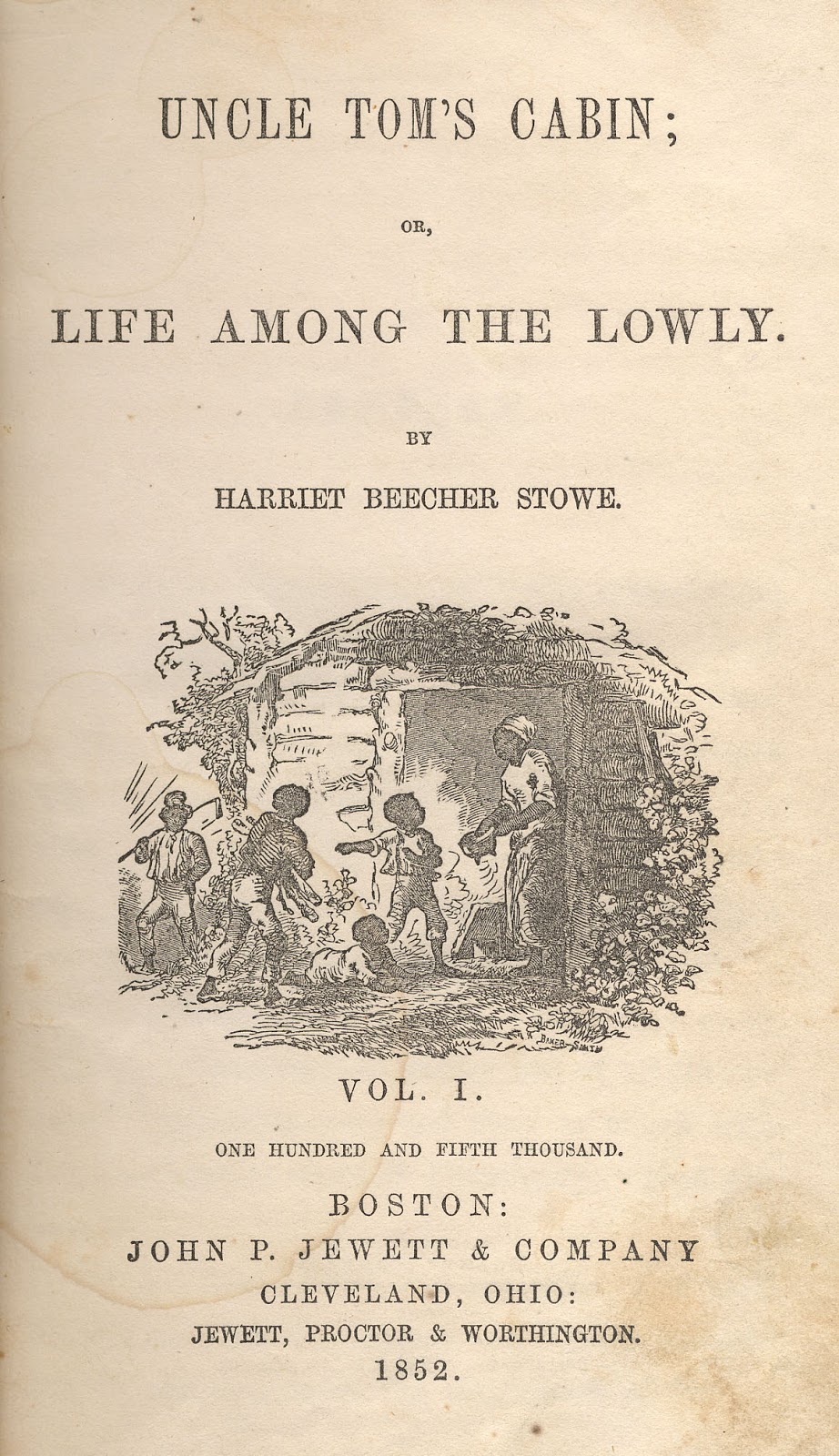
Second, the abolitionist movement was a huge force behind the events leading to the Civil War. The first outcry over slavery was from the Mennonites and Quakers in 1688. It can gained momentum in Vermont in 1777 and successfully lobbied the new United States government to ban the importation of new slaves in 1808. The movement then looked to end slavery completely in the United States. As the North slowly did away with slavery due to the influx of Irish and German immigrants, by the early 1830s, the movement grew more and more influential. With the passing of the Fugitive Slave Act of 1850, the law states that a runaway slave from one state was a fugitive in another regardless if it was a slave or free state, helped the movement. Soon the Underground Railroad begins to form. The railroad was a series of safe houses which fugitive slaves used to reach freedom. The movement was further fueled by the publication of Harriet Beecher Stowe’s Uncle Tom’s Cabin (newspaper series in 1851, book format in 1852. The book depicted the evils of slavery and offered a view many citizens in the country hadn’t thought before.


Third, the economics and political power of the slavery system was the most powerful cause to fuel the Southern states’ insistence on the continuation of slavery. The Southern states were largely agricultural and slavery helped keep the production going. The practice seemed to diminish and seemly on its way out when Eli Whitney invented the cotton gin (1794) and the need for slaves exploded as cotton got easier to harvest (American Civil War magazine September 2010). The Southern states became very wealthy and very powerful with the expansion of slavery. When the Republican Party formed in 1854, the party gained prominence as members were strongly opposed to the westward expansion of slavery. As well as California being admitted to the union as a free state in 1850, the political power had shifted to the North and the abolitionist movement. The final fuel to the fire was the 1860 election of Abraham Lincoln without a single Southern electoral vote. It was proof to the Southerners that their political influence was waning. Feeling excluded from the political system, the Southern states believed that secession was their only option. This decision would be the final act which would led to war.


Lastly, the fight over the expansion of slavery in new territories. The Missouri Compromise of 1820 restricted slavery in new U.S. territories. In 1819, Missouri requested admission to the union as a slave state which threatened to upset the balance between free and slave states. Congress passed the compromise allowing Missouri as a slave state and Maine as a free state. It also passed an amendment that drew an imaginary line across the former Louisiana Territory establishing a boundary between free and slave states. Slavery could not be permitted in states north of this line thus being allowed in states below this line. It remained law until it was negated by the Kansas-Nebraska Act of 1854, which contained the popular sovereignty clause which the residents of the territory would decide if they wanted to be a free or slave state, further divided the country. It would lead to the eruption of violence known as Bleeding Kansas, John Brown and his gang and their trial of massacres and murders. John Brown attacked pro-slavery settlers and later would lead an attack on the arsenal in Harpers Ferry, West Virginia on October 16, 1859. 


In conclusion, the events which led up to the beginning of the Civil War helps see why the causes are still debated 156 years later. James McPherson, a Pulitzer Prize winning author, believes the ultimate cause of the Civil War was due to “uncompromising differences between the free and slave states over the power of the national government to prohibit slavery” in new territories. In essence, the argument over states’ rights is at the root of the Civil War. According to an article in the American Civil War magazine (September 2010), the origins of the Civil War began 250 years earlier when the first ship of slaves arrived in Jamestown, Virginia in 1619. Essentially, both claims are true and yet doesn’t paint the whole picture. Slavery was interwoven into every aspect of every event leading to the Civil War. Therefore, whatever cause you may point to, one thing is certain, the Civil War was most likely inevitable. 

Thursday, August 4, 2016

Leaving Independence: a beautiful story of a journey on the Oregon Trail

Leaving Independence by Leanne W. Smith is a story of one woman’s bravery and determination to better herself in the aftermath of the Civil War. Abigail Baldwyn is faced with a tough choice. The carpetbaggers are after her house and she learns that her husband is still alive and serving the Army in the West. Wondering why her husband never came home after the war, she decides to leave her home and join her husband with their four children. She arrives in Independence, Missouri, the starting point of the Oregon Trail, and begins to make preparations for the long journey. There she meets Hoke Matthews, a quiet and mysterious man who joins the wagon train as a team leader. On the trail, she and the wagon train meet with disease, tragedy and danger. Then danger strikes Abigail and Hoke must track her movements to rescue her from someone who plans to do her harm. Will he reach her in time? Will she discover the truth about her husband’s absence? Will they make it to the end of their journey?


I thoroughly enjoyed Leaving Independence! It reminds me of another book with a similar theme; however, this book had its own drama, twists and turns. Even though certain events were obviously going to happen, I still gasped and cheered when they did. It was a great story for the brave men and women who risked the unknown to venture to a new home and life in the American West. I highly recommend Leaving Independence.

Leaving Independence

Is available at all major booksellers

Wednesday, June 15, 2016

Mercer Girls: an excellent story about a little known piece of history

Mercer Girls by Libbie Hawker is a fictionalized story about a little known events of our history. In 1864, Asa Mercer traveled to the East Coast, recruiting single women to come to the Washington Territory. The story focuses on three woman: Josephine Carey, Doreen “Dovey” Mason and Sophronia Brandt. All three woman have their secrets and reasons for joining Mr. Mercer on the trip to Washington.


The story opens in March 1864, the city of Lowell, Massachusetts has been hit hard by the Civil War. Josephine Carey is on a race against time to see Mr. Mercer. She is determined to join the group of women. Dovey Mason joins the group as a runaway from home. Her father is forcing her to marry in order to restore the family’s wealth. Josephine first meets Dovey, she knows there is something more than the young girl is saying but doesn’t pry. Instead, she takes her under her wing. Sophronia joins the group as a missionary to bring God to the lawless town of Seattle. The women set off to New York City where they board a ship which will sail to Panama. From Panama, they will sail again to San Francisco before continuing on to Seattle. Once they arrive in Seattle, the women settle into their new lives with new jobs and possibly new beaus. But the lives they left behind seem to follow them and threaten to undo the new lives they have built.


I loved Mercer Girls as it is a great story with drama and adventure. It is a piece of history that I knew nothing about and I loved to read about the pioneering women who left all they knew for an unknown life in a new territory. I also enjoyed the chapter on the author’s notes and remarks about the book. Ms. Hawker wrote that many descendants of the Mercer Girls still live in Seattle and protect their memories and legacy very closely. I feel that Ms. Hawker gave the Mercer girls a worthy story of their brave resolve to find new and better lives. If I were in their position, I don’t know if I would have the some bravery and courage to head into the unknown like they did. Then again, maybe I would. I highly recommend Mercer Girls.

Mercer Girls
is available in paperback for $14.95
free with KindleUnilimited

and on Audiobook for $14.99

Tuesday, May 10, 2016

Tucson Knights: another adventure in the Wild West

Justice P. Stone is back in Tucson Knights by Robert C. Mowry. A new mission, same enemy and the same high stakes. It has been two years after the events of Adobe Gold.


President Lincoln calls Stone to Washington DC with a new assignment. An assignment which would take him back to the Arizona and New Mexico territories with special appointments. At the same time, his son, Buck, is eagerly to muster out of the Confederate Army as he no longer believes in the fight they are fighting. He may be able to walk away from the Army but many will try to pull him back in. A plot by the Knights of the Golden Circle to rid the territory of the Union presence is at the center of the events. Will Stone be able to get to Tucson in time to stop the plot? Will Buck be able to rid himself of the Confederate Army?


I enjoyed Tucson Knights as much as Abode Gold. The events are exciting and fast paced. I eagerly turned the pages to finish the fight, to see who won each round and to discover if Stone will be able to complete his mission and foil the plot of the Knights. I highly recommend Tucson Knights as well as Adobe Gold for the readers who enjoy mysteries and suspense set in the Wild West territories.

Tucson Knights
is available on Amazon
in paperback for $13.95

free with Kindle Unlimited

Wednesday, March 18, 2015

Adobe Gold: a spy novel sent in 1861 American Southwest

Abode Gold by Robert C. Mowry is the first book in the Stone Justice series. The story is about Colonel Tyrone Rafter who was left for dead in Mexico on a secret mission for the U.S. Army during the Mexican-American War. He was captured, tortured and left for dead. When he lost his leg in a Mexican prison and when he finally escapes, he learns that his wife and his country has been told he was dead. His wife remarried and he now has no home to return to.


The story opens with Tyrone Rafter in Mexican cantina. He is known as the El Pata Fantasma (the Phantom Leg). It’s been fifteen years since he left on a rescue mission into Mexico when he learns that his wife has died. He decides to reclaim his son and his life. He journeys to Washington D.C. where he meets with his old friend, newly elected President, Abraham Lincoln. Lincoln convinces him to talk one last mission into the New Mexico Territory, undercover as a traveling preacher, Justin P. Stone. He must find a stash of gold before the Confederate troops do. Will someone recognize him? Will he find his son? Will he learn who betrayed him in Mexico? Will he be able to find the gold and restore his name?


Abode Gold is a great adventure story with twists and turns. With a great historical backdrop of the early days of the Civil War and the often forgotten battles fought in the Southwest, this story will take the reader on a journey through the dangerous game of spies. I enjoyed the journey of Tyrone as he becomes the preacher and navigates the sides of a divided country at war. I want to finish the series and see where Tyrone’s adventure takes him. I highly recommend this book to anyone who enjoys a great adventure story with the twists and turns of a great spy novel.

Adobe Gold is available on
Amazon for the Kindle for $3.99 
And in paperback for $13.95