Nathanael, sometimes called Bartholomew, is a disciple which little is known but a lot can be learned from. It is thought that his two names are derived from his full name: Nathanael Bar-Tolmai. Nathanael means “God has given” and Bar-Tolmai means son of Tolmai. While his occupation is unknown, Nathanael was a man of honesty, straightforwardness, insight and faith. Even though he initially rejected Jesus, he recognized him as the Son of God and the King of Israel. He was a man in “whom there is nothing false” by Jesus (John 1:47). From Nathanael’s example, we learn that Jesus respects honesty in people and even if they challenge him because of it. Nathanael becomes a key leader in the early church. Who was Nathanael? Why is skepticism normal and even healthy? Jesus saw an authentic believer in Nathan. How did he know?
Philip found Nathanael and told him about Jesus (John 1:45); however, Nathanael responded with skepticism, “Nazareth! Can anything good come from there?” (John 1:46). Nazareth was hated with the Roman garrison there and the town had a poor reputation in morals and religion among its residents. Nathanael’s hometown is Cana, about four miles from Nazareth and he would have been well aware of the town. Nathanael was well versed in the Law of Moses and the prophets. However, he was not a member of the academic elite. He undertook the study of the scriptures as a hobby, a personal passion and not a profession. However, despite his prejudice, Nathanael still came to meet Jesus. As he approached, Jesus knew him before they physically met. It is evidence that Jesus knows us all who we really are before we come to him. God knows the real you and still wants you to follow him. God knew us before he formed us in our mother’s wombs (Jeremiah 1:5) for a plan and a purpose (Jeremiah 29:11). While Judeans saw Galileans as lower, even the Galileans viewed Nazareth as rough, uncultured and uneducated. A modern comparison would be that many people outside of California see its residents as “loony leftists” or “the land of fruits and nuts.” Even though the description doesn’t describe everyone here. It is understandable why Nathanael was skeptical when Philip announced that Jesus of Nazareth was the one the Law, Moses and the prophets wrote about (John 1:45). Skepticism is defined as doubt as to the truth of something. Honest skepticism is a healthy and constructive attitude characterized by a willingness to question claims and being open to new evidence and reason. There are five characteristics to honest skepticism. First, openness to evidence. There must be a willingness to consider new evidence and arguments. Second, critical thinking. An ability to analyze information, to identify potential biases and evaluate the validity of claims before accepting or rejecting them. Third, self awareness. One must recognize their own susceptibility to bias and error in their personal judgment. Fourth, humility. There must be a willingness to be wrong and adjust views in light of new evidence. Lastly, respectful inquiry. Honest skepticism respectfully engages with others to seek understanding of new perspectives and reasonings. Despite Nathanael’s skepticism and prejudices, Jesus saw in him an authentic believer. There was nothing fake or insincere about him. Essentially, Nathanael was not a hypocrite. Jesus saw through the sinful, the imperfect and the ordinary to the eager heart who was willing to leave everything to follow Him. In Matthew 5:8, Jesus says “Blessed are the pure in heart, for they will see God.” The Greek word for pure is katharos meaning “clean, blameless, unstained from guilt” and the Greek word for heart is kardeeah meaning the physical heart as well as the spiritual center of thoughts, desires and sense of purpose. Being pure of heart means to be free from hypocrisy and ulterior motives and a focus on God. Seeing God refers to experiencing His presence. Being pure of heart does not mean believers are free from sin or struggles, it just means that they are driven by love and devotion to God. A pure heart is a willing heart for God. Answering God’s call with eagerness (Isaiah 6:8) and focusing our actions as if for God and not for man (Colossians 4:9). In conclusion, after the resurrection and the ascension, the last verse that speaks of Nathanael is Acts 2:1-4 on the Day of Pentecost. Church history suggests he traveled and ministered to parts of Persia and India, even as far as Armenia where he is claimed as a saint. Nathanael was a man of honesty and despite his prejudice, he was willing to meet Jesus and examine the claims and believed when the claims proved to be true. Honest skepticism is normal as we examine and weigh new evidence. God sees our heart and when we are eager and focused on Him, we can experience His presence in a deep and meaningful way. Nathanael may not have been as prominent as Peter or John; but his honesty and faith is still a lesson we can learn from and an example to strive to be.
Showing posts with label Jeremiah 29:11. Show all posts
Sunday, June 29, 2025
Saturday, April 30, 2022
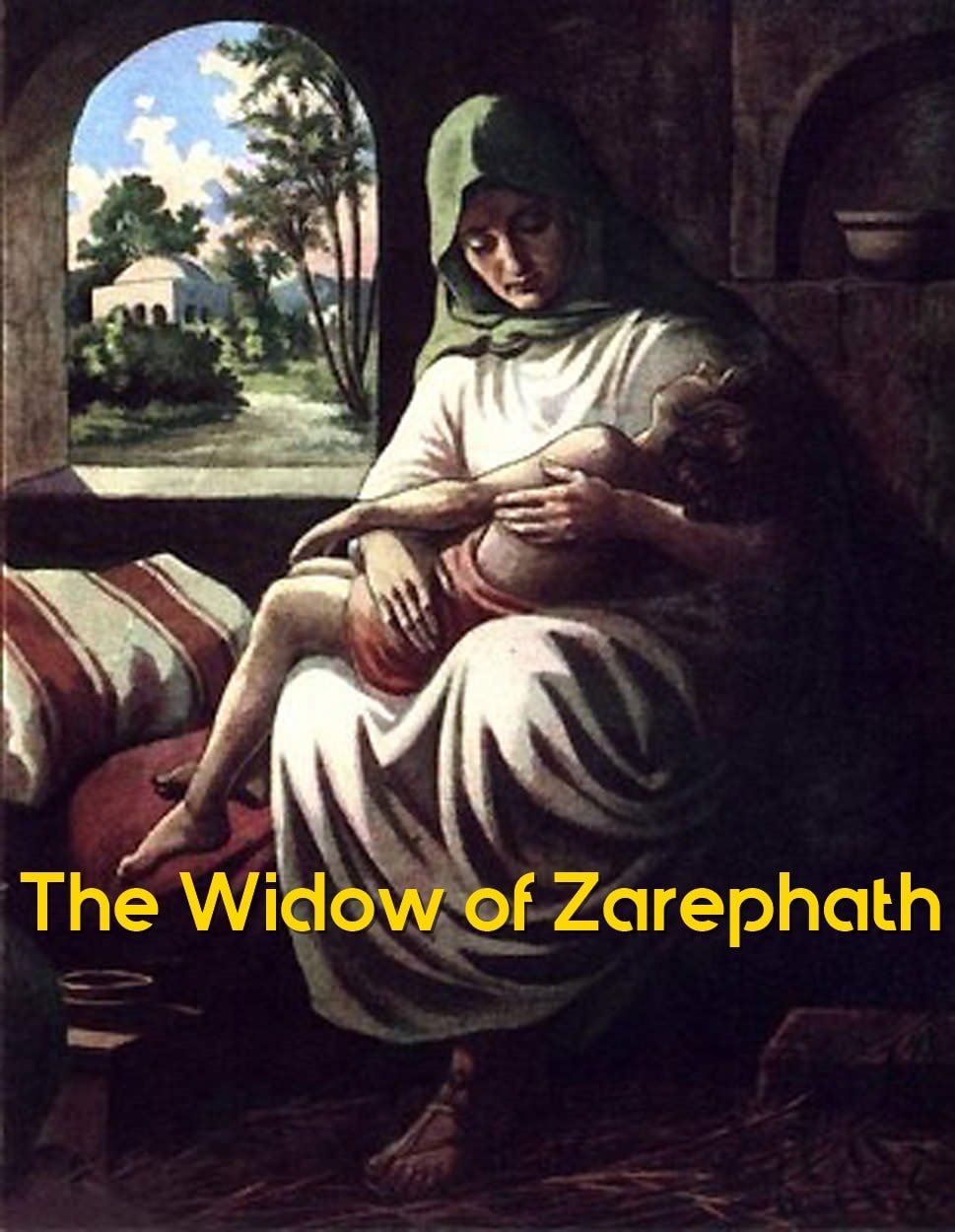
The Widow of Zarephath: a story of God's miracles and providence
The widow of Zarephath was a woman who knew great sorrow. She would suffer the loss of her husband, live through extreme poverty and famine. She was a foreigner facing starvation when she showed extraordinary hospitality to a stranger. As a Phoenician woman, she didn’t know that she would be entrusted to care for one of Israel’s great prophets. She didn't know that the God of Israel would send his prophet to her. Why would she? Why would she think that God would see her and know her plight or even care? It is a story of God’s miracles and providence. The widow of Zarephath would experience the repeated miracles of God’s provisions. What is her story? Why was being a widow important to her story? What are God’s promises to provide for us?
We are introduced to the widow in 1 Kings 17:8-24. She lived in Zarephath, a village close to the Mediterranean. She used to love the ocean but the massive ocean seemed to be mocking her down. Its watery abundance reminds her of all that she lacked. She lives a lonely life. There was no one to warm her at night. There was no one to work the fields and provide food for their table. Her husband had died as a result of the drought. She was left along with her young son. They were close to starvation. As she prepared their final meal with the last of the flour and oil she had, a strange man appeared at her door and asked for some food. She explains that they have no food, he tells her that the flour and oil will not end. She will have enough food. Skeptical, she makes the man food from the last of the flour and oil. Something amazing happens! Every time she used the flour and oil, it never ended just like the man said. It lasted day after day, month after month. Never failing until the rains came. In the ancient world, widows were often treated as second class citizens who were ignored and allowed to go hungry. A woman alone is dependent on her husband, sons or community for support. But God has a special love and care for widows. In Psalm 68:5, God is, “A father to the fatherless, a defender of widows” in his holy dwelling. He commands widows to be treated with compassion and to be provided for. When the Israelites were declared disobedient, the evidence was in their lack of concern for and even mistreatment of widows (Isaiah 1:23, Ezekiel 22:6-7, Malachi 3:5). However, anyone who provided for widows were noted as worthy. Job 29:13 says, “the man who was dying blessed me; I made the widow’s heart sing.” Even in the New Testament, widows were treated with special care. In 1 Timothy 5:3-16, Paul urged the church to care for older widows. Today, there are numerous programs and plans that help provide for a widow’s financial needs. However, we need to take care to be aware of a widow’s emotional and spiritual needs. While their financial needs may have been met, they will still need friendship and companionship and perhaps with household chores and errands. Sometimes it may seem that God doesn’t know our needs or that he even cares. But he does. God doesn’t ignore the needs of those who do not have the resources for those needs. Jeremiah 29:11 says, “For I know the plans I have for you, declares the Lord, plans for welfare and not for evil, to give you a future and a hope.” Ever gotten a perfectly timed check in the mail? Is it just the right amount to pay off a past due bill or provide food for the week. Have you ever wondered how you’re going to clothe your growing children, only to be given boxes and boxes of hand-me-downs? God provides for all our needs and he will continue to provide. Sometimes it is easy to forget all the ways he has provided for us. Sometimes, when times are extremely, it is our faith that waivers. Hebrews 11:6 says, “And without faith it is impossible to please him, for whoever would draw near to God must believe that he exists and that he rewards those who seek him.” Sometimes all we need is a little faith and God does the rest. The story of the widow of Zarephath is a story of God’s providence through miracles and faith. I feel the widow was unable to deny a hungry man, despite her and her son’s own hunger, that she decided to act on faith. Her act of faith opened the door for God’s miracles. In Matthew 17:20 Jesus says, “if you have faith as small as a mustard seed, you can say to this mountain, ‘Move from here to there,’ and it will move.” There are numerous stories in the Bible of people with the smallest faith that results in the biggest miracles. The widow’s story is also a reminder that we cannot forget those who have lost their husbands. Even in today’s financial safeguards, widows are often forgotten. If you know a widow in your family, neighborhood, or church, check in, chat for a bit. It may be just what they need to brighten their day.Monday, August 4, 2014
Why I believe everything happens for a reason
During that past seven months, I have been involved in a
grief support group online which focuses on parents who have lost child either
through pregnancy complications or childhood deaths. While the group support
have meant a great deal for me, there is one thing that bothers me. Many of the
members hate the statement, “everything happens for a reason.” They hate the
statement so much that they get angry when they hear someone say it. I fully
believe that everything does happens for a reason. I believe it for three
reasons: God’s will, consequences or results of a decision and the nature of
the world we live in.
In Ecclesiastes 3:1-15 tells us that there is a time for
everything. God has a plan for all people and that we all must experience the
cycles of life. The good and the bad. A time for life and death (verse 2) and a
time to mourn and a time to dance (verse 4). I'm sure when people hear verses
1-8, they hear The Byrds playing in their head. I know I do. Many people would
say then your babies were meant to die. Maybe they were because verse 11 says
“He has made everything beautiful in its time. He has also set eternity in the
hearts of men; yet they cannot fathom what God has done from beginning to end.”
We cannot see into the future or comprehend everything that God sees or
understand. I fully believe with all my heart that the losses of my babies has
strengthen my faith and trust in Jesus Christ, has brought my husband and me
together and made us stronger and helped us appreciate the blessings that God
has given us.
Judges 16 tells the story of Samson and Delilah. Samson,
whose strength was greater than any man before, falls madly in love with
Delilah and trusts her with his biggest secret. By telling her this secret, it
led to his capture and his eventual death. The story illustrates that all our
decisions have consequences for good or bad. God allowed Samson’s decision to
follow its natural course and he suffered greatly for it. God does this in our
lives today. Every decision will results in something. If we follow God’s plan
and will, He will bless us but if we go against His plan and will, we will
suffer the consequences of such a decision. We’re short on cash because we
didn’t budget. We are having a fight with our loved ones because we decided to tell
a secret or a lie. We worked hard at work and received a promotion. Bad
decisions will yield bad results and good decisions will yield good results.
Sometimes our situations are simply the results of past decisions.
Sometimes the events in our lives happen because of the
fallen world we live in. Homes and businesses will be lost in a horrific storm.
Certain weather patterns will form storms. There is no way to stop them or ease
the damage they will cause. Earthquakes can occur at any moment and there is no
way to predict them. We live in a fallen world and there is good and evil all
around us. We can hope for the best but prepare for the worst. In life, there
are no guarantees. There are no guarantees that everyone will live to see a
ripe old age. God tells us in Job 14:5-7 that before we were even born, our
days are numbered but God also tells us in Jeremiah 1:5 that before we were
formed in the womb, He knew us and He has plans for us (Jeremiah 29:11). I
believe that God has a plan when he took my babies back to Him. I may not fully
understand why but I fully trust Him that He will reveal it to me in time.
In conclusion, I believe that everything happens for a
reason. There is a season for everything. Decisions will yield good or bad
results. This is a fallen world. My babies’ lives were cut short by our
standards. But by God’s they lived as they were determined to. I realize now
that if my first baby was born, my beautiful Abby wouldn’t be here now. I also
realize that if Ziva had lived, I probably would not have started my blog and actively
writing again. I don’t know the reasons why but I do know that God has a plan
and I will trust Him with every breath. It may hurt to think that there’s a
reason for everything but to me, something happening without a reason is even
worst.
Subscribe to:
Posts (Atom)