Sunday, November 26, 2017

Song of a Captive Bird: based on the life of Iranian poet Forugh Farrokhad

Song of a Captive Bird by Jasmin Dapzink is a story inspired by the life and poetry of Forugh Farrokhzad. Born in 1935 to her father, a man she only knew as the Colonel and his wife, Turan, Forugh was a child who found pleasure in breaking the rules and even greater pleasure in the storytelling afterward. In the summer of 1950, she met her cousin and future husband, Parviz Shapour. He was a satirist who encouraged her to write poetry. They were married in 1951 when she was 16 and her only son would be born two years later. However, she felt trapped by the bonds of marriage and motherhood, she began to travel to Tehran seeking to publish her poetry. Once her poems were published and gained attention, she finds her life at a crossroad. Parviz grants her a divorce and she loses custody of her son, she tries to rebuild her life and gain her voice as a feminist and a poet at a time when Iran was in turmoil.


Song of a Captive Bird is an interesting story of a woman ahead of her time. I wasn’t familiar with her or her poetry but as a lover of poetry I was intrigued. Her life was filled with horrors and heartache. First at the mercy of her father, then her husband (who didn’t treat who horribly but expected her to conform), and then at society who wasn’t prepared for her voice. Ms. Dapzink describes Forugh’s life with such details that I cringed and cried at her pain and at her frustration. Sadly, Forugh was killed in a car accident on February 14, 1967. Her poems would be banned and censored by the government but her poems still found their way into the hands of the people and have been read for decades after her death. I enjoyed how Ms. Dapzink used Forugh’s poems throughout the story so the reader can understand the situation which inspired her work. I highly recommend Song of a Captive Bird.

Song of a Captive Bird
will be available on February 13, 2018
In hardcover and eBook


Why should I stop, why? 
the birds have gone in search 
of the blue direction. 
the horizon is vertical, vertical 
and movement fountain-like; 
and at the limits of vision 
shining planets spin. 
the earth in elevation reaches repetition, 
and air wells 
changes into tunnels of connection; 
and day is a vastness, 
which does not fit into narrow mind 
of newspaper worms.”

-verse taken from “It is Only Sound that Remains”

Friday, November 24, 2017

Foods native to the Americas we might have been aware of

As I continue with my series for Native American Heritage Month, I thought about what foods we enjoy today that was introduced by the Native Americans. Just as spices were introduced to Europe through exploration of the East, a variety of foods were introduced to the world known as the Colombian Exchange. The world today owes the Native Americas of North and South America for many of the food it enjoys. Approximately, 60% of the world’s food originated in the New World. From fruits to vegetables to meats, the Native Americans enjoyed a vast and varied diet. Traditionally thought to be mainly hunter-gatherer societies, Native American tribes were also farmers who cultivated a wide variety of foods.


1. Tomatoes: First cultivated in South America in the region of Chile to Ecuador, birds are believed to have carried the seeds spreading them to present day Mexico as early as 800 BCE. The Aztecs embraced the red tomato as well as the green husked tomatoes known as tomatillo to become a staple in their diets. Europeans first feared the tomatoes. They thought they were poisonous as tomatoes are a member of the nightshade family. There is some debate about how the tomato reached Europe. One story states that Hernan Cortes brought the plant in 1521 while another story states that Christopher Columbus might have brought it back in 1493. The first mention of the tomato in European writings was in 1544. However, it wasn’t incorporated into Italian cuisine until the late 17th or early 18th century.

2. Potatoes: Usually associated with the Irish and the Great Famine of 1845, the potato was first cultivated by pre-Inca peoples of Peru between 3700-3000 BCE. Over 3,000 varieties of potatoes can be found in the Andes of South America. First introduced in Europe in the 16th century by the Spanish, the potato has been estimated to be responsible for a quarter of the growth in the Old World population and urbanization between 1700 and 1900 as the potato yields abundantly with little effort. European farmers were skeptical of the potato but soon it became a staple in European diets. North American, however, didn’t see the potato until the Irish immigrants brought them in the 1700s although a wild variety of potato can be found as far north as Mexico and Texas. 


3. Maize (Corn): I’m sure everyone is familiar with corn as originating in the New World. However, many do not realize how important maize is to the Native peoples. First cultivated in Mexico and Central America, maize plays a vital role in many Native cultures. Corn is one of the Three Sisters, along with squash and beans. Referred to as a relative, corn is essential in many creation stories. For example, Little Giver is a corn spirit in southeastern tribal stories. He presented the people with the gift of corn. Selu of Cherokee legend is a goddess associated with fertility. The Mayans believed that humans were fashioned from corn and based their calendar on the planting season. The Zuni people of southwestern US has a story of the 8 corn maidens whose dance helped the corn grow.

4. Berries: Cranberries were used as food, wound medicine and dye by the Northeastern natives. Due to its bitterness, cranberries were used as a part of a tonic which was given for various ailments. The Algonquian peoples called the berry, sassamanash, and introduced it to starving settlers in Massachusetts. In the 1820s, cranberries were shipped to Europe and became popular in Nordic countries as well as Russia. Currants were used by many native tribes for medicinal purposes. Blackfoot natives used currant roots for treatment for kidney disease and menstrual issues. The Cree natives used currants as a fertility enhancer. The strawberry we know today are a crossbreed of two New World strawberries: Fragaria virginiana from eastern North America and Fragaria chiloensis of South America. The two species were first bred in Brittany, France in 1750s.


5. Squash: The word comes from a native word askutasquash, meaning “a green thing eaten raw” from the Narragansett, an Algonquian tribe of the Rhode Island area. Although most natives would eat various squash raw, they were also dried and roasted. The most common native squash is the pumpkin. Pumpkins are thought to have originated in Mexico area between 7,000 to 5,500 BCE. Pumpkin seeds, also called “pepitas” have been discovered by archaeologists in caves of Mexico dating back to 7,000 BCE. The natives used pumpkins not only as a food source but medicine as well. In particular, the seeds were dried and roasted and used for intestinal issues and kidney aliments. Another native squash is the acorn squash. The seeds were the most consumed part of the acorn squash as they were dried and stored for a food for lean times as well as for journeys.

6. Meats: While Native Americans consumed little to no meat in their everyday diets, they consumed various wild and domesticated animals. Tribes near water sources consumed various fish, lobster and shellfish. For example, the costal tribes of California consumed abalone. In California’s Northern Channel Island, the natives there gathered and consumed abalone for nearly 12,000 years. Turkey is another meat source that was popular as a feast food especially for the Mayans and the Aztecs who revered the wild turkey known as huexolotlin as a manifestation of the trickster god, Tezcatlipoca. Turkeys were domesticated and spread as a food source from Central America north through the southwest and the eastern America. The Muscovy duck was often fattened and eaten as a feast food in Mexico, Central and South America. The duck is thought to originate on the Miskito Coasts of Nicaragua and Honduras.


In conclusion, this list is just a small portion for the wide variety of food which originated with the New World. I found it interesting that many of us cannot think of the potato without thinking of the Irish or even Italian food with the tomato based pasta sauces. These foods are so engrained in those ethnic cuisine, we don’t realize that they were always there. It wasn’t until the exploration of the New World that the dishes we know today came about. Many of the foods I listed are among my favorite foods. How many of your favorites are on the list? 

Wednesday, November 22, 2017

As Bright As Heaven: one's family struggles through a pandemic on the homefront

As Bright as Heaven is the next novel by, one of my favorite authors, Susan Meissner. The story opens in January 1918 as Pauline Bright visits the grave of her infant son and contemplates a move which will uproot her family and into an unknown future. Her husband, Thomas, has been offered an inheritance in Philadelphia. His uncle, Fred, runs a mortuary in the city and asks Thomas to be his heir and take over the business. It’s an opportunity that seems hard to turn down. Pauline and Thomas along with their three daughters, Evelyn, 15, Maggie, 12 and Willa, 6, leave the only life they’ve known and move to Philadelphia. As they settle into their new home and new city, the Great War rages in Europe and many American men are preparing to join the fight. And soon rumors of an illness spreading across Europe reaches the shores of America. Soon the city and the Bright family are faced with the growing pandemic of the Spanish flu. Will the family be touched by this horrible illness? How will they endure the challenges they face?


I was very eager for this new book. I’ve been a fan of Susan Meissner since I read A Fall of Marigolds a couple of years ago. So when I won an advanced copy from Bookish First, I was on pins and needles as I waited for it to arrive. Told from the perspectives of Pauline, Evelyn, Maggie and Willa, the story unfolds in a very dramatic roller coaster of tragedy and heartache. I’ve heard of the Spanish flu pandemic before and read about it in other novels; however, I have never read a story quite like this one. Ms. Meissner has a gift to give her characters such a voice that their words stay with you. So different from her recent novels where the present is connected with events of the past; however, the story is still an emotional ride with the Great War and the pandemic as the catalyst to the events the Bright family must face and endure. I highly recommend As Bright as Heaven.

As Bright as Heaven
will be available in hardcover and eBook

on February 6, 2018

Monday, November 20, 2017

The History of Lacrosse you may not have realized

Lacrosse is a game many of us may not be familiar with. Many of us don’t know that its origins either. The game of lacrosse has its origins with the Native Americans of Canadian and eastern United States. It is one of the oldest sports in North America. A version of the game originated in Canada as early as 1100 AD. It was a game played with a ball and a stick and would begin as the ball was thrown into the air and the two teams rushing to catch it. The game had important significance to the Natives of North America. The game we now know today was extensively modified by Europeans in the 19th century.


Different tribes had various names for the game. The Onondaga called it dehuntshigwa’es or “men hit a rounded object.” The eastern Cherokee called it da-nah-wah’uwsdi or “little war.” The Mohawk called it begadwe or “little brother of war.” The game generally tended to be a huge mob of players, ranging from 100 to 1,000 men, and were major events which could last several days. The two teams were generally made up of men from opposing villages in an open field between the two villages. The rules of the game would be decided the day before. Generally there was no out-of-bounds and the goals would range from 500 yards to 6 miles and would be chosen by natural landmarks such as large rocks or trees. The teams would play from sunup to sundown. On the stick there would be placed a mark about chest high. Hits below the mark were not awarded any points. Hits above the mark were awarded one point, hits to the top half of the stick were worth two points and hits to the very top of the stick were worth three points. Also the ball could not be touched with the players’ hands. Scores were loosely kept by the audience or the players and medicine men would act as coaches.


The game would serve different purposes in the lives of the natives. First, it was used to settle any intertribal disputes. The winning team often brought glory and honor to their tribe. Second, it was used to toughen young warriors for combat. As the game could be played for days, it required conditioning and stamina that would be essential for victory in actual battle. Third, it was used simply for recreation. Many native tribes celebrate their heritage with playing the game. The Haudenosaunee Confederacy (or Iroquois Nation) is one example of the game as a time honored tradition. Lastly, the game served religious purposes. The tribes would play together for the “pleasure of the Creator” and to pray together. The game is known as The Creator’s Game. There were rituals before and after the game which were important. The players would decorate their bodies with paint and charcoal as well as decorate their sticks. There were strict taboos about the foods the players could consume before the game. Wagers would be made before the game. After the game, a ceremonial dance would be performed followed by a large feast.


The game was first observed by French Jesuit missionaries in the 1630s. They condemned the game, deeming it too violent and for the use of betting. Jean de Brebeuf wrote about the game and gave it the name lacrosse. He described the Huron playing the game in 1636 using the French term for field hockey, le jeu de la crosse. Despite the Jesuit opposition, the colonists were fascinated by the game. By 1740, many French colonists would be playing it. The interest in the game grew in Canada during the 1800s. In 1856, a Canadian dentist, William George Beers, founded the Montreal Lacrosse Club and is known as the father of modern lacrosse. He would further alter the game by codifying it in 1867. He shorten the length of the game to first team to reach 5 goal or lead by 3. He reduced the number of team members to twelve. He regulated the field to 200 yards. And he redesigned the stick and ball. The Mohawk Lacrosse Club in Troy, New York became the first organized club in the US. By the 20th century, many high schools, colleges and universities would adopt the game as a league sport. It also became a sport for the 1904 and 1908 Summer Olympics but would be later dropped as an official sport. Today, an indoor version called box lacrosse is played by a team of five.


In conclusion, lacrosse is another example of the Native Americans influence on our lives today. A game that was played for the Creator, it has many purposes in the lives of the Native Americans’ lives and community. It served as training, recreational and religious purposes. For many Native tribes today, it is still played for the Creator and as a celebration of their heritage. Today, it is an organized sport in various parts of the United States and Canada. Lacrosse may have a French name but it is a Native sport at its core. 

Saturday, November 18, 2017

Hagar: a study into a minor Biblical figure with a big life lesson for us all

Hagar Rediscovering the God who sees me by Shadia Hrichi is a 7 week Bible study about Hagar and her role in the Bible and God’s influence in her life. Each week is divided into 5 days of personal study with each day having one or more questions to ponder or group discussion. The author states in her introduction that Hagar is a great example of someone who discovered God during a difficult time in her life. A minor character with a powerful redemptive story. What lessons can be gleaned from a woman who suffered at the hands of others? What did God do for Hagar that He can still do for us?


This study is very interesting. Unfortunately, I had no time to fully do the study before posting my review; however, after reading though the study, I am eager to do the study in its entirety. I found the format cut off in the eBook version, if you can get a physical copy and want a study, I highly recommend Hagar Rediscovering the God who sees me.

Hagar Rediscovering the God who sees me

Is available in paperback and eBook. 

Thursday, November 16, 2017

Contemporary Native American Literature

Native American literature is traditionally oral stories handed down through the generations. Contemporary Native American literature saw a resurgence in the late 1960s during a time some have called the Native American Renaissance, a term considered by some academics to be controversial, and gave rise to a new generation of Native American writers. According to Anna Combs, “the purpose of Contemporary Native American Literature is to” fuse the literate and oral cultures and to construct an ethnic identity of Native Americans in the late twentieth century.” I will discuss three books which I see as examples of this purpose.


The first book I would like to discuss is N. Scott Momaday’s House Made of Dawn. It was published in 1968 and was created with the resurgence in modern Native American literature. The title is a reference to the connectedness between the spiritual and physical worlds as well as the people and the land. The story follows Abel as he returns to the reservation in New Mexico after fighting in WWII. His grandfather, Francisco, tries to instill in him a sense of native traditions and values. However, the war has left Abel broken and shattered. Abel begins to wander, eventually ended up in Los Angeles, California where life is difficult for him as many criticize him for not assimilating to the modern world. When he returns, once again, to the reservation to care for his dying grandfather, he hears the stories of his people. His grandfather stresses the importance of staying connected to the traditions. Abel participates in a traditional ritual which helps him return to the land, his people and his place in the world. I also read this book for a Native American literature class and again it stayed with me because the story is intertwined with poetry and I love poetry. The imagery and words are powerful as it highlights that many of our struggles are spiritual as well as physical. It is not a book to rush through. It needs to be read slowly, absorbing and contemplating the images and meanings. I still have my copy from college along with my notes in the margins. I’ve read many criticisms about this book and I find that many who disliked it do not truly understand the poetry as Momaday is a self-described poet and not a novelist. Regardless, I found House Made of Dawn very powerful.


The second book I would like to discuss is Leslie Marmon Silko’s Ceremony. I read this book for a Native American literature class in college over ten years ago. It is a book that has stayed with me. The imagery, the message, the process of recovery the main character goes through are powerful. The story follows Tayo, a half-white, half Laguna Pueblo man, who has returned from WWII. The white doctors say he’s suffering from battle fatigue (we’d now call it PTSD). He is struggling with the death of his cousin, Rocky, during the Bataan Death March of 1942 and the death of his uncle, Josiah, back home. He believes he let his uncle down as he was unable to keep his promises. After spending several years in a mental health facility, he is sent home to his aunt and grandmother. The story connects with the three main Pueblo spiritual entities who created the world. The fight in the spiritual world connects with Tayo and his own spiritual fight to rid himself of his guilt and pain. Tayo is key to the healing of the land as well as his own healing. With multiple timelines weaving into one and mixtures of spiritual, past and present, Ceremony is a story of how it’s all connected and how moving forward often involves confronting the past and making what peace you can with it.


A final book I would like to discuss is Mary Crow Dog’s memoir Lakota Woman. She is a Sicangu Lakota. Born September 26, 1954 and raised on the Rosebud Indian Reservation in South Dakota. In her memoir, she describes her childhood and her young adulthood during the American Indian Movement of the 1970s. The book details her participation in the 1972 Trail of Broken Treaties, a cross-country protest to bring national attention to the issues effecting the Native American people such as living standards and inadequate housing. She also describes her participation in the 1973 Indian Occupation at Wounded Knee. Her description of the occupation is the part which has stayed with me. It began on February 27, 1973 when an estimated 200 Oglala Lakota and the followers of the American Indian Movement seized and occupied the town of Wounded Knee, South Dakota on the Pine Ridge Indian Reservation. The town was chosen for its symbolic value as it was the site of the 1890 massacre where 300 men, women and children were killed. Her memoir was published in 1990 and she remained active in the Native American church until her death on February 14, 2013 at the age of 58.


In conclusion, there are many more examples of great Native American literature which help portray the Native American life, culture and traditions. There is power of these stories is in the imagery and in the words the author uses to tell the story of these characters. As an avid bookworm, I find profound life lessons and truths in stories outside my culture and the world as I experience it. I highly recommend reading these books I have discussed as well as other Native American authors. You will see and, hopefully, understand the world in a different way.

References

Combs, Anna Contemporary Native American Literature January 15, 2014. prezi.com/1eixsbcn0rqi/contemporary-native-american-literature/ Retrieved November 16, 2017.

Tuesday, November 14, 2017

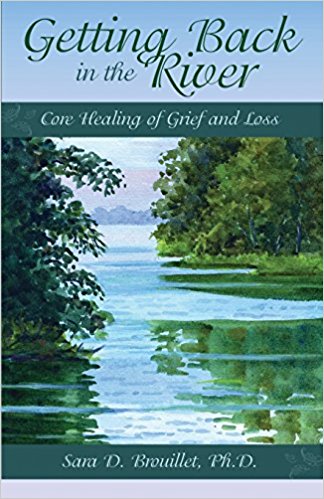
Getting Back in the River: a great book through the grieving process

Getting Back in the River by Sara Dumaine Brouillet, Ph.D is a grief recovery book. Using Biblical principles and the psychological progress of grief, Dr. Dumaine Brouillet guides the reader on the path recovery following a loss. It doesn’t what type of loss, a sudden death or a death after a long illness, the grief process of the individual left behind can be devastating. Her main tool is what she calls GBU letters. Good, Bad and Uglies letters are two letters written by the individual. One from the individual to the loved one who has passed. The idea is to bring out the hidden thoughts and feelings and make them conscious. This letter is then disposed of in a manner chosen by the writer after 72 hours of writing it. The second letter is written by the individual from the perspective of the loved one. Each letter will discuss the good about the loss, maybe the loved one suffered from a long illness and his or her death was a relief. The bad about the loss, maybe the individual wasn’t able to say goodbye in time. And the uglies about the loss, anything the individual hated, feared and other worse thoughts and feelings.


Getting Back in the River is a book rich with information with in-depth information about the grieving process and God’s Word. It was a bit more complicated read than I expected but the author is sincere in her guidance through the grieving process. Writing from her experience as a grief counselor, she offers personal experiences with clients. As the grieving process is a long and complicated journey for some, I recommend this book. As we will all suffer the loss of loved ones in our lives, we can benefit from the book’s insights and techniques.

Getting Back in the River

Is available in paperback and eBook