Thursday, May 31, 2018

The book of Romans: the power of grace


Romans is an illustration of how people have turned from God and God’s response and his offer of salvation through faith and grace. Pastor and author Max Lucado has a great book on the book of Romans. In the Grip of Grace (1996) begins with the Parable of the River which helps describes how people have turned from God. Briefly, the parable is about five brothers who disobey their father by getting too close to a powerful river. They are caught in the currents and swept away, fair from home. They began their long journey home and one by one, a brother stops the journey and turning away from the hope of seeing their father and home again. Leaving two, the oldest and youngest brothers, to continue the journey. I will use this book and the parable as I discuss different aspects of Romans.


The first brother is an illustration of an individual who turns from God and seeks his own pleasure in life. Hedonists are people who believe that the most important thing in life is pleasure. Their goal is to satisfy themselves, their passions with a disregard to God. They believe that no one is guilty of sin and what each person does is their own business. Paul describes this person as having no excuse for the things he does. In Romans 1:20, Paul says that men have no excuse “since the creation of the world God’s invisible qualities- his eternal power and divine nature- have been clearly seen, being understood from what being made.” Therefore, nature itself is a testimony, evidence to the existence of God and his role as the Creator. But because they choose to ignore God and claim he doesn’t exist, Paul tells us that God gave them over to sinful desires (Romans 1:24). Hedonists believe that since they haven’t seen God, therefore there is no life beyond what we life, there’s no ultimate truth beyond this world and there’s no purpose in life beyond one’s own pleasure. He has no concern for the eternal and refuses to acknowledge a Creator (Lucado, 26). Hedonism has made its way into Christianity through the prosperity gospel. Prosperity Gospel is a belief among some Christians that financial blessings and physical well-being are always the will of God for them and that faith, positive speech and donations to religious causes will increase one’s material wealth. However, many Christians criticize this idea as contrary to Scripture as God never promised a wealthy life here on earth.


The second brother is an illustration of an individual who becomes the fault finding judgmentalist. This person compares himself to others as “Well, I’m not as bad as they are!” He is the finger pointer, the “record keeper” of others’ wrongs for God. This person is often bitter and proclaims himself the watchdog for God. Paul tells this “watchdog” that he has no authority to judge (Romans 2:1) and cannot escape God’s judgment based on others’ wrongdoings. Romans 2:3 says “So when you, a mere man, pass judgment on them and yet do the same things, do you think you will escape God’s judgment?” The judgmentalist doesn’t realize that the wrath he is storing up against others will be used against himself at his own judgment (Romans 2:5). Paul tells us that God doesn’t show favoritism. Those who do evil will face trouble and distress and those who do good will receive glory, honor and peace (Romans 2:9-11). We do not need to keep tally of the wrongdoings of others, God already sees and already knows. Focus on your own wrongdoings as you alone will stand before God and your list of others’ transgressions will not help your defense. It is one thing to have an opinion about one’s actions but its entirely another thing to pass a verdict. Romans 2:1-2 is a prohibition of standing in judgement of other people and failing to condemn ourselves (Stott, 82). There are two reasons we are not in a position to judge: we aren’t good enough and we don’t know enough. 
Therefore, leave the judgment to God and focus on your own wrongdoings and rightness with God.


The third brother to leave the journey is an illustration of a legalist who believe that works will save him. This individual will write a list of accomplishments that he hopes will settle his debt with God. He acknowledges that he is bad, but he will make it up to God by doing `good works on earth. Paul tells us in Romans 4:5 that man doesn’t have to work to be saved, he only needs to trust in God who justifies him through his faith and credits him with righteousness. The legalists are the ones who usually become stuck up and think they are the only ones who will make it because he has done many works and looks down on others who haven’t. These people are the ones who criticizes other Christians who may not go to church every Sunday while they faithfully sit in the same pew every week. They go to every weekly Bible study and volunteer for every activity the church may organize. The problem is the motivation behind it. They are doing so in order to win brownie points with God rather than the heart behind the act to show God’s love to others. They may give their ten percent tithe every month and not feel the pinch and yet they will scuff at the individual who puts in a few dollars not realizing that it’s the last dollars that person has until payday. This reminds me of the story of the poor widow who gave all she had to the temple while others gave large amounts. Jesus proclaims that the woman had put in more than the wealthy did because she gave out of her poverty and others gave out of their wealth (Mark 12:41-44). The difference? The value of the gift isn’t in the amount but the spirit in which it was given. Therefore, when you give of your time or money, make sure you are doing so in the right spirit.


This leads us to the Grace-driven Christian. The brother who stayed on the journey, leaning on the strength of the older brother. This person actively seeks God, who acknowledges that he is bad but knows he is forgiven though his faith in Jesus Christ. You may ask what is grace? Simply, grace is unearned and undeserved favor from God. We receive grace through our faith (complete trust) in Jesus Christ. Through grace and faith, we can stand before God as not guilty as Jesus took our guilt upon himself on the cross. Romans 10:10 says “For it is with your heart that you believe and are justified, and it is with your mouth that you confess and are saved.” Faith comes from our hearts and we are saved through grace as we confess our sins. We are made right with God through faith alone, not through obeying the law (Romans 3:28), not by the works we do or passing judgment on others. Grace gives us peace with God (Romans 5:1). Grace gives us a place with God and a share in his glory (Romans 5:2). We are saved dispute our struggles. Even after becoming a Christian, an individual still struggles with sin. Sin just doesn’t disappear from our world and our lives. However, God still claims us as His child and he still guides us through his word. “The same One who saved us first is there to save us still’ (Lucado, 148). This statement reminds me of the Avalon song Always Have, Always Will. In the song, the narrator reflects on his sinful nature as he struggles to follow Christ and follow his own selfish desires. “I always have, I always will. You saved me once you save me still.” The fact is we do not need to be perfect for God, as long as we have faith in Jesus and look to his Word for guidance, his grace and forgiveness will always be given to us.
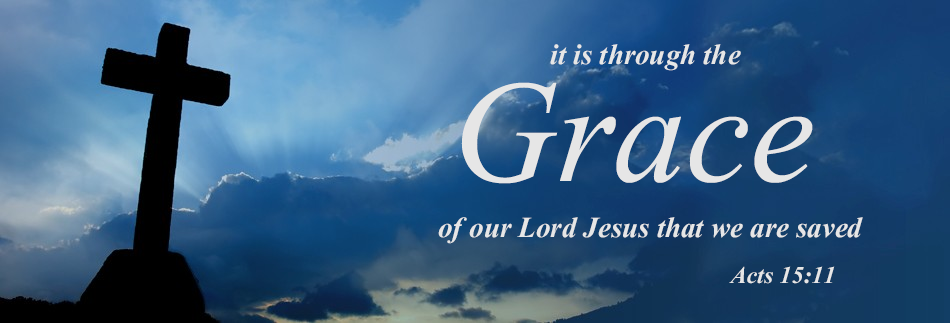

In conclusion, as we go through life, we can sometimes find ourselves acting like the three brothers who left the journey. We become the hedonist who focuses on our own desires. We become the judgmentalist who criticizes others and ignores our own wrongs. We become the legalist who looks at our list of accomplishments and forget the heart and spirit of the service we can called to do. But we refocus on God and the gift he has given us in his son, we realize that we all have fallen short. We are not called to be perfect. We are simply called to love him, to trust in him and he will help us with our human struggles. Every other approach to God is a bartering system: If I do this…(works). If I feel this...(emotions). If I know this…(knowledge). Christianity has no negotiation. Every person is made right with God through faith in Jesus Christ (Romans 3:22-24). That’s it.


References
Lucado, Max (1996): In the Grip of Grace. Dallas, TX: Word Publishing
Stott, John (1994): Romans: God’s Good News for the World. Downers Grove, IL: InterVarsity Press

Sunday, May 13, 2018

White Houses: the story of two women's deep friendship


White Houses by Amy Bloom is a fictionalized look into the friendship, and possible love affair, between Lorena Alice “Hick” Hickcock and First Lady Eleanor Roosevelt. The story opens in April 1945, soon after President Roosevelt has passed away and Hick is waiting for the arrival of Eleanor, whom she hasn’t seen in years. The story then takes us back to when the two women first met. Hick was a reporter and Eleanor was on the getting ready to set on the road for the White House as Franklin makes his bid for the presidency. Told in a series of memories from her childhood through the Great Depression and her life with the Roosevelts, the book takes a deeper look into these historical icons.


White Houses takes the reader into the characters and shows them as more than the media and history has recorded them. Real people with real issues, concerns and struggles as the United States headed to the depths of the Great Depression and war. I usually love historical fiction and don’t usually mind when a book features real people, but I found this book dragged a bit. If the two women were indeed lovers, the author didn’t display much emotion between them. It felt flat and so matter of fact. I still enjoyed the story and recommend White Houses to readers who like fictionalized stories of historical figures.

White Houses
is available in hardcover and ebook

Thursday, May 3, 2018

A general overview of the different religious groups in the gospels


As I read through the gospels over the last few months, I decided that I would go back on do more research on the groups which are discussed during Jesus’s ministry. The Pharisees, teachers of the law and the Sadducees are the three main groups who opposed Jesus and sought to end his influence over the people of Israel. These groups would make up the Sanhedrin, the Jewish council, composed of 70 members with the high priest serving as a leader. It is this council in which Jesus would have his trials before being handed over to Roman officials. The Sanhedrin also judge the apostles and members of the early church as they spread the message of Jesus.


First, the Pharisees are often the most widely known and most often mentioned in the gospels. They were a strict group of religious Jews who advocated minute obedience to Jewish law and traditions. The origin of the group is shrouded in some obscurity, but it is believed to have been organized out of the Maccabean Revolt (165 BCE). The Pharisees had three distinct characteristics. First, they had deep respect for the Law. Second, they were more a fraternity than a sect. To be a member, one must have a strict adherence to the Law, oral or written. Third, the Pharisees despised those they did not consider to be equals and were arrogant as they believe to be the only interpreter of God and his Word. The Pharisees saw the Jewish faith as a religion of works rather than heart as they believed God’s grace came through the Law. The Pharisees believed in predestination, the teaching of special divine providence. They stressed so much on the immortality of the soul that they often clashed with the Sadducees over this belief. They believed the reward for good works and wicked souls were under the earth. Only the souls of the virtuous would rise again. They also believed heavily in the existence of angels and spirits. They accepted the Old Testament scriptures and fostered the messianic hope which they gave a material and nationalistic twist. The picture painted in the New Testament and by teachers of the Bible, is almost entirely negative; however, not everything about the Pharisees was bad. Not all of them were self-righteous and hypocritical. Some tried to promote true piety. Some joined the Christian movement in the beginning. Some of the great men in the New Testament were Pharisees. Nicodemus (John 3:1-21) who met with Jesus to discuss his miraculous signs. He would later boldly defend Jesus as a member of the Sanhedrin (John 7:50-51).


Second, teachers of the law were religious scholars and professional interpreters of the law who especially emphasized the traditions. They are often seen together with the Pharisees in the gospels. They were an important element of the Sanhedrin as they often served as judges. In the application of the Law, the oral teachings of these men were a greater authority than the written law itself. They were described as the most watchful and determined opponents of Jesus as they disagreed with association with tax collectors and other sinners (Mark 2:16, Luke 15:2). They agreed with Jesus on respect for the law and commitment to the obedience of the law. However, they disagreed with Jesus in respect as they denied his authority to interpret the law. They also rejected Jesus as the Messiah because he did not obey all their traditions. It is mentioned throughout the gospels on multiple occasions, they believed that Jesus forgiving sins was blasphemous (i.e. Matthew 9:3, Mark 2:16). But not all the teachers of the law were confrontational. In Matthew 8:19-20, a teacher of the law told Jesus he would follow him wherever he will go where Jesus teaches him the cost to follow him. Some teachers of the law even agreed with Jesus when he says that God is the God of the living when he was questioned about the resurrection (Luke 20:39).  


Lastly, the Sadducees were a wealthy, upper class Jewish priestly party, while many of the Sadducees were priests, not all priests were Sadducees. They often profited from business in the temple. The origin of this group is uncertain, but it is thought to be from the period of Jewish history between the restoration of the Jews to their own land (536 BCE) to the Christian era. They held to distinctive beliefs. First, they rejected the authority of the Bible beyond the five books of Moses and held only to the written law. They rejected all the traditions of the Pharisees. Second, they denied the existence of the resurrection of the body. They believed souls died with the body. Third, they denied the existence of angels and spirits according to Acts 23:8. Although the existence of angels and spirits was accepted in the Old Testament and especially in the five books of Moses, it is hard to understand why they would deny it. Scholars have thought of possible reasons as to general indifference to religion and their own rationalistic temper and the wild extravagances of the angelology and demonology of the Pharisees. Lastly, the Sadducees did not believe in predestination. There was no need for divine providence to order their lives and human beings were entirely masters of their own lives. Doing good or evil was a matter of free choice. With the destruction of Jerusalem in 70 BC, the Sadducees seem to disappear from history.


In conclusion, these three groups display the both the good and bad of knowledge. To be so sure of themselves in what they know, they rejected anything which didn’t fit in their box of understanding including God himself. In today’s church, the term, Pharisee, is often used as an insult for someone who focuses too much on rules and regulations than on grace and mercy. They are a lesson to be mindful how one’s acts and sees themselves in relation to their knowledge. We may be well read in the Bible; however, we must not forget we are dealing with children of God and a God who is more powerful than we can imagine.

Monday, April 30, 2018

The book of Acts: the beginnings of the church


The book of Acts, authored by Luke, details the events after Christ’s ascension into Heaven and the men and women who helped shape the early church. Peter who became a leader and continued spreading the gospel. Stephen who is traditionally thought to be the first martyr of Christianity. Philip who performed miracles in Samaria and baptizing an Ethiopian man. One man who helped the early church more than any other man, Saul of Tarsus, who became known as the Apostle Paul after one of the greatest conversions to be recorded in the Bible. Acts 7:58-28:31 detailed his life as Saul, his conversion and his mission trips to travel to every region he could, preaching the message of Christ and establishing churches. He continued to teach from inside a prison cell, letters to the churches he established and his companions which became the books Romans through Philemon.


When Saul of Tarsus is first introduced by Luke, he is hated, persecuting the early Christians. The first mentioned of Saul of Tarsus is in Acts 7:58, 60 at the stoning death of Stephen. He gave his approval as Stephen died (Acts 7:60). Luke details Saul’s conversion in Acts 9: 1-19, Saul made murderous threats against the disciples and made his way to Damascus to gather men and women who belonged to the Way (early Christians) to arrest them (verse 2). While on the road, a flash of light from heaven surrounded him, as he fell to the ground, a great voice spoke “Saul, Saul, why do you persecute me?” (verses 3-4). It is Jesus who tells Saul to make his way into the city and wait there. When Saul gets up from the ground, he is unable to see. He, with the help of his companions, makes his way to Damascus. For three days, he was blind, unable to eat or drink (verses 8-9). In the city, Ananias, a disciple, was given a vision from Jesus to seek Saul to restore his sight (verses 10-12) but Ananias is hesitant because he has heard stories about Saul of Tarsus. But Jesus reassures him that Saul will be his instrument to spread his message to the Gentiles and the people of Israel (verses 15-16). Ananias obeys, finds Saul and restores his sight. Saul was baptized and began to regain his strength (verses 17-19). The lessons in Saul’s conversion is that people can be changed by Jesus, even today. Saul was convinced he was persecuting heretics when he was persecuting Jesus himself as believers are the body of Christ on earth. Despite his fears, Ananias obeys Jesus and finds Saul, greets him lovingly, calling his Brother Saul (Acts 9: 17). It is not always easy to show love to other, especially when we are afraid of them or doubt their motives. However, we must show lovingly acceptance to other believers, for even the hardest hearts can be softened by the power of Jesus Christ.


Soon after his conversion, Saul began to preach in the synagogues (Acts 9:20). He grew more and more powerful in his conviction. People were skeptical about Saul but soon were convinced as his changed life was evident (Acts 9:22). It is important to know what the Bible teaches and how to defend your faith, but your words need to be backed up with the actions in your life. This can be difficult to do. In the song, What if I stumble? by DC Talk (1995), a quote from American author, Brennan Manning (1934-2013) was used. He says “The greatest single cause of atheism in the world today are Christians who acknowledge Jesus with their lips and then walk out the door and deny him by their lifestyle. This is what an unbelieving world simply finds unbelievable.” Unfortunately, there are many Christians who acts as if they are perfect and judges of the world and become blind to their own faults that the world still sees. These are the Christians that the non-believers sees and says, “Well if that’s being Christian, then why bother?” Walking with Christ is not easy. We are still human with human weaknesses and we will stumble every now and then as our human side takes over. However, we need to strive to emulate Jesus as best we can. If we are humble, admit our mistakes, we can show non-Christians that being a follower of Christ isn’t about being perfect, that we aren’t the judges of the world. We are to show Jesus’s love and bring his message to the world. Saul is one of the great examples of how a life can be changed by Christ and being his message to the world. He admits his weaknesses and even delights in them as he writes in 2 Corinthians 12:7-10 that his weaknesses keeps him humble and God’s power is displayed in our weaknesses. Strive to be humble and show the world that we can be strengthen by Jesus despite our weaknesses, despite our faults, and despite our failings.


By the time he begins his mission trips, Saul begins to use the name Paul. Some have thought that he changed his name to further signify his conversion. However, the names are interchangeable as he is Jewish as well as Roman through his father. The custom was two names to reflect both heritages. He seems to change to the name Paul as he travels around through Greece and what is today called Asia minor, preaching the message of Jesus to Gentiles. My thought is that he did so to be more approachable than going by his Jewish name would. The book of Acts details three mission trips. During his first mission trip, he travels with Barnabas where he encounters a Jewish sorcerer and false prophet called Bar-Jesus (Acts 13:1-7). They traveled throughout the area, boldly preaching the message of Jesus (Acts 13-14). During his second, Paul begins to traveling with Silas (Acts 15:40) where they traveled through Syria and Cilicia (Acts 15:41). Timothy (Acts 16:1-5) and Luke (Acts 16:10 the change in pronouns) join Paul and Silas on their mission trip. During this trip, Paul and Silas were imprisoned for “advocating customs unlawful” for Romans to practice (Acts 16:21). During their imprisonment, there was a great earthquake which freed their shackles. It convinced the jailer of the power of God (Acts 16:25-30). After his third mission trip, while in Jerusalem, Paul is arrested by Roman troops (Acts 22) when a group of Jews stirred up the crowd and accused Paul of defiling the temple by inviting Gentiles in (Acts 21:28). Eventually he is sent to Rome, where he is placed under house arrest, allowed visitors and boldly preached the message of Jesus (Acts 28:30-31). Tradition holds that Paul was released after two years and sets off on a fourth mission trip. However, there is no Biblical account of this, only mentions by Paul in letters to the various churches. During his mission trips, Paul displayed a boldness and fierce intensity. He carried the mission to spread the gospel to the rest of the world as commanded by Jesus (Acts 1:8).  


In conclusion, while the book of Acts isn’t just an account of Paul but the early church, you can’t deny the impact he had on the early church as he helped spread the message beyond the Jewish communities. He has become known as the apostle to the Gentiles. Of the 27 books in the New Testament, Paul has been the attributed author to 14 of them although some scholars now question if he truly authored some of them. God used all parts of Paul, his background, his citizenship and even his mistakes to spread the gospel to all people. A man who once approved of the murder of one of God’s people became the loudest voice for him. If God can use a man like Paul, he can use anyone of us to further his message. All we need to do is be sensitive to his leading and direction.

Tuesday, April 3, 2018

The Room on Rue Amelie: a beautiful story of strength of the human spirit


The Room on Rue Amelie by Krisitn Harmel is a story of the French Resistance in World War II. The story opens in March 2002 as a elderly woman is dying and her husband begins to recall when they met in occupied France. Flash back to December 1938, when American Ruby Henderson meets Marcel Benoit and falls in love. They marry and move to Paris to his apartment on Rue Amelie. It is a dangerous move as the rumbles of war are being to spread. By September 1939, Hitler invades Poland and World War II has begun. In their apartment building, Ruby befriends the Dacher family, a Jewish couple with an 11-year-old daughter, Charlotte. By October 1940, Hitler has occupied Paris and trouble for Ruby and the Dacher family. Soon Ruby and Charlotte are pulled in the French Resistance as part of the chain which helps lead fallen Allied pilots out of France. A choice that puts them all in danger. Despite the risks, they fearlessly help the pilots to the next stop along the escape line. Will they be discovered? Will they survive the war?


The Room on Rue Amelie is a beautiful story about the strength of the human spirit in times of great turmoil. While the book was marketed to fans of Kristin Hannah’s The Nightingale and it does remind me of that story as the French Resistance is a major thread of both books, The Room on Rue Amelie tells another side of the French Resistance and focused more on the characters’ lives as they deal with the occupation of Paris and the harsh treatments of the Jewish. I enjoyed each character as they played their part in the struggle against the occupation. I cried with them when tragedy happened and I held my breath as they got closer to danger. I highly recommend The Room on Rue Amelie. If you have read The Nightingale, you will enjoy The Room on Rue Amelie.

The Room on Rue Amelie
is available now in hardcover and eBook
Paperback will be available on October 23, 2018

Saturday, March 31, 2018

The Book of John: lessons in purpose, focusing on God, and prayer


We have finally come to the end of the gospels with the book of John. It was written by John, son of Zebedee, brother of James and it was written to new Christians and searching non-Christians as conclusive proof that Jesus is the Son of God and all who believe in him will have eternal life. I will discuss John the Baptist, even though he appears in all the gospels, John starts with John the Baptist as he declares his mission. We can learn from John the Baptist’s life and his commitment to his purpose. Second, I will discuss why physical aliments are not punishments for sins but possibilities for God to show his works in our lives. Lastly, there is no wrong way to pray. The importance of prayer is coming to God, not having the right words or the perfect length.


John first writes about John the Baptist, he is giving testimony when priests and Levites asked him who he was. First, they asked him if he was the Christ, to which John replied no (John 1:20). Then they asked if he was Elijah, again John replied no (John1:21). They finally asked him if he was The Prophet as foretold by Moses (Deuteronomy 18:15), John replied no (John 1:21). John tells them that he is “the voice of one calling in the desert. Make straight the way for the Lord” (John 1:23) as foretold in Isaiah 40:3. John the Baptist was unique. He wore odd clothes, ate strange food and preached a message that the Jews hadn’t heard before. He has a specific role: to announce the coming of the Savior and he did so with all his strength and energy. John is an important figure in all four gospels. John was set apart for God’s service and he remained faithful to that calling until his death. He was a man with no power or position in Jewish society, yet he spoke with irresistible authority. There are three important lessons from John the Baptist’s life. First, God does not guarantee an easy or safe life to those who serve him. John was eventually imprisoned and executed because of his message. Many people believe that the Christian life is a cushy one; but it isn’t. Second, doing what God desires is the greatest possible life investment. Even though he lost his life, John the Baptist, his message never stopped. John had accomplished what God wanted him to do. Lastly, standing up for the truth is more important than life itself. Even when his life was threatened, John refused to back down. Although we may not face life threatening situations, we can still learn this important lesson from John the Baptist. It is better to stand up for the truth than being liked by others.


John writes about the healing of a blind man to illustrate Jesus’ lesson that physical ailments are not always punishments for sins. In John 9:1-12, a man who had been born blind passed by Jesus when the disciples asked Jesus whose sin caused the man’s blindness: the man’s or his parents? Jesus replies to his disciples, “Neither this man nor his parents sinned but this happened so that the work of God might be displayed in his life” (verse 3).  It is still a common belief today that our troubles are caused by our sins. Sometimes they are, we suffer the consequences of our bad decisions. Like getting injured in a car accident because we decided to pick up the phone instead of watching the road. However, sometimes it is not our fault at all. God uses our misfortunes or disabilities to teach us and others to rely on him through our rough times as well as our times of comfort. Jesus makes a salve with dirt and his salvia, places it on it on the man’s eyes and sends him to the Pool of Siloam to wash it off. When he did, the man could see. What was the purpose of the man’s blindness? To demonstrate the healing powers of God. I have seen people receive devastating news of terminal cancer and yet their faith and focus on God never waivers. Through the treatments and the wasting of their bodies, the light of Jesus still shined in their eyes and it never dimmed even when their death was imminent. Even as they prayed for healing, they knew God heals in two ways: he may heal us physically or he may call us home to heaven. Regardless of the source of our misfortunes, God wants us to focus on him, rely on him and he will guide us on the right path.


As a new Christian, I was told to pray to the acronym JOY: Jesus, Others, Yourself. For many years, I struggled with this. It didn’t feel right. It wasn’t until I studied the book of John and prayer in general in my college years that I understood why. When in the Garden of Gethsemane, Jesus prays. However, he prayed, first, for himself. John 17:1-5. He asked God the Father to glorify him now that the time has come to glorify him, so the Jesus can glorify the Father (verse 1). He then prays for his disciples. In John 17:6-19, he asks God the Father to protect them by the power of his name, to protect them from the evil one. He lastly prays for future believers. John 17:20-26, “I pray also for those who will believe in me through their message” (verse 20). When Jesus prayed for himself, the disciples, and future believers, he prayed for unity (verse 11), protection from the evil one (verse 15) and sanctity/holiness (verse 17). To me, there is no wrong way to pray. There is no right formula to bring your requests, concerns to God. A quick prayer for safety is okay. A detailed prayer for those in our lives is okay too. God listens whenever we call on him. The order or length isn’t what to focus on. The focus should be on coming before God with our prayers. Some people set a certain time each day to pray. That’s okay. Some people pray throughout the day as the need arises, that’s okay. As with every relationship, it’s different for everyone. Follow Jesus’ example and pray as you feel is necessary. Pray for yourself is that’s what on your mind. Pray for others if that’s what is laid on your heart. The order doesn’t matter. The length doesn’t matter. Heck, even the place doesn’t matter. It is coming to God that does.


In conclusion, the book of John is a book filled with great lessons in the life of Jesus and those around him. John the Baptist was a man with a mission. A man who never backed down when threatened. He stayed focused on God and his task until the end. He is an example that each of us is given a purpose in life. It may not be as extreme as John’s but a purpose for the glory of his kingdom. The blind man is a lesson that our ailments aren’t always punishments but a chance for God to show his power in our lives. We need just to focus on him in all times of our lives and he will heal us, lift us out of our calamity, as we demonstrate our faith in him. He will use it to his glory. Pray as your heart is led. God doesn’t care if the words are eloquent or lengthy. He cares that you are coming to him with your cares and concerns. He wants that time with you. All you need is to pray.

Saturday, March 24, 2018

Ask me about my uterus: one woman's journey to seek answers for her pain


Ask Me about My Uterus: A Quest to Make Doctor’s Believe in Women’s Pain by Abby Norman is her own journey through a painful past to deal with a painful medical condition which many doctors do not fully understand. As a young college student, Ms. Norman began to experience painful, stabbing cramps that would keep her bed ridden for days. She is finally diagnosed with endometriosis, a condition which isn’t fully understood even with today’s medical technology and knowledge. Ms. Norman discusses the journey of women’s medical knowledge through the ages and even in psychology as it was thought that women’s pains and conditions were caused by hysteria originating in the uterus. Does she ever get the answers she’s looking for? What can doctors learn by listening more closely to their female patients?


I originally chose this book because I know many women who suffer from conditions with no real explanations or solutions, who still struggle to find answers. I expected this book to be so much more than it was. I thought she would focus on her journey for answers and help other women reading her story to fight for their answers. However, she tended to focus more on her troubled and horrific childhood. There are a few statements Ms. Norman makes which I don’t agree with or question the age of such knowledge. At one point, she makes the claim that women are more likely to be given sedatives after surgery and men are given painkillers. I’m not sure where she got this information, as she doesn’t give any references that I saw, but this has not been my experience with surgery at all. However, it is a disturbing thought to think about if it is true for even one female patient in pain. I recommend Ask Me about My Uterus: A Quest to Make Doctor’s Believe in Women’s Pain as a tool, inspiration to help women confront their doctors to listen more closely.

Ask me about My Uterus:
A Quest to Make Doctor’s Believer in Woman’s Pain
is available in hardcover and eBook