Showing posts with label Old Testament. Show all posts

Tuesday, December 31, 2024

The Trinity: the mysterious nature, difficult to understand but does the Bible teach it?

The Trinity is one of the most difficult to understand for Christians and non-Christians alike. And yet it is one of the cornerstones to Christian beliefs. Simply, the Trinity is God the Father, God the Son (Jesus) and God the Holy Spirit. God exists three in one. They are consubstantial as they come from the same source and of the same substance. There are relational distinctions as in three distinct realities in relation with each other, but subsist in one being. Confused so far? The nature of the Trinity is mysterious and we can only know in part as full understanding is beyond us, at least for now, as I believe we will fully understand in heaven. What exactly is the Trinity? What does the Bible teach about it? Why is it so difficult to understand?


As stated above, the Trinity consists of three parts: God the Father, God the Son and God the Holy Spirit. First, God the Father is acknowledged throughout Scripture. In Deuteronomy 1:31, Moses calls God a father who carried his son through the desert to the promised land. In Psalm 103:13-14, God is the father who has compassion on those who fear him. In 2 Corinthians 1:3, Paul calls God the Father of our Lord Jesus Christ as well as the Father of compassion and of all comfort. Second, Jesus is God the Son saves the sinners. He is truly God and truly man (Philippians 2:6-8), born of a woman, born under the law to redeem those under the law (Galatians 4:4-5). Jesus also claimed an eternal existence as in John 8:58, he states “Truly, truly I say to you, before Abraham was, I am!” The “I am” statement, referring to Exodus 3:14, would not have been lost on the Jewish audience that they tried to stone him and Jesus left the temple (John 8:59). Third, God the Holy Spirit who adopts and unites the believer with God the Father. The Holy Spirit guides, testifies, speaks, discloses and glorifies. In 1 Corinthians 2:11, Paul writes that the Holy Spirit knows the thoughts of God. How can the Holy Spirit know the thoughts of God if he was not God? The image below is a conceptual diagram to give a visual of how the Trinity works. 


Trinity does not appear in the Bible as the term was first used by Tertullian (c AD 160-230) meaning TRI-UNITY (Kou, 2023, Winger, 2019). However, the concept can be seen throughout the Scriptures. In Genesis 1:26, God spoke in the plural: “Let us make man in our image.” John 1:1-18 summarizes the creation in Genesis: how God spoke, how his Word (Jesus) as the agent of creation, did the work (John 1:1-4) and how his Spirit hovered over the waters (Genesis 1:2). There is also a plurality in God. One of the many names of God, Elohim, is plural in Hebrew (Kou, 2023). There are three core elements of the Trinity (McGarry). First, they are equal. No one is greater than the others and they are equal in honor and eternality. Many skeptics who know the Scriptures might stop here and interject with “didn’t Jesus say “the Father is greater than I?” Yes, he did in John 14:28. However, Jesus willingly submitted to God the Father and while on earth, submitted to the limitations of his physical form. It is also temporary as Jesus also prayed in John 17:5 that he be glorified in the Father’s presence as he had before the world began. Second, they are distinct as Ephesians 1:3-14 states God the Father chooses us “before the creation of the world” (verse 4). Jesus as God the Son did the work to accomplish our salvation (verses 5,9). God the Holy Spirit is the one who secures our salvation like a seal (verses 13-14). Each person has a particular role and works together in perfect cooperation as they are one. Three, they are united. They are not isolated from each other. In John 17:20-26, Jesus prays for believers’ unity as he is united with the Father. 


I think The Trinity is so difficult to understand because we do not have a perfect analogy to help explain it. Sometimes the Trinity is taught as one person has different relationships. For example, I am one person; however, to my husband, I am a wife, to my daughters, I am a mother and to my mother, I am a daughter. However, this analogy fails to fully encapsulate the Trinity. Since my birth, I have always been a daughter, but not a wife and a mother. While I was born a daughter, the expressions of a wife and mother, I took on as I married and had children. As God is “a unity of three persons, not one person with three expressions” (McGarry). There are plenty of other bad analogies. One in particular is the egg analogy. The shell, yolk and egg white are all components of the same egg. However, this is faulty as the shell is discarded to use the yolk and the egg whites and even the yolk can be separated from the egg whites. Since the components can be separated and are not equal in value where every Person of the Trinity is equal in value and cannot be separated from one another. As James White wrote “Within the one Being that is God, there exists eternally, three co-equal and co-eternal persons, namely, the Father, the Son, and the Holy Spirit” (Forgotten Trinity, 26). There are three persons, Father, Son and Holy Spirit, that share one essence or being of God (Winger, 2019). 

In conclusion, the Trinity is a unique concept that our human brains cannot easily wrap itself around and we may never truly be able to explain it to the satisfaction of skeptics and detractors. Our job as believers is not to fully understand and comprehend all things; but, to trust what God has revealed at this time. However, the question we have to ask ourselves is: do we believe the Bible teaches it? Yes? Then that is enough at this time as God may reveal more to help us understand in the future. It may be seen as a cop out to some but I can honestly say that I understand more now than I did when I first became a believer, so who can say what God will reveal to me as I study His Word and seek Him? 


References


Kou, Christopher (April 4, 2023). The Trinity 101: What Every Christian Should Know. Logos. https://www.logos.com/grow/nook-what-is-the-trinity-doctrine-101/. Retrieved December 1, 2024. 


McGarry, Mike (October 11). Teaching the Trinity to Students. Youth Pastor Theologian. https://www.youthpastortheologian.com/blog/teaching-the-trinity-to-students. Retrieved December 1, 2024. 


White, James (1998). The Forgotten Trinity: Recovering the Heart of Christian Belief. Revised and updated edition, November 5, 2019. 


Winger, Mike (2019). The Trinity: Can We Defend it Biblically? Bible Thinker. https://www.youtube.com/live/p0cLKtR5kfE?si=WUU3plLpG7Qbxb9X. Retrieved December 1, 2024. 


Wednesday, July 19, 2017

Angels: what are they in the Bible and what purpose they serve in our lives today

Angels are supernatural heavenly beings created by God. While Scripture does not give a time of creation, but Job 38:7 implies they were created before the creation of man as they “shouted for joy” at God’s work. There are only two angels specifically named in the Bible. Gabriel, the messenger, and Michael, the archangel. While Scripture as a whole is silent regarding details of the time and cause of a rebellion leading to fallen angels, there are a few verses which reference it. 2 Peter 2:4 says that God sent the fallen angels to be bound up in hell. There is so much information about angels out there. I will try to be as concise and clear as I can. I will discuss what the Bible says about the angels’ descriptions, their work in heaven as well on earth, and their appearances in the Old and New Testaments. Lastly, I will cover evil angels and their purpose.


First, the descriptions of angels are limited; however, Scripture does give some details. There are a vast multitude of angels (Revelation 5:11). They are without a bodily organism; they often appear as men on multiple occasions. Jesus said they do not marry or die (Luke 20:34-36). They constitute a company rather than a race developed from an original pair. They possess superhuman intelligence; however, they are not omniscient. In Matthew 24:36, Jesus says that angels do not know the day or hour of his return and 1 Peter 1:12 says that the angels long to see what believers experience through Christ. They are stronger than man but not omnipotent. In 2 Thessalonians 1:7, Paul writes that powerful angels will appear with Christ at his second coming. 2 Peter 2:11 describes the angels are stronger and more powerful than man. Angels are distinct beings and are not glorified human beings. Hebrews 1:14 says that angels are ministering angels who will serve those who inherit salvation.


Second, angels work toward believers include a variety of tasks. They guide as described in Genesis 24:7 as an angel guided Abraham’s servant to find Isaac’s wife. They provide as described in 1 Kings 19:5-8 as angels provided Elijah food and drink as he fled from King Ahab and his queen, Jezebel, plot to kill him. They deliver men from harm. As in Daniel 6:22 as an angel protected Daniel from harm in the lion’s den. In Acts 12:7-10, an angel helped Peter escape from prison. They direct. In Acts 8:26, an angel sent Philip into the desert where he encountered the Ethiopian who needed help understand Scripture. They comfort. In Acts 24:23-24, an angel is sent to give Paul comfort as he sailed for Rome and trial before Caesar.  Angels work toward non-believers as well. Angels were sent to destroy Sodom for their sins (Genesis 19:13). When the Lord sent a plague on Israel and an angel stretched his hand out to destroy Jerusalem, the Lord told him to stop (2 Samuel 24:15-17). An angel struck down Herod Agrippa I when he did not praise God (Acts 12:23).


Third, angels had an important role in Jesus’ life too. An angel appeared to Joseph in a dream and announced Jesus’ conception (Matthew 1:20-21). Angels heralded his birth to shepherds in the field (Luke 2:8-15). Angels attended to Jesus after his temptation in the desert (Matthew 4:11). Paul wrote in 1 Timothy 3:16 that the angels witnesses his resurrection. In Matthew 28:1-7, an angel appeared to Mary Magdalene and Mary to proclaim his resurrection and show the women the empty tomb. Lastly, angels accompanied Jesus on his ascension to heaven (Acts 1: 9-11). Angels will play an important role in Jesus’ return to earth. Jesus said that angels will help “weed out everything that causes sin and all who do evil (Matthew 13:41) when he gave the explanation for his parable of the weeds. In doing so, angels will separate the wicked from the righteous (Matthew 13:49). An angel will be instrumental in binding Satan for a thousand years (Revelation 20:1-3).
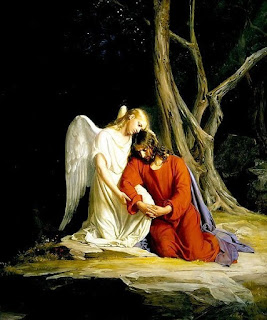

Angels appeared to people many times in the Old Testament. Including the Old Testament instances I mentioned previous paragraphs, there are many stories of angels appear to individuals. Three angels came to Abraham and proclaimed that the same time the following year, his wife, Sarah, will have a son in her old age (Genesis 18:1-15). An angel appeared to Hagar, the maidservant, when she ran away from Sarah’s mistreatment (Genesis 16:7-8). Angels appeared to Lot at the Sodom city gate (Genesis 19:1) and hurried Lot and his family out of the city before its destruction (Genesis 19:15). Jacob has a dream of stairway of heaven which angels were ascending and descending on it (Genesis 28:12). An angel appeared to Moses in the flames of the burning bush (Exodus 3:2). An angel came to Joshua to give him God’s instruction to attack the city of Jericho (Joshua 5:13-15). An angel appeared to all Israelites to remind them of God’s deliverance and his covenant (Judges 2:1-4). Gideon was given a special message from God by an angel (Judges 6:11-13). An angel appeared to the wife of Manoah to proclaim the coming of their son, Samson, after years of childlessness (Judges 13:2-5). Angels were active in the New Testament as well. Luke 1:26-38 states that the angel, Gabriel, appeared to Mary to deliver the message that she will give birth to a son. In Acts 5:19-20, an angel appeared during the night and opened the jail, freeing the apostles to continue to spread Jesus’ message. An angel appeared to a Roman centurion named Cornelius and told him to seek out Peter (Acts 10:3-8). The apostle John writes that the vision documented in Revelation was given to him by God through the angels he sent (Revelation 1:1).


Evil angels or demons are spirits whose purpose is to oppose God and try to defeat his will and frustrate his plans. Romans 8:38-39 states that nothing, not even demons, can separate believers from the love of God. The book of Job is a perfect example of demons hindering man physical and eternal welfare by a limited control over natural phenomena. In Job 1:12 states that the Lord allowed Satan to take everything from Job, but he was not allowed to physical touch him. His cattle was carried off by attackers (Job 1:13). Then the house where his children were feasting was destroyed by a mighty wind, killing everyone (Job 1:18-19). Demons often will inflict disease on believers. In Luke 13:11, 16 tells the story of Jesus healing a woman who had been “inflicted with a spirit for eighteen years (verse 11) and Jesus states it was Satan who bound her (verse 16). Demons will often be sent to tempt man to sin. In Matthew 4:3-10, Satan attempts to tempt Jesus to use his power to make bread from rocks. Whatever power demons have is limited by the permissive will of God.


In conclusion, angels are mentioned over 300 times in the Bible. Both good and bad angels, they serve a purpose in the will of God. You may be asking “well that’s great but does angels have to do with me?” Do you think God would stop using angels as his messengers? I don’t think so. Hebrews 13:2 says “do not forget to entertain strangers; for by so doing some people have entertained angels without knowing it.” As I discussed above, many from the Bible entertained angels without realizing it until it was revealed to them. Entertaining or being hospitable is simply helping others feel comfortable and at home. With people coming in and out of our lives, never to be seen again, you never know if one of them was really an angel.  A customer, someone you pass on the street may be an angel passing through with a message, a reminder.

References
Zondervan New International Bible Dictionary

Strong’s Exhaustive Concordance of the Bible

Thursday, June 29, 2017

Satan and the Old Testament: who is he?

Recently I read on conversation on a message board where someone claimed that Satan does not appear in the Old Testament. A statement I knew was not true. Two conversations between Satan and God appears in Job 1:6-12 and Job 2:1-8. However, it peaked my interest: what was the origin of the word, Satan, and who is he in the Old Testament. In Hebrew, Satan is a noun from a verb meaning to obstruct or oppose as used in Numbers 22:22, 1 Samuel 29:4 and Psalm 109:6. Ha-Satan is translated as the accuser or the adversary. The definite article occurs in Job 1-2 ten times and three times in Zechariah 3:1-2. I also began to investigate who Satan was in Judaism and discovered something interesting: it depends on the different eras of Judaism.


First, Enochic Judaism occurred during the Second Temple period between 516 BCE to 70 CE. It taught that Satan is an opponent of God and a chiefly evil figure among demons. It is in the book of Enoch which references Satariel, an angel before the fall from Heaven. The second book of Enoch references a Grigori (Watcher) called Satanael who was cast out of heaven. Judaism and most of Christianity rejected the books of Enoch as canon due to the idea that angels sinned and rebelled against God as illustrated by Trypho the Jew while debating Justin Martyr (Dialogue 79). Although many Christian churches use the books for historical or theological interests. The only churches today who accept the books as canon are the Ethiopian Orthodox Church and the Eritrean Orthodox Church.


Second, Rabbinic Judaism has been practiced since the 6th century CE and teaches that satan was Yetzer hara or evil inclination of humans. Genesis 6:5 says “The Lord saw how great man’s wickedness on the earth had become; and that every inclination of the thoughts of his heart was only evil all the time.” Satan is personified in three places. In 1 Chronicles 21:1 as the seducer. In Job 2:1 as the heavenly persecutor and Zechariah 3:1-2 as the accuser. Satan is always subordinate to the power of God and has a role in the divine plan. However, during the Medieval era (5th – 15th century CE), the Enochic literary works were rejected and every attempt to root out any reference to rebel or fallen angels. Evil became viewed as abstract and the first two chapters of Job as a metaphor. These teachings can be seen in Modern Orthodox Judaism as the Talmud, the central text of Rabbinic Judaism, is studied.


Third, Hasidic Judaism arose as a spiritual revival movement founded by Israel Baal Shem Tov in the 18th century in what is today, modern Ukraine and spread across Eastern Europe. The story of his birth features Satan as a tester as an agent of God whose main function is to tempt one into sin and then report back to God. His parents, R’Eliezer and Sara, were known to bring in guests. Satan wanted to test R’Eliezer to see if he would take in a poor and dirty guest. The court of heaven agreed and Satan appeared at their home in dirty rags and behaved horribly for a guest. But his requests were met without complaint. When Satan returned to heaven, the court of heaven decided to reward R’Eliezer. Sara would soon give birth to a son in her extreme old age. A sin with a holy soul, the type of soul which only occurs once in a thousand years. These teaching that Satan as an agent of God can be seen in Modern Conservative Judaism as well.


Lastly, Modern Reform Judaism (also known as Progressive Judaism or Liberal Judaism) was founded on July 17, 1810 by Israel Jacobson in Germany. The reform movement came to American when German reformers immigrated here in the mid-1800s. According to their traditions, Satan is interpreted symbolically. He is the representation of innate human qualities to do evil and selfish desires. They reject any other representation or interpretation of Satan. He is not yetzer hara, an agent of God or a fallen angel. Their teachings tend to focus on learning, duty and obligation. Their teachings stress ethical responsibility both personal and social, including equality between the sexes as taught in the Torah. They focus on family devotion, private prayer and public worship as well as observance of the Sabbath and holy days.


In conclusion, the answer to who is Satan in Judaism is very complicated and has changed over time. The answer depends on the historical period and the beliefs of each individual sect. So to say that Satan doesn’t appear in the Old Testament is false. While researching this topic and reading about the different Jewish sects, I was reminded of the vast differences in Christian denominations too. Therefore, what I learned the most is, as always, it’s a good idea to avoid generalizations. I read a few articles that made statements about Christians that I, and others I know, do not ascribe to. Like Jews don’t believe in Satan and Christians believe he was a fallen angel. It may be true for some, however, not for all.  

Saturday, May 14, 2016

Jesus (Yeshua) is a worm...and a snake too among other things: an interesting and thought provoking book

Jesus (Yeshua) is a worm…and a snake too among other things by Kendall T. Shoulders is an interesting in-depth study of the imagery throughout the Bible as it points to Jesus as the Messiah. The book is actually two books in one. Book 1 focuses on the imagery of the worm and a snake to indicate the coming of the Messiah in Jesus. Book 2 continues that theme as similarities between figures of the Old Testament to Jesus and the prophecy of Revelation.


Book 1 is the Jesus as the tola worm as it is used throughout the Old Testament. The tola worm is an important worm to the ancient world. It was a source of dye for cloth. It was environmental cleaning. Parallels between the tola worm’s appearance in the Old Testament and the events of Jesus’ life is amazing. The imagery that is drawn between the parallels are mind-blowing. The author also draws conclusions about the use of the materials and decorations in the Tabernacle to Christ. The use of gold, silver, bronze and the colors used in the priestly garments all have a purpose pointing to the coming of Christ. The tola worm’s presence in the story of Jonah teaches that “a self-righteous attitude compels us to compare ourselves to other people” and how easy it is to accept God’s grace on our behalf but how difficult it is to accept God’s grace and even extend grace to others.


The author also draws a parallel with a snake and Jesus in Book 1. While many believers would see the snake as a symbol of Satan, an interesting point was made in the story of Exodus. When Moses makes his request to Pharaoh to let the Israelites go, Aaron’s staff becomes a snake. The Pharaoh’s wise men and sorcerers perform the same feat (Exodus 7:8-13). However, Aaron’s snake swallowed the other snakes. This is an image of Jesus “swallowing our sins, including every possible vile, evil thing that Satan could imagine.” The author also takes the story of the Israelites in the desert and they were told to look at a bronze snake in order to be healed from a sickness brought on by the people’s constant complaining (Numbers 21:4-9). Those who looked at the bronze snake high on a pole were healed, those did not died. This story seems to be a foreshadowing of Jesus on the cross. Those who look to him are healed and saved from their sins and those who don’t…


Book 2 is a bonus section which continues the theme of how Jesus is the fulfillment of all things concerning the Law (Genesis through Deuteronomy), the Psalms and the prophets. From Adam to Isaiah, images and prophecies foreshadow an event of Jesus’s life. It’s a great way to see how every book of the Old Testament points to the Messiah in Jesus. The author compares interesting similarities Genesis figures to Christ, Satan and the end times. While some are interesting and thought provoking, I found some to be a bit of a stretch. For instance, the author claims that Abel’s birth points to the virgin birth of Christ because the Bible states that “Adam lay with his wife Eve, and she became pregnant and gave birth to Cain” (Genesis 4:1); however, in verse 2 simply states “Later she gave birth to his brother Abel.” He claim is that Adam did not “lay with” Eve in order for her to conceive Abel, this is a foreshadowing of Christ’s miracle birth. Is he wrong? I don’t know but there isn’t any evidence to say it’s true.


Jesus (Yeshua) is a worm…and a snake too among other things is an interesting and thought provoking look into the Bible and how Jesus is seen in every story. When I first saw this book as it was available to review, the title caught me off guard. I requested to review it as I was anticipating being angered at the possibilities of what the title seems to suggest. However, once I started reading, I realized the title doesn’t fully give the picture of what an amazing book it is. While I disagreed with some of the author’s claims, he presents them with verses and cultural references for support. I highly recommend this book as a new and unique look into the amazing works of God as it is told in His Word.