Becoming Free Indeed: My Story of Disentangling Faith from Fear by Jinger Duggar Vuolo is a story of one young woman questioning the ideology of her youth and growing in one’s faith. Everyone knows the Duggar family. Jinger is the sixth child of the famous TLC 19 Kids and Counting family. From the age of 10 years to her late twenties, her life was a fishbowl. She was convinced that obeying the rules was the key to success and a faith-filled life. She promoted Bill Gothard’s Basic Life Principles. While, to the public eye, it seemed she successfully followed the rules, lived accordingly and it was working; however, in private she lived in constant fear that she was displeasing to God. It wasn’t until a new family member, her brother-in-law, that Jinger began to examine what she believed, why did she believe it and did the Bible say something different? When she met her future husband, pastor Jeremy Vuolo, she realized that her life was built on rules and not on God’s Word. Jinger began to commit herself to studying the Bible, to truly understand it for the first time. She shares what her life was like living under the tenants of the IBLP, the Biblical truth that changed her perspective and how she disentangled her faith from the fear with a renewed faith and deeper relationship with Jesus Christ.
I won a copy of Mrs. Vuolo’s book through a Goodreads giveaway. While I wasn’t a huge fan of the Duggar family’s show and I certainly didn’t agree with the tenants they lived by, I was intrigued by the daughters as they grew, married and started families of their own. I was shocked at the chance to read Becoming Free Indeed. I found Mrs Vuolo’s words to be filled with conviction, honesty and love as she told her journey. She goes in depth examining the rules and principles taught by Gothard and the IBLP against the Bible. She discusses the whirlwind feelings she experiences as she realizes that these rules were not Biblical. Her hope with the book is that it is helpful to those who have been hurt by those who claimed to be of God. I say she succeeds in that goal. Jesus is more than a rule maker who seeks to punish us for displeasing him. I highly, highly recommend Becoming Free Indeed: My Story of Disentangling Faith from Fear.
Becoming Free Indeed: My Story of Disentangling Faith from Fear
No More Lies is the second book in the No More Words trilogy by Kerry Lonsdale. Jenna Mason seems to lead the perfect life. A successful career as an animator, a town house near the beach and a great relationship with her son, Josh. However, she hides a terrible secret, something she has been running from for thirteen years. After years of constant moving, Jenna concedes to Josh’s wish for a permanent home. After a while, it seems they are safe. No one is following them and they can have a normal life. Until one day, a reporter starts asking the wrong questions which opens the door for the wrong people to find her. She has no choice but to run again. As they go off the grid, Josh goes missing. Jenna is forced to seek help from the one person she didn’t think she’d ever see again.
No More Lies is a wild ride as readers learn Jenna/Lily’s story, the events which lead Josh to Olivia’s doorstep in No More Words and leading into the third and final book, No More Secrets (release date March 14, 2023). It is a family story and dynamic built on lies, secrets, and emotional abuse that the children are fighting to break free from those cycles that caused them pain. I thoroughly enjoyed Jenna’s story. Jenna has taken every precaution to make sure she and Josh are safely hidden. She even opens her heart to love again. As those in her past show up in her present, she goes into protection mode more for Josh than for herself. She must decide if the time has come to fight back against those who would harm her. I highly recommend No More Lies. However, I would recommend reading No More Words first.
No More Lies is available in paperback, eBook, and audiobook
No More Words is available in paperback, eBook, and audiobook
What We Carry by Kalyn Fogarty is a story of heartbreak, grief and finding a way back. Cassidy Morgan has always followed a carefully thought out plan for her life. Top education, check. Fulfilling career, check. Marriage to the love of her life, check! The next item would be to start a family, But when a late-term miscarriage throws her off her tracks, she finds herself questioning everything she knows about herself, her life and the world around her. Cassidy finds it difficult to move past her sense of guilt and shame, she shuts herself off from her husband, Owen, as well as the rest of the world. At the depth of her grief, she begins to see the areas of her life that aren’t so perfect. When she unexpectedly becomes pregnant again, joy and fear overwhelm her. Cassidy must decide if she will let her grief and fear hold her back from a future that is worth living for.
As a woman who dealt with many miscarriages at various stages of pregnancy, there aren’t many books that truly get into the darkness that happens after a miscarriage. What We Carry is thought-provoking and eye opening for any one who has not experienced a pregnancy loss. Ms. Fogarty is deeply honest in her unflinching, no-holds-bar depiction of the fear, the pain and the grief that follows a miscarriage. The what ifs, the undeserving blame and questions of what went wrong are very real. I also appreciated Ms. Fogarty’s depiction of the well-meaning and yet not so helpful comments is so accurate. What We Carry is a heartfelt, tear-filled story. A journey of how grief and fear can turn into strength and courage. While every woman’s experience and journey is different, I feel that women who have gone through this journey can feel a connection with Cassidy and Owen as they find their way through the fog. I highly recommend What We Carry.
What We Carry is available in paperback, eBook, and audiobook
The Woman of Endor or the Witch of Endor is an unusual character in Saul’s story. Her story is brief in 1 Samuel 28. She is immersed in the occult with a reputation of being able to conjure spirits and yet she was kind a motherly. She was a character of compassion and sorrow. She showed King Saul compassion on the eve of his death after her great sorrow of being the one to help deliver a hopeless message to the king. While her role is brief, God used her to deliver a final message to the king. What is her story? Why was it a big deal that Saul sought her out? Why would God allow a witch to deliver his message?
In the dead of night, a man comes to a woman, begging her to summon a spirit. The woman senses a trap as the king had banished all mediums and outlawed witchcraft. He wants her to summon the spirit of Samuel. It is then she realizes the man in front of her is King Saul. She protests but he insists, assuring her that no harm will come to her for doing as he asked. When Samuel’s spirit appears, she is filled with terror. Saul falls to his face on the floor as Samuel delivers his message. He will die in battle and his sons will die as well. After Samuel’s spirit leaves, the woman feeds Saul. It would become his last meal as Samuel’s message comes true the next day. Saul would fall on his sword and by the end of the day, his sons would be dead as well.
Many ancient peoples, as well as many people today, felt as though they were living in close contact with the spirit world. They relied on divination and fortune telling to communicate with the dead for guidance and knowledge. Right from the start, God told his people to avoid witchcraft in any and all forms. Leviticus 19:31 is clear and firm, “Do not turn to mediums or seek out spiritists, for you will be defiled by them. I am the Lord your God.” The story of Saul and the woman of Endor reminds us that there is nothing new to human behavior. We all experience the same desires, temptations and needs. People try to find the answers they desperately want and not necessarily the ones they need to hear. Saul was desperate. He knew the silence from God could only mean one thing but he was willing to break his own decrees to receive a message from God.
Endor was the land of the Manasseh tribe. A large city on the side of a hill, it became a harbor for refugees who had fallen out of favor with Israel (Bolinger, 2020). The Bible doesn’t specify if the woman truly conjured Samuel. There are many who believe it was a demon and not the spirit of Samuel. Why would God allow the woman to conjure Samuel, when he strictly forbade it? The Bible is not clear as to God’s reasons. I personally believe God allowed the spirit of Samuel to come forward in order to give Saul his final message, a reason behind his silence. A message, I think, Saul already knew deep in his heart. Saul’s interaction with the woman of Endor could be seen as a story of irony. “He, the destroyer of the necromancers, forsaken by Yhweh himself, repairs to the witch’s house” (Hirsch, no date).
In conclusion, the heart of the story of Saul and the woman of Endor is fear. Saul was filled with fear that he had been forsaken by God and in one last desperate act, he sought out a medium, despite God’s instructions and his own decrees. Through God’s final message, Saul learns that he had forsaken God first. The woman of Endor was also afraid for her life. If she was caught performing witchcraft, it would mean her life. But Saul was desperate that he would break his own rules. Fear is a very natural, human emotion. It is what we do with our fear that matters. Do we let fear lead us to disobedience like Saul? Or do we focus on our faith in God to overcome our fears?
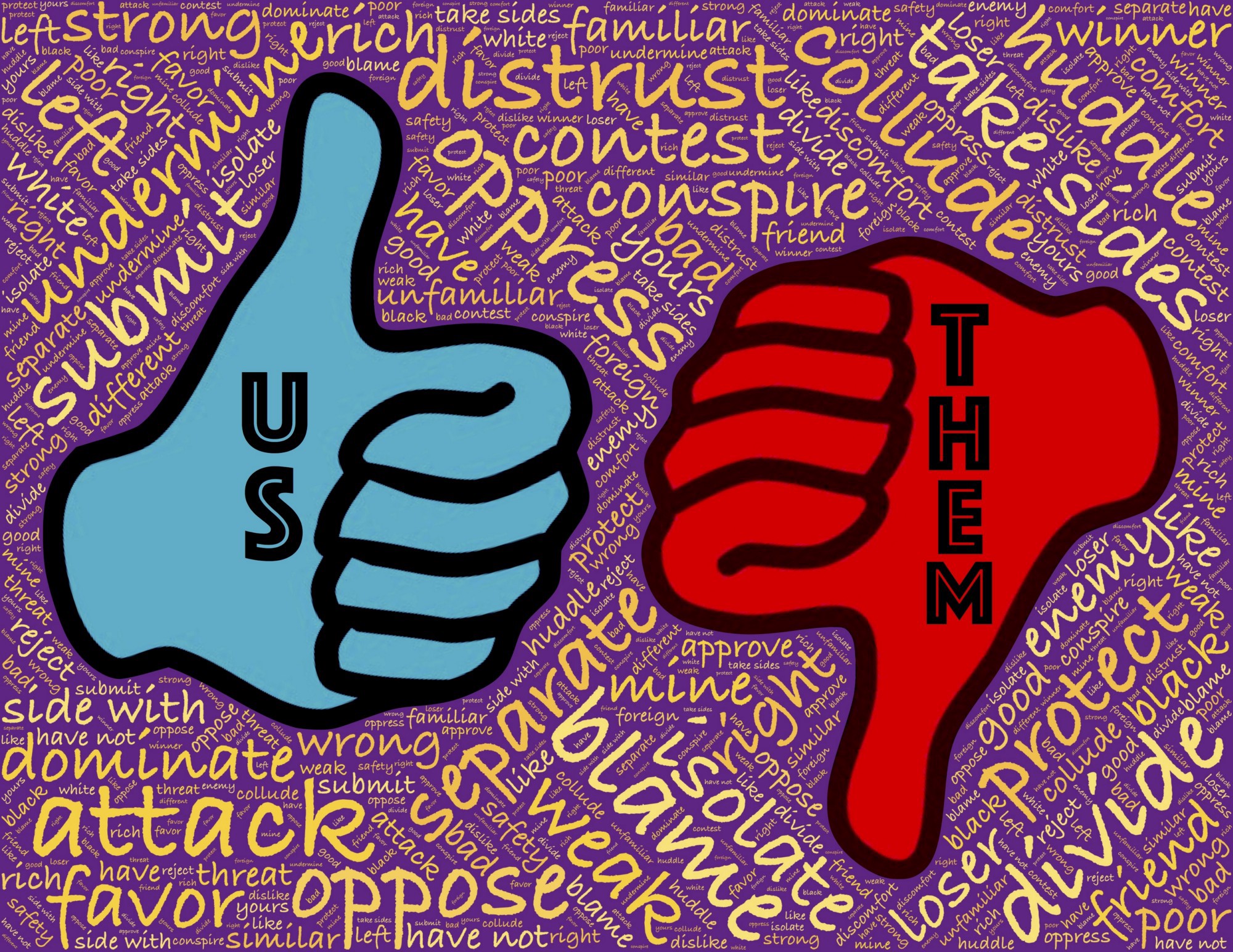
Tribalism is a term that I have been hearing a lot in recent months, particularly in the media and podcasts. I had no idea what it was or what it meant. I had a general idea but in my inquisitive nature, I had to find out more. The basic definition is the state or fact of being organized in a tribe or tribes. It is the behaviors and attitudes that stem from strong loyalty to one’s own tribe in terms of ethnic groups, religious groups, regional or other social groups or political groups. In general, tribalism is seen in a positive light and a needed construct in our society. However, it has a negative connotation in a political context. While I researched this topic, I came across many who argued against political tribalism and others who argued the problem isn’t tribalism but something else entirely.
Human survival relies on groups. Tribes, clans, nations, have been organized in all societies for the protection, strength, and growth of its members. Today, tribes or groups can be for connections and support with a specific common thread. Whether it is a diet (i.e. vegetarianism) or labor unions or nationality, we all need one or multiple ones (Taylor, 2020). We are drawn to a group or groups based on our identities and tribal identities can and will fluctuate through our lives (Segal, 2019). Tribes can be any group with a deep connection. As the English poet, John Donne writes, “no man’s an island.” When most people argue against tribalism is when it becomes toxic. When a group joins people together out of fear, anger, jealousy and spite and aligns to destroy other groups and fosters bullying and scapegoating of non-members (Segal, 2019). Fear often will bypass logic as the instinct is to fight and ask questions later. The less you know, the easier it is to fear (Javanbakht, 2019). Extreme forms of toxic tribalism is ethnic cleansing and genocide. Every day toxic tribalism is more along the lines of cyberbullying and finger pointing. Good tribalism is what we need, bad tribalism is what we need to avoid. According to Elizabeth Segal (2019), good tribalism is difficult to build but is healthier to maintain with bad tribalism is easy to build but unhealthy to maintain as the constant negative emotions can take its toll on one’s health.
Tribalism becomes bad when it blinds its members to reason. Michael Adams says when the tribe tells you, “Don’t step outside the bounds. Don’t draw outside the lines. Don’t do anything that your tribe wouldn’t do” (Taylor, 2020). I’ve seen this in certain groups, For example, if someone is gay, they must be progressive because no gay individual would possibly be conservative. This thinking fosters the “us versus them” mentality with a “if you aren’t for us, then you are against us” battle lines. There is a social pressure to go along with the group despite what they see with their own eyes (Taylor, 2020). How often have we been told to hate a group due to a trait that has been deemed “undesirable”? How often do we encounter members of the hated group that don’t fit the portrayal at all? The social pressure as well as fear can blur human logic and the motivations behind their behaviors (Javanbakht, 2019). The most extreme example of this tribal thinking (Taylor, 2020) is Adolf Hitler. Hitler was able to convince an entire population to turn on their neighbors simply because they were Jewish or associated with Jews. It led to the extermination of millions who didn’t fit into the group as described by Hitler. There are countless other examples throughout history and since World War II of atrocities caused by tribal thinking. They all have a common thread. A leader who was able to convert the people’s tribalism and devotion into the fear of others (Taylor, 2020).
In her article, The Problem Today is Not Tribalism but its Absence, Jennifer Brick Murtazashvili argues that the problem is not tribalism but factionalism (2020). In her argument, tribalism is the only way to fix what factionalism has broken. The focus on the smaller group rather than the nation as a whole has caused the conflicts. Tribalism is the only way to work toward meaning, community and connection and the sense of belonging (Murtzashvili, 2020). Alan Finlayson from The Guardian argues that only in politics is tribalism viewed as negative. The idea of tribalism has come to be “unhealthily excessive” and leads to irrational outlooks and hindering our thinking (Finlayson, 2019). I have dealt with this accusation as I have encountered individuals who automatically think that my Christian faith has closed my mind to all other ideas. Rather than let me consider the ideas, use my faith as a part of my decision making process to accept or reject an idea, I am automatically told I will reject it. According to John Patrick Leary, tribalism wasn’t an issue until Trump’s election when political commentators started to complain about how polarized American politics have become, how angry, how uncivil and how tribal (2020). It is nothing new but it is misleading as he continues. Attributing conflicts to ‘tribalism’ allows for the appearance of objectivity, but “it makes it easy to sidestep questions of facts and history and treat everything as an unsolvable matter of interpretation” (Leary, 2020).
What can we do? How do we change bad tribalism into good tribalism? Elizabeth Segal (2020) has two suggestions. First, recognize that groups built on the foundation of hate, disdain, and anger build those traits in their members. At the constant urging of bad tribalism, members stay angry. I see this all the time on social media. I am supposed to be outraged at X because I am a member of a certain group. And when I’m not? My loyalty is questioned. If a group is demanding you stay outraged, angry or in a state of fear, it is best to take a step back and ask why and possibly find a new group. Second, Empathy is another powerful tool. It can broaden our sense of connections to others and diminishes the connection between bad tribalism (Segal, 2020). As Harper Lee wrote in To Kill a Mockingbird (1960), “You never really understand a person until you consider things from his point of view until you climb into his skin and walk around in it.” When we listen to understand, rather to respond, we can learn a great deal about people.
In conclusion, tribalism, at its core, is not a bad thing. We all belong to one or multiple tribes throughout our lifetimes. We need to help and support our tribes, our communities when they are in trouble. Tribalism becomes bad when the behaviors of group members become toxic and fuel their hate toward others. We need to ask ourselves why do I fear a certain group, why am I angry at this situation? Is it because I am truly afraid or truly angry? Or am I afraid or angry because I have been influenced? It has been stated that we fear what we do not know. If we fear something, we need to learn more about it. We need to make sure our fear is justified or simply because we’ve been influenced to fear. We cannot let others in our tribes tell us how to think, feel and act.
The story of Rahab is one of my favorites in the Bible. Rahab
was a clever and wise woman who devised an escape plan for her and her family.
As the stories of the Israelites traveled to Jericho and whispered among its
citizens, she heard about the amazing things the Israelite God could do. She
decided that she would put her faith in this God she didn’t know in an amazing
act of faith. Her decision would mean her death if she was find out but she
still took the risk. Although she was a prostitute and an idolater and would
see her city and her people destroyed, her act of faith would be rewarded as
God gave her a new life among his people and a place in the ancestry of his
Son. What was her story? Why would she take such a risk? What does her story tell
us about fear and God?
Jericho may be one of the world’s oldest cities as its
ancient ruins can be found approximately 17 miles northeast of Jerusalem. The
walled city was the gateway to Canaan, the final obstacle for the Israelites to
overcome to claim their promised land. Rahab’s home was inside the thick
surrounding walls. She would entertain the visitors to the city as well as many
of the locals. This is how she heard the strong and marvelous stories of the
God of the Israelites including the parting of the Red Sea (Exodus 14:15-28)
and the victory against Sihon and Og (Numbers 21:21-36). When the spies that
Joshua sent into Jericho made their way to Rahab’s house, she hid them on the
roof under stalks of flax which were out drying. When the king asked Rahab
about the two men, she claimed not to know who they were or where they were
from. She tells the king they left at dusk and men were sent out in pursuit.
When it was safe, Rahab tells the men a warning and asks them for their
assurances that she and her family would be spared (Joshua 2:12-13). They
agreed and tells her to hang a scarlet cord out her window and her family would
be spared. Rahab watched from her window the gathering army, their strange
walking around the city, the final thunderous cry, and the crumbling of city’s
walls (Joshua 6:12-20). Rahab and her
family were spared and joined the Israelites into the promised land.
The significance of the red cord cannot be overlooked. Scarlet
has become synonymous with salvation and redemption. In similar fashion of the
lamb’s blood on the doorframes of the Israelites, the red cord spared Rahab and
her family from the coming siege (One for Israel, 2018). While the Messiah was
promised to the Israelites, the scarlet cord in Rahab’s story is a connection
that the promised Messiah was coming for the Gentiles as well. The scarlet cord
is a fore of how redemption will come to faithful Gentiles (Jews for Jesus,
2001). Rahab’s faith was rewarded with the honor of being the great grandmother
of King David and an ancestor in the genealogy of Jesus (Matthew 1:5) and one
of only two women mentioned in the Hall of Fame in Hebrews 11. Rahab’s
redemption is also an example of how God’s grace no boundaries. Anyone who
comes to him with faith will be saved. It would seem strange that God would
choose to save Rahab, a prostitute, however; God saw her heart, not her
profession. God often chooses many people of various backgrounds, especially
those who are on the lowest rung of the societal ladder. No one is beyond his influence
or his grace. The scarlet cord saved Rahab and her family just as the blood of
Jesus saves those who believe in him. Rahab’s story is just another example of
God’s willingness to use the less than perfect, the outcasts, anyone who
society may see as unsuitable to accomplish his holy purposes
Fear and feelings of failure will often keep us from moving
forward in our faith. While she was afraid, as she heard the stories of God,
she rose above her situation with faith and trust. Her faith gave her the
courage to risk her life. She knew it was certain death if the king of Jericho
found out she lied. It would also certain death if she turned the spies in. She
would have been destroyed along with the city. In the face of certain death,
Rahab placed her faith and trust in the Israelite God who had accomplished the
unbelievable. She was resourceful and willing to help others at great cost to
herself. Despite her profession, she is remembered for her faith. Rahab is an
example of how not to let feat affect your faith in God’s ability to deliver. One
of my favorite quotes from Tessa Afshar’s Pearl in the Sand is “It’s
time to leave fear behind or you’ll be robbed of your destiny. You don’t need
confidence in yourselves or in your own power. Be strong in the Lord. When
disaster seems close, don’t be discouraged. God will never leave you.” Acting
on faith is like the saying, which has many forms but generally says, that
courage is being afraid and going forward anyway. That’s what Rahab did. She
put her faith over her fear. If we can find the strength to put our faith over
our fear, what wonders could God do in our lives?
In conclusion, Rahab was a woman of great faith in a God she
didn’t know. She heard the stories and believed that the Israelite God was more
powerful than the idol gods her city worshipped. Her story is another example
of who God doesn’t wait for us to be spotless or matured faith. He takes the
ordinary, the willing and accomplishes the extraordinary both in their lives
and the lives around them. There is a saying that goes around that says roughly
that God doesn’t call the qualified, he qualifies the called. Rahab didn’t set
out to be important or honored or rewarded. She simply wanted to survive. God
saw her heart and saw a woman of great faith. He honored her in many ways. Her story matters as our stories matter today.
Rahab’s simple decision to help the spies made a huge difference. What simple
decision in our lives could make the difference?
Pearl in the Sand by Tessa Afshar, a fictional
account of Rahab’s life including the events of Jericho and her life after
marrying Salmon and becoming an ancestor of Jesus.
Jesus (Yeshua) is a Worm…and a Snake too Among Other
Things by Kendall T. Shoulders, an analysis of often overlooked metaphors
and symbols which point to the coming Messiah in the Bible.
Oh, Susannah: Things
That Go Bump by Carole P. Roman is the second book about a young girl named
Susannah who is learning about life and herself. In this book, Susannah is
reluctant to go to a sleepover at her friend’s Lola’s house because the house
is old and scary. But she’s afraid to tell her parents and Lola why she doesn’t
want to go so she goes anyway. While there, she and Lola start to have fun
while Susannah tries to push aside her fears. Until something happens that she
can’t hide her fear anymore. She learns that everyone has fears and just
because something is old and scary looking doesn’t mean that it is.
I enjoyed this book as it is a lesson for children with
fears. Like my 5 year old is afraid to be alone in the dark and I’ve been
trying to help her overcome this fear. I will be reading this book to her in
the hopes that she can relate to Susannah and understand there is nothing to
fear. I enjoyed Ms. Roman’s illustrations that everyone has a fear of something
and not let fear keep them from enjoying life and having fun. I highly
recommend Oh, Susannah: Things That Go
Bump for any family or school library.
Psalms is a collection of poems, songs and prayers which
express praise, worship and confessions to God. The book contains 150 psalms
which express the heart and soul of humanity. The shortest psalm is only two
verses (Psalm 117) and the longest psalm is 150 verses (Psalm 119)! The
psalmists experience the depths of despair and the heights of joy and God
brings them out of their struggles. David was the most prolific psalmist who wrote
73 psalms. The psalms are said to be written between the time of Moses (around
1440 BC) and the Babylonian captivity (586 BC). With so many psalms, it was
hard to choose just a few to discuss; however, I’ve chosen psalms which have
great meaning to people I know as well as ones which stood out to me as I read.
First, Psalm 40 is my husband’s favorite psalm. His favorite
band, U2, used Psalm 40 as inspiration for their song, “40.” It was written by
David and speaks to waiting patiently while doing God’s will. While we wait, we
can love God, serve others and tell others about him. Verse 1 opens this theme
directly, “I waited patiently for the Lord; he turned to me and heard my cry.”
Waiting patiently for the Lord is not easy but David received four blessings
for he patience: God had 1) lifted him out of this despair, 2) set his feet on
a rock, 3) gave him a firm place to stand (verse 2) and 4) gave him a new song
of praise (verse 3). Blessings are often not received until a trial of waiting.
For instance, my husband and I recently bought a car. We waited for years for
our own car. From balancing sharing a car with my mom and then getting a gift
of a car riddled with problems, we patiently waited for the day when we could
get our own car. Then this year, God rewarded our patience with a great deal
and a car we love to drive.
Second, Psalm 73 was written by Asaph, a leader of one of
the temple choirs. This psalm speaks about living holy lives and trusting God
for our future. The psalm opens discussing how the wicked seem to prosper:
“always carefree, they increase in wealth” (verse 12) but the righteous have
lasting rewards. After the riches of this earth will fade away, the righteous
has something which cannot disappear: God. Verse 27-28 states “Those who are
far from you will perish; you destroy all who are unfaithful to you. But as for
me, it is good to be near God. I have made the Sovereign Lord my refuge; I will
tell of all your deeds.” One verse stood out to me and speaks to those who feel
as if they have failed and cannot return to God. Verse 26 says “My flesh and my
heart may fail, but God is the strength of my heart and my portion forever.” As
you and I live our life, despite our best efforts to live a Christ-like life,
we will fail. We will have moments of weakness. However, as long as we cling to
God in those moments, we will have renewed strength.
Third, Psalm 103 is a psalm of David which speaks of God’s
great love for us and what God does for us tells us what he is really like. Verses
8-10 tells us who God is. He is compassionate and gracious, slow to anger,
abounding in love (verse 8). He will not accuse, harbor his anger forever or
treat us as our sins deserve (verse 9-10). My favorite verses is 11-12, “For as
high as the heavens are above the earth, so great is his live for those who
fear him; as far as the east is from the west, so far has he removed our
transgressions from us.” These two verses are great joy for believers. Since
the east and west can never meet, it is symbolic of God’s forgiveness. When He
forgives our sins, He separates it from us and doesn’t remember it. People will
remember their sin and dwell on it. However, when we place our trust in Christ
and seek forgiveness, God forgives and forgets. Our record has been wiped clean
and we can live with a new slate. Although this doesn’t mean we won’t sin again
because we will; but when we truly seek forgiveness from God, he will remove
our sin.
Lastly, Psalm 112 is a psalm about the advantages of having
faith in God. God guards the minds and actions of those who follow his
commands. Verse 1 states, “Blessed is the man who fears the Lord, who finds
great delight in his commands.” To fear the Lord is to have great reverence and
respect for God and His Word. The Hebrew word for fear, yirah, have a wide range of meanings in Scripture. It can mean a
fear of impending danger. However, it also means the idea of wonder, amazement,
astonishment, gratitude, admiration, and worship of God. Therefore, the fear of
the Lord is an overwhelming sense of the glory, worth and beauty of the One
True God (Parsons). If we have fear and trust in the Lord, we “will have no
fear of bad news” and our hearts will be “steadfast, trusting in the Lord”
(verse 7). This verse is one of the reasons why that I do not fear the future.
Despite the discord in our country and the world, I trust that God is in
control and all will work for His good. Many people will be dragged into the
debates, the arguments and great anger will ensue, but I refuse to do so. I
have faith in the Lord and no man can change that.
The book of Psalms is a great source of encouragement when
feeling afraid or a host of other emotions. It is also a source to go to when
facing struggles and difficult times. For the psalms which I have featured,
these psalms teach us that if we wait patiently for the Lord, we will be
blessed. Trusting in God will give us riches that will never fade. God will
help us in our moments of weakness. God has great love for us and He is a
forgiving Lord. Lastly, fear of the Lord helps us be unafraid in the world
around us. Although it sounds too good to be true and sometimes we will fail.
Sometimes, we will get inpatient, we will falter in our trust, and the fear in
the world around us will overpower us, God is a forgiving God and he will
welcome you back. All you have to do is turn to Him.
References:
Parsons, John J. (retrieved 1/29/2017) The Awe of the Lord http://www.hebrew4christians.com/Scripture/Parashah/Summaries/Eikev/Yirah/yirah.html
Inside Out, which
opened June 19, 2015, was a box-office and critical success for Disney/Pixar.
It would gross $856.1 million and would be the 10th highest-grossing
animated film of all time. The story is features of the emotions of 11-year old
Riley (voiced by Kaitlyn Dias) as she moves with her mom and dad (voiced by
Diane Lane and Kyle MacLachlan) from her home in Minnesota to San Francisco. The
story opens with Joy (voiced by Amy Poehler) as Riley’s first and primary
emotion on the day she is born. Joy then introduces the other Emotions: Fear
(voiced by comedian Bill Hader) who is “really good at keeping Riley safe,”
Disgust (voiced by comedienne Mindy Kaling) who keeps “Riley from being
poisoned physically and socially,” and Anger (voiced by comedian Lewis Black),
who “cares very deeply about things being fair.” Then there is Sadness (voiced
by Phyillis Smith), who Joy isn’t sure what she does or what role she could
possibly play for a happy girl like Riley. From a console in headquarters in
inside Riley’s mind, Joy and the other emotions help Riley interact with the
world. From my first viewing, I loved this film. I will discuss my top three
reasons for enjoying and recommending this film.
First, Inside Out
gives us a story in which we can see the value of all our emotions. With joy,
we can enjoy fun and celebrate great times in our lives. In the movie, Joy is
very determined to keep Riley happy that she forgets that Riley’s other
emotions are important too. Joy tries to get all the Emotions to see the bright
side of the situations. They try but it doesn’t work as they all have different
perspectives. With Anger, we can see the injustice and unfairness in life. To
use anger as a push to fix the injustice we encounter. With Disgust, we can form
our opinions and our standards with food, friends and other aspects of our
likes and dislikes. With Fear, we can keep ourselves safe and secure debating
new adventures, weighing the risks and rewards before trying new things. And
with Sadness, we can feel pain and grief. Each emotion is important and
deserves to be felt at the moment. While some of the emotions can be felt in
extremes, when the emotions are in balance, an individual can be happy, passionate,
opinionated, adventurous and sympathetic. Each emotion is a critical part of
our personality, who we are as individuals. When we ignore one or more
emotions, we deny ourselves a part of who we are.
Second, Inside Out
explores the mind, memories and other brain functions in a fun and meaningful
manner. In the central story, Joy and Sadness, with the Cord Memories, are
whisked away from headquarters and land in Long-Term Memory where all her other
memories are stored. Joy and Sadness must get the Core Memories back to
headquarters. Core Memories were created at key moments of Riley’s life and
help power various parts of Riley’s personality such as friendship, family, and
honesty. While they make their way back, they meet up with Bing Bong (voiced by
comedian Richard Kind), Riley’s imaginary friend who has wandered Riley’s
memories as she no longer plays with him. Bing Bong helps them navigate through
Riley’s mind. They pass through Imagination Land, Preschool World, Abstract
Thought and Dream Production. Bing Bong points out Critical Thinking, Language
Reasoning, Inductive Reasoning and Déjà vu areas of Riley’s mind. I know these
are concepts and areas in which the children in the audience will not fully
understand but as they watch the movie. I think it’s great to introduce these
ideas in a fun way that the audience can understand without getting too
technical.
Third, Sadness is a crucial emotion to a valuable life. The
film features Sadness in a manner which teaches Joy a valuable lesson. Joy, in
her passion to keep Riley happy, she pushes aside what she doesn’t understand,
mainly Sadness. Sadness helps Bing Bong through his sadness that Riley no
longer needs him by talking with him about their adventures together. Sadness
realizes the best way to wake Riley up suddenly is to scare her. At the lowest
point of the movie, Joy realizes that many of Riley’s memories are a mixture of
emotions. Events which started out sad lead to happiness with the help of her
parents and her friends. Events which started with anger turned to happiness
and so on. At one point in the movie, Riley gets the idea to run away back to
Minnesota and it is Sadness who is able to change Riley’s mind and realize what
she is doing. Riley goes home to her parents where she confesses that she
cannot be happy like they want her to be. She misses her home, her friends and
she is sad. Riley’s parents confess that they miss Minnesota too and the family
hugs. Sadness brings Joy to the console and together they create a memory which
is filled with both sadness and joy.
The film ends as Riley grows. A new expanded console is in
place where each emotion now has an important seat. New aspects of Riley’s
personality are formed: Tragic Vampire Romance, Fashion and Boy Band to name a
few. After watching the behind the scenes documentaries, I find that the
director and writers view the movie as growing up and learning to deal with the
changes that are inevitable in life. The movie also features emotions as keys
to relationships. Emotions link us to others. Through tears, anger, fear and
joy, we experience life with those around us. We bond with people to form
families and friendships based on the experiences of these emotions. I
understand their view that life isn’t about just being happy. Joy isn’t always
the answer. Sometimes Sadness is the answer and we can learn joy from sadness.
I love Inside Out for its ability to
tackle the complexity of human emotions in a fun adventure. I’ve read reviews
where people didn’t like the movie simply because Sadness is the hero and think
that the writers want everyone to be depressed. To those reviewers, you missed
the whole point of the movie. Without sadness, we cannot know joy. Without
tears, we cannot know laughter. I highly recommend Inside Out to young and old. We all can learn from this movie.
Yesterday, I had what one would call a crisis of
faith when life situations and life decisions caused an intense doubt and
internal conflict and I often feel there is nowhere to turn. Recently, our
landlord sent us a letter stated that they were raising the rent, which we knew
they were going to do but it brought a decision that we weren’t expecting. We
either have to sign another year lease and our rent raises only $60 or stay
month-to-month and our rent raises by $110! We are planning to move after two
years but to be tied to another lease is difficult because what if a new home
opportunity came before us when our lease wasn’t up yet? Do we break the lease
or do we let this home opportunity slip by? That’s the problem with crises of
faith, a lot of “what if” scenarios come up that may be impossible but you can’t
help but think of them. This led to my husband, Joe, talking about sacrifices in
order to move and live where we would like. He talked about giving up things
and he gave the examples giving up my cat, Kairi and having another baby. This
made me very upset and shocked.
As I was left to those
thoughts rolling in my head all day. And the more I thought about it, the more
upset I became. How dare he make such suggestions especially this week when we
marked my due date and honored the memory of Ziva! The tears came like
waterfalls. I sat at the kitchen table, listening to uplifting songs on YouTube
trying to feel better when I broke down and cried out to God to help me. Then I
reached out to my friends on Facebook. The support I got caused even more tears
and I knew that I wouldn’t feel any better until I talked to Joe. After we
settled in for the tonight, I opened the conservation. And boy was I wrong! Joe
was not asking me to give up my cat or my dream of having another baby. I felt
better and after trying to go to sleep, I got up and did my usual midnight
Internet search and I found some quotes which helped me.
1.“Crisis
are part of life. Everybody has to face them, and it doesn’t make any
difference what the crisis is” –Jack Nicklaus, American golfer
It is so true and I
often forget that we are not the only ones who face crises either it be
financial, medical or family. Everyone has crises when the bills keep coming
and they don’t care if your hours have been cut or you just had to put new
tires put on the car. They want their money.
2.“Come
a crisis, we want other people.” –Danny Boyle, British film director
If life is going
smoothly, we often think we don’t need other people but when a crisis hits we
run for the nearest person. We need the comfort and support. We don’t need
answers, at least not right away, we need the human contact and to hear that
everything will be alright.
3.“When
some crisis occurs, couples don’t have the resources to deal with it because
they’ve been so busy getting on with their lives. They haven’t learned how to
sit down and discuss things.” –Janet McTeer, British actress
I
learned this lesson the hard way. If you don’t confront someone and talk about
what needs to be discussed, you’ll end up being resentful and it will build up
until you explode. So if you’re angry with someone, talk to them about it. You’ll
often find that the person doesn’t even realize that he or she hurt you.
4.“Seeds
of faith are always within us; sometimes it takes a crisis to nourish and
encourage their growth” –Susan Taylor, American journalist
Our
faith grows with each crisis. Each time, I’ve faced a crisis and God has seen
me through, my trust in Him grows. I know that God will not abandon me but you
can’t stop the human brain from getting on the runaway train of “what ifs” and
worst case scenarios.
5.“God
didn’t promise days without pain, laughter without sorrow or sun without rain,
but He did promise strength for the day, comfort for the tears, and light for
the way. If God brings you to it, He will bring you through it” –unknown
There
are countless Bible verses which demonstrate this principle. Here’s a few of my
favorites:
“For
we walk by faith, not by sight” 2 Corinthians 5:7
“The Lord himself goes
before you and will be with you; he will never leave you nor forsake you. Do not be afraid; do not be
discouraged.” Deuteronomy 31:8
“I can do all things through him
who strengthens me” Philippians 4:13
So
if you are in the middle of crisis of faith, don’t hold it in. Reach out and
talk to someone who trust. Sometimes just talking about can help relieve the
stress. It may not give you a solution but it give you support you’ll need to
get this the situation. We can’t do it alone. God designed
us to be social people. He gave us a support system to help us. He can even
speak through these people. I have often prayed about something and the answer
was given to me through a friend. I don’t think she knew she was being used by
God to give me my answer but I recognized an answer when I hear it.