Showing posts with label education. Show all posts

Tuesday, October 20, 2020

The Girl with the Louding Voice: one girl's fight for herself

The Girl with the Louding Voice by Abi DarĂ© is the story of 14-year-old Adunni, a young girl who lives with her widowed father and her two brothers in a rural Nigerian village. All she longs for is an education, so she can find her “louding voice” and speak up for herself. Unfortunately, her father has other ideas and sells her to be married. When tragedy strikes in her new home, she takes the opportunity to run and she makes it to Lagos where she finds a job as a housemaid for a wealthy woman. Soon the job isn’t what to be what she thought. But she never loses sight of her goal to get an education, escaping poverty. She’s added a new goal: to help other girls like her better themselves. Through spirited determination and with the help of an unlikely friend and ally, Adunni helps her find hope, joy and the determination to realize her dreams.

From the opening chapter, I was pulled in by Adunni’s fiery spirit. She never settles and she never takes no for an answer. For every obstacle in her way, she stood a little taller and gathered the strength to push them aside. The Girl with the Louding Voice is a powerful, eye opening story of a young Nigerian girl fighting to find more to her life than what the male dominated society tells her. Ms. DarĂ© began several chapters with facts about Nigeria, it’s people and it’s government. They were interesting to read and gave more context to the events that Adunni is experiencing. It is a story into a world that many people do not exists and needs to be brought to light as young girls like Adunni are silenced by a lack of education and choices every day. I highly recommend The Girl with the Louding Voice. Adunni’s story will make you laugh, cry and break your heart but you will cheer her on as she pushes forward.


The Girl with the Louding Voice is available in hardcover, paperback, eBook and audiobook. 

Sunday, October 15, 2017

How are schools evaluated and what can parents do for their child's education

Education is something my husband and I take very seriously. As a college graduate, I know the importance of a good foundation is needed to help a child succeed. As my daughter approached school age, my husband and I were looking into the school in which she would be attending. We looked into all the information about our local school that we could. After a conversation with a friend, I realized that despite my research, I didn’t know how the school was assessed. How were schools rated? And what are the alternatives if parents do not like the local school. For this blog, I will focus on the state of California which is where I reside. I strongly urge parents to look into their own state’s educational ranting.


The Academic Performance Index (API) is a measurement of academic performance and process of individual schools in California. It is one of the main components of the Public Schools Accountability Act (1999) which was passed by the state’s legislature. The API scores ranged from 200 (low) to 1000 (high). The statewide API score was targeted at 800 for all schools. A school’s growth is measured by how it was moving toward or past that goal. Scores were calculated for all students as a whole as well as by groups i.e. race, English learners, students with disabilities and those who were considered socioeconomically disadvantaged. A school’s score was designed to be an indicator of performance level and was calculated annually by the California Department of Education. Primarily by students’ performances on the California Standards Test (CST) and the California High School Exit Exam (CAHSEE). Due to the API’s heavy reliance on standardized testing, many critics argued that the reliability and accuracy of the API scores as weaknesses as indicators of a school’s academic achievement. The scores were suspended after the 2013 calculation and later cancelled as a new system is being devised to replace the API scores. This new system will be designed to measure progress on the Common Core Standards.


Since 1988, California has required all public schools receiving state funds to prepare and distribute a School Accountability Report Card (SARC). A similar requirement is also contained in the federal Elementary and Secondary Education Act (1965). The SARC’s purpose is to provider parents and the community with important information about a school. “A SARC can be an effective way for a school to report on its progress in achieving goals. The public may also use a SARC to evaluate and compare schools” (California Department of Education). The SARC has four parts. First, Conditions of Learning section details the student body. The number of students enrolled in total as well as by groups. The number of teachers that are fully credentialed and the types of textbooks and instructional materials used for each subject and grade. The school’s physical status is rating as Good, Fair or Poor as well as notes as to repairs that are needed and actions taken or planned to fix any issues. Second, Pupil Outcomes section details scores on statewide assessments, particularly the California Assessment of Students Performance and Progress (CAASPP) System which is given to the general education population in grades 3 through 8 and grade 11. One of these assessments in this system is the California Alternative Assessments (CAAs) for English Language Arts/Literacy (ELA) and mathematics. A CAA test for science will be piloted for this school year and is expected to be operational by the 2019-2020 school year. Third, Engagement is the schools scores on the level of parental involvement. What opportunities has the school offered as to getting or allowing the parents to be involved in the school’s operation and their children’s education? Most common opportunities are the Parent Teacher Association (PTA), Back to School and Open House Nights. This section also details the school’s suspension and expulsion rates and well as the school safety plans. For example, my daughter’s school is a closed campus. Once the bell rings, the gates are locked and no one is allowed in or out until dismissal. If someone needs on campus, for example to volunteer in the classroom, it must first be arranged with the teacher and the office must be informed and the individual must check in with the office before being allowed inside the gates. Lastly, the SARC provides information about support staff such as counselors, librarian, psychologist and other non-teacher positions. This section also details the average class size, professional development for its teachers and as well the types of services that are funded and provided to its students.


What can parents do if their local school isn’t up to their standards and they do not want to send their children to that particular school? Do they have any recourse? I was in the California public school system, the districts were starting an idea that as long as a student lived in the district boundaries, he or she could attend any school in the district. However, I could not find any information that this is still the case. So, if you don’t want your child to attend the school closest to you, what are the other options? There are private schools which are usually privately funded and thus costs money. There is the option is homeschool. According to the Home School Legal Defense Association, the average cost of homeschool is approximately $900 per child per year. There are ways to offset such costs. For example, if you are not going to use the curriculum again for another child and the materials are in good shape, you can sell the material to another parent. Before considering homeschool, check out the requirements for your particular state. For example, California requirements that parents who wish to homeschool establish a home based private school by filing an affidavit. There are numerous homeschool sites which can help parents with this process. Another option is charter schools. Charter schools have been in the news in recent years and little is understand about them. Charter schools are government funded but operates independently of the established state school system and in some cases are privately owned. According to the California Charter School Association, these schools are public schools which are non-sectarian (no religious affiliation), tuition free and open to any students who wish to attend regardless of where they live as long as there is space.


When my daughter was entering school, I felt I had to find the right school for her to enrich her and help her thrive. I realize now that school is only one tool to do this. Her education begins and ends at home. What my husband and I do is more important than finding the school with the best scores, the best teacher-student ratio, etc. Parental involvement can turn any low performing school around by simply getting involved, being a voice for your child. I understand this could be difficult for working parents; however, there are simply ways to so do. And start early, my daughter learned her colors and numbers while riding in the car. She learned her shapes, animals and food with grocery shopping. And oh, bad TV! But don’t discount preschool TV programming, they can make learning fun and engaging. My daughter loved Disney Junior’s Mickey Mouse Clubhouse, Nick Jr’s Team Umizoomi and many others which taught problem solving, shapes, patterns, etc. In the two months my daughter has been in kindergarten, she has grown by leaps and bounds. Within a month, she was writing words other than her name. She is reading short sentences and eagerly wants to read anything she can. I love her teacher and her school. Bottom line: DO NOT be the parent who drops their child off at the school gates and says “OK! She’s your responsibility for six hours!” No! Your parental responsibility doesn’t end at the school gates. You are your child’s first and greatest teacher. It begins and ends with you.


In conclusion, there is no test that the state can devise which will accurately measure what a child has learned. One test given on one day cannot possibly be the only tool we can use to measure this. Every standardized test, assessment test is supposed to be better than the one it’s replacing. The SARC is a useful tool to get a picture of how the school is doing and other important but it is only a snapshot. Your involvement is still key to your child’s success. If you are curious about your local school, set up a meeting with the principal, discuss your concerns and any questions you may have. If you have any concerns about your children’s education, contact his or her teachers, set up meetings and voice your concerns. Be your child’s strongest and loudest advocate.


References
California Charter School Association www.ccsa.org Retrieved October 15, 2017
California Department of Education www.cde.ca.gov Retrieved October 14, 2017

Home School Legal Defense Association www.hslda.org Retrieved October 15, 2017

Thursday, August 31, 2017

Breastmilk or formula: does it really matter?

Breastmilk versus formula. One of the biggest debates and hottest issues between mothers. In my experience, the loudest and often most opinionated voices are the breastfeeding advocates. So much so that mothers who formula feed are often ostracized and shamed for daring to feed their precious child such garbage. But is it really garbage? As a mother who tried to breastfed and failed, it was heartbreaking to turn to formula in order for my daughter to thrive. Does it really matter? I will discuss the pros and cons of bother breastmilk and formula as well as personal experiences and thoughts on each.


There have been many studies which claim that breastmilk is the only healthy option. Breastmilk is touted as the great elixir to help your child be smart and healthy. According to one article, it is a classic chicken-and-egg dilemma (Tatar, 2016). Mothers who breastfeed are usually more educated and have higher IQs and less likely to smoke and other harmful activities. They also tend to live in areas where the exposure to illness is less. Whereas mothers who tend to use formula are poorer and live in areas where the risk for illnesses is higher. Are the breastfed children’s IQs higher and their health better due to the breastmilk or the enriched environment? In Tatar’s article, he discusses a study in which two groups of moms were studied. One group received extensive breastfeeding support and education and the other group did not. At the 3 month, mark the group which received extensive support were still exclusively breastfeeding (43%) while the other group only 6% were still breastfeeding. Nine percent of the breastfed babies had at least one illness with diarrhea versus 13% of the formula fed babies. Three percent of the breastfed babies had eczema versus 6% of the formula fed babies. And there was no difference between the breastfed babies and the formula fed babies in terms of the number of common colds. The conclusion? Breastfed babies do suffer less from illness than formula fed babies; however, it’s by a relatively small difference.


There are many pros and cons with breastfeeding. First pro is it’s free with no bottles to wash and prepare. Second, breastfeed can help the mother burns calories and lowers her risk for certain cancers. Third, breastmilk can help strengthen the baby’s immune system and lowers his or her risk of SIDS. The first cons is that it’s time consuming. A baby will feed every 2 to 3 hours for an average of 20 to 45 minutes. That’s an average of 35 hours a week! Second, only mom can feed (unless she pumps). Moms must worry about medications, foods and drinks she consumed that can pass through her breastmilk to the baby. Third, mothers can develop mastitis, an infection of the breast tissue from clogged milk ducts. It is extremely painful and can result in hospitalization and surgery if not treated quickly. Lastly, there is no way to really tell how much the baby is eating with breastfeeding unless, of course, it is pumped. The American Academy of Pediatrics (AAP) recommends exclusive breastfeeding for the first six months and encourages continuing breastfeeding until one year of age as long as the mother and child are willing. I think the key word is “willing” and I would add “able.”


There are many pros and cons to formula too. First pro, anyone can help feed the baby at any time which can help mom rest or even take a shower. Second, feedings can be easily scheduled, tracked and controlled as most formula fed babies do not need to eat as often. Third, Moms do not need to watch her own consumption of medications, foods and drinks. The biggest con for formula is cost. A can of formula, on averages, costs about $21 and a baby can easily go multiple cans in a week or so. Second, time to prepare the formula. However, to me, this isn’t really a con because water can be poured ahead of time and you simply need to add the formula powder and mix. Or what I did, I prepared the formula and store it in the refrigerator until my daughter was ready to eat. And no, I didn’t need to warm it up because despite common belief, it doesn’t have to be warm. My daughter actually preferred it cold. Third, formula doesn’t provide the same immunity benefits as breastmilk. Lastly, some babies may need special and more expensive formula like soy-based or lactose free formulas.


My sister is the mother of an 11 ½ month old boy and she has been able to exclusive breastfeed. For this blog, I asked her experience with breastfeeding, education and support she was given throughout the entire process. The biggest pro for her is that breastmilk is free. She also enjoys the bonding and connection time with her son. “There’s something about the way baby looks up at you” (personal interview August 27, 2017). She likes the health benefits for both herself and her son. Her son has not been sick. Although, many women claim breastfeeding helped them lose the pregnancy weight, it didn’t for her. Her biggest con is pumping at work. She often stressed out when she was only pumping a couple ounces at a time and was worried her son wasn’t getting enough to eat. In terms of support, she had a lot of support from the hospital both prenatal and postnatal as well as online communities and friends who have breastfed in the past. She admits that the first few weeks were difficult. Pain and discomfort were common as both she and her son found a position hold they both felt comfortable with. She had a few issues with blocked ducts but many home remedies worked for her to clear the issue. “I think education and support is key. If you don’t have that you’ll have a hard time getting through it” (personal interview August 27, 2017).


I dreamed of being a mother practically my entire life. I would cuddle my baby dolls and pretend to breastfeed them as I saw my mother do with my younger siblings. You can imagine my devastation when it was extremely difficult for me and my daughter. I struggled for six weeks to breastfeed. One day at my daughter’s doctor’s appointment, when she had dropped weight again, her doctor recommended I start supplementing with formula. I was heartbroken and felt like such a failure that I couldn’t provide breastmilk for my baby. So I started formula and my daughter thrived. She was a happy and healthy baby. She has only had one ear infection her entire life. She rarely gets sick and when she does, it usually doesn’t last for long. She is extremely smart and quick witted. The things she says and does often amaze me. She is bright and picks up things quick. I was willing to breastfeed for as long as I could, I just wasn’t able. I CANNOT stand the shame mothers get for using formula especially from women who do not know their story or their reasons for choosing to do so. I do not regret my decision to stop breastfeeding and start formula because ultimately it is about what is best for my child and me. I think mothers are often forgotten in the breastfeeding-formula debate. 


In conclusion, in my opinion, ultimately fed is best. If you can breastfed and can meet its challenges, great! I’m proud of you and keep up the great work. However, if you tried and cannot breastfeed for whatever reason, feed your baby formula with confidence. Your child can still be healthy by providing a healthy environment. Your child can excel in school when you provide an enriching environment by reading, exploring the world around you and encouraging your child to learn all they can. There is so much in life which is influence by many factors that just one doesn’t determine a lifetime. Education and support are a major key. The difference between my sister’s experience and my own is support. I only got support while I was in the hospital but once I was sent home, I didn’t get any information about further support. Hospitals need to get better at providing this information for moms. And moms, if you do decide that despite education and support, that you cannot breastfeed, it’s okay. Only you can decide what’s best for you and your baby. Don’t let anyone else, bully you into thinking you are doing something wrong or dangerous simply because they do not agree. The last picture is one of my daughter and my nephew. Both are happy and healthy children. One was formula fed and one was breastfed. If I didn't tell you who was fed what, would you be able to tell me? You couldn't. So don't judge a child's future by the method his or her parents chose to feed him or her. There are too many factors that go into a child's health and future than just breastmilk or formula. 

References

Tatar, Emiliano Breastmilk vs Formula: What do the studies really tell us? Philly.com April 20, 2016. Retrieved August 27, 2017.

Saturday, February 11, 2017

Three new children's books for any library collection

Today I have three new children’s book to review!


First, If you were me and lived in…the Ancient Mali Empire by Carole P. Roman and illustrated by Mateya Arkova is a new addition to the series in which children are introduced to the ancient empire of Mali. The book details the empire’s history which was at its height in 1332 and was a vital trade and world power. The book highlights the empire’s Muslim faith and as well as daily life of their homes, food, clothing and cultural practices such as slavery for the salt and gold mines. I enjoyed this book very much as it introduced an empire that I was not aware of and how vital it was to the famous Silk Road. I highly recommend this book for any family or school library.


Second, If you were me and lived on…Mars by Carole P. Roman and illustrated by Mateya Arkova is a fantastical journey to what life on Mars would be like. The story introduces children to the 6 month journey from Earth to Mars. The history behind the name and its place in our solar system. The book also discusses what the living conditions would be like and how the food would be grown on the planet. I enjoyed this book as an interesting approach to introduce the planet to children. I highly recommend this book for any family and school library.


Third, Ellie Camps under the Stars by mother-daughter team of Marci and Elle Fair. It is the sixth book in The Amazing Adventures of Ellie the Elephant series. In this book, Ellie and her friend, Pudgy the penguin go camping. The pitch their tents and sleep under the stars. They go on several hikes and talk about what they see like beautiful waterfalls and amazing mountain views. I enjoyed this book and especially the photos of Ellie and Pudgy on their mountain adventure. I highly recommend this book for any family or school library.


These titles are available on Amazon and Barnes and Noble in paperback and in eBooks. 

Wednesday, August 24, 2016

Great new additions to the "If you were me and lived in..." series!

Another round of wonderful books by Carole P. Roman. This books are a wealth of information for young children. If you were me and lived in… series has opened the world to children about countries they may never visit and now she has included history lessons about eras long ago.


First, the Middle Ages. The book introduces the period known as the Middle Ages and the daily lives of those who lived during this time. There is information about the communities in which people lived, the jobs which were performed and the everyday homes. The food, drink and clothing which were a part of daily life were discussed. At the end of the book, there is a list of important people from the Middle Ages as well as a glossary of terms which were introduced in the book.


Second, Ancient China. The book focused on the era of the Han Dynasty (206 BC until 220 AD), the longest dynasty and known as the Golden Age of Ancient China. The importance of the Silk Road was discussed as an important trade route to China. In addition to discussion about the food, the homes and the family dynamics, the importance of the colors in which clothes were made are discussed. Red indicates joy and happiness while white was a color of mourning. And yellow was reserved for the emperor only. Religions, important holidays and lucky (and unlucky) numbers in Ancient Chinese cultural were discussed as well.


Third, the American West. The book focuses on an important part of the American Expansion and the Oregon Trail and the pioneers who settled the West with the Great Migration of 1843. Life on the trail was hard as the dangers of disease and Indian attacks were a constant worry. Once at their destinations, the pioneers would build their homes. Readers will be introduced to the homestead community including the schoolhouse and how education was conducted as the families built their homes and towns. The book includes a list of important people of the American West including Wyatt Earp.


Fourth, a book which covers the country of Brazil. With the Summer Olympics completed, this book is a great opportunity to introduce children to the host country. Brazil is the largest country in South America and is the largest Portuguese speaking country in the world. They are the largest producers of coffee and the Amazon Rainforest and the Amazon River are contained with the country.


Ms. Roman has brilliantly made a series of book which presents information in a fun and entertaining manner. The information is simply presented but grabs the attention of the readers. These books are great additions to any school or family libraries as children begin to explore history and the world. I highly recommend these titles and other titles in the If you were me and lived in… series! 

All title in this series are available on Amazon 
in paperback for $19.99
or free with KindleUnlimited 

Monday, July 11, 2016

Great new additions to the If you were me and lived in... series

Carol P. Roman has taken her If you were in me and lived in… back in time! Four new book which introduce children to life in four very important periods in world history.


First, Elizabethan England. Children are taken back in time to 1578 and the reign of Queen Elizabeth I. The golden age of art and literature. The time of William Shakespeare. Readers are introduced to the different trades people would perform in their villages as well as the different types of houses that people lived in. Foods, entertainment and other important aspects of life in the era. At the end of the book, a glossary of terms as well as a list of very important people of the Elizabethan era are presented.


Second, Ancient Greece. Children are taken back in time thousands of years ago to the birthplace of democracy. Ancient Greeks were identified by the city-state they lived in such as Athens, Sparta and Corinth. Greek mythology is discussed and how the stories played an important role in the Greeks everyday lives. The philosophers are discussed such as Plato and Socrates. The literature of the time: The Iliad and The Odyssey.


Third, Colonial American. Travel back in time again to 1620 and the establishment of a colony in the new world. Readers are introduced to who the colonists were, why they came to the new world and how they got here. Once here, the readers learn about the harsh conditions and basics of life. At the end of the book, notable names such as William Penn, John Smith and many others are listed.


Lastly, Renaissance Italy. Children are taken back in time to 1483 Florence, Italy and the birthplace of the Renaissance. The Renaissance is a reawakening of creativity after the darkness of the Middle Ages. The art, the literature, and entertainment. Children are introduced to the life children would have lived with education and entertainment.


I loved these new additions to the If you were me and lived in… series. Each book is an excellent introduction to different time periods in our history and what life was like then. I highly recommend these books for any school or family library!

These titles are available on Amazon
In paperback for $14.99

Free with KindleUnlimited

Wednesday, February 24, 2016

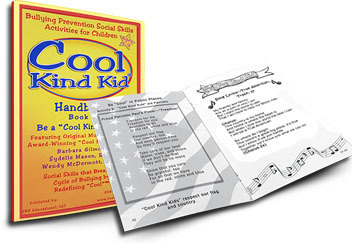
Cool Kind Kid Challenge: a wonderful bullying prevention program

Bullying is a serious matter in our society today. I’ve written two blog posts about it and now I will review a new series of books which introduce how children can be kind to others and discourage bullying when they see it. Cool Kind Kid is a proactive educational curricula for schools, created by Barbara Gilmour, which includes music, characters and activities which engage the children in the lessons. I received three books with is part of the entire program. I will describe and review each book in turn.


First, Be a “Cool Kind Kid” is a handbook about the basics of the program. It is lesson plan of the social skills and social competence training. The missing link in the bullying crisis, according to the program creator. The materials are designed to be easy to follow, flexible to fit the children’s understand and require very little preparation. There are questions and interaction on the children’s part which they can engage and think of ways to solve the problem in the situation. Topics covered include the Golden Rule, patriotism, and the Magic Words.


Second, Bullying Prevention Tips is a handbook for parents to read and understand that a child’s education starts at home. The social skills a child will need in life are taught and enforce at home. The book is filled with tips on how to introduce and guide children to learn kindness, empathy, respect, tolerance and acceptance, helpfulness and many others. The book gives parents ideas about how to introduce and enforce the concepts at home and in their communities.


Third, Picture Book Series Book 1 is a book which introduces the topics of the program in pictures for children who are younger. All the topics, the Golden Rule, the Magic Words, are covered in a fun manner which will capture of the attention of the younger children.


Cool Kind Kids is a great method to introduce the concept of kindness to children in a fun and useful manner. According to the information which I received with the books, the vision of the program is to give the opportunity to every child to learn the necessary social skills needed to stop bullying either as a observer, a victim or the bully. The curriculum is available for Grades 2-4 and Camp Kits for ages 4-6 and 7-9, which are designed for camps, after school programs, community and recreation programs. I highly recommend Cool Kind Kid to all schools, day cares and families who want to introduce and encourage kindness and helpfulness in our children. If a child learns to be kind to others and stand up for himself and others, bullying can be a thing of the past.

For more information about this program,
Please visit
or on Facebook facebook.com/coolkindkid


Sunday, February 22, 2015

When I grow up I want to be..a Nurse! A great story to introduce a great career

Wigu Publishing has a new title for the When I grow up I want to be… series. In this story, a young girl named Amber explores the different jobs of a nurse.


Amber has an accident during a soccer game. The school nurse tells her mom that Amber needs to go the emergency room. When Amber arrives she is scared about what is happening and George, the ER nurse, helps to calm her fears. The book introduces the history of nursing and Florence Nightingale. It also introduces what jobs nurses can do like take a patient’s vitals and the different surgical nurses involved in a surgery. There is also a section on how to overcome your fears and how X-rays work. With the help of X-rays, the doctor learns that Amber has a broken arm and it must be put in a cast. In no time, Amber is healed and back on the soccer field.


I enjoy any book which introduces the different types of jobs that are available to them when they grow up. This book introduced the different ins and outs of working as a nurse in the medical field. I highly recommend this book for any school library or family collection as a way to expose children to different careers as well as familiarize them with the different people they could come in contact with.The publisher has also announced that current and new titles will be available in Spanish. 


When I grow up I want to be…a Nurse
Is available on Amazon

In paperback for $12.95 or on the Kindle for $2.99

Wednesday, November 26, 2014

Two new titles for the wonderful "If you were me and lived in..." series

Two more great books from the If you were me and lived in… series. First, we visit Peru where the readers learn about this South America country and its culture, weather, and topography. We learn that Peru has many different climates from dry plains to the wet Amazon Rain Forest. The Andes Mountains runs through Peru and is the home of the famous city of Machu Picchu. Ceviche, a popular Peruvian dish, is discussed as well as other not so famous dishes. 


Second, we visit Greece, the “crossroads of Europe, western Asia, and Africa.” The readers learn about Athens, the largest city in Greece and the “cradle of western civilization” and the birthplace of democracy. Greek food is mentioned giving few examples of delicious Greek food like the loukoumades, doughnuts with honey and cinnamon. Of course, you can’t read about Greece and not learn about the Olympic Games and its origins. As well as the Feast of St. Basil at the New Year where a coin is hidden inside a cake and whoever finds the coin is said to have good luck in the new year.


I highly recommend this books for any classroom or family library. All titles in this series are available in Amazon on the Kindle for $0.99 and in paperback for $8.68

Monday, October 13, 2014

The Universe-sity: another self-help book of positive thinking

The Universe-ity: A Spiritual Education Using Law of Attraction by Michael Samuels is a how to be successful without education. He uses the terminology of school to illustrate the law of attraction. First, what is the law of attraction? Let me explain because Mr. Samuels does not explain it very clearly in his book. The law of attraction is simply positive attracts positive and negative attracts negative.


In his introduction, Mr. Samuels asks did we ever learn in school? Yes! I did. I loved school. I learned many life lessons from my teachers with the illustrations in literature and other subjects. I did attend college and I have two Bachelor’s degrees. While I am not making money from this education, I do not regret the knowledge that I have obtained. I use my education every day. I may not make money doing it, I still use it. Mr. Samuels makes the statement that “no one in school taught us about who we really are?” How can a teacher do that? I don’t understand. No one can teach me about me. I discover who I am through life experiences.


It seems to me that Mr. Samuels’ measure of success is money and material possession. His list of individuals who were successful without the benefit of a high school diploma, let alone, college is filled with actors and actresses, musicians. Ever since I was a little girl, I dreamed of becoming a wife and mother. I’ve been happily married for 5 years with a two year old daughter. I feel that I am successful. My husband and I have a wonderful relationship and my daughter is a healthy and happy toddler. Do I make money? No. Am I any less successful? No.


I feel the problem with many college students today is that the idea that a college degree with help you make a lot of money. While Bill Gates and Steve Jobs do not have college degrees, they have the innovation and drive to create something that the world has never seen before. You can’t teach innovation. You can encourage and you can inspire but you can’t teach someone to see a masterpiece among tubes of paint or electrical wires. Positive thinking will only take you so far, you must have drive, determination and perseverance. 

Monday, September 15, 2014

Anthony Ant goes to France: a fun adventure to the city of Paris

Anthony Any Goes to France by Julie Bettendorf is a great story of adventure. Anthony Ant goes to Paris, the capital of France also the home of fashion, poetry and ballet dance. Along with his friend, Lulu Ladybug, he sees the various sights of the city: Eiffel Tower, Louvre, beautiful gardens, Norte Dame Cathedral.


I loved this book. It has great illustrations and takes the reader on a fun adventure around the City of Lights. I recommend this book for any family’s and classroom’s library.

Anthony Ant Goes to France is available on Amazon

for the Kindle for $2.99, Hardback for $19.95 and Paperback for $13.95.

Thursday, August 14, 2014

We visit Norway, France, and Mexico in the "If you were me and lived in..." series

More books in the “If you were me and lived in…” series by Carol P. Roman. First, we start with Norway. A country in Northern Europe known as the Land of the Midnight Sun. Their currency is called the kroner which is a small coin with a hole in the center. While living in Norway, one can see the aurora borealis or the northern lights. They celebrated Syttendde Mai on May 17th as a celebration of the signing of Norway’s constitution. There are parades and costumes.

Second, we travel to France located in Western Europe. Its most famous city, Paris, is known as the City of Lights because it was the use to use gas lamps in 1838. The most famous landmark, the Eiffel Tower and the famous crepes which are served as a breakfast food or dinner and even dessert. They celebrate July 14th, known as Bastille Day as their independence day. It signifies the beginning of the French Revolution.


Lastly, we visit Mexico. The largest city is Mexico City which is home to the Palacio de Bellas Artes or the Palace of Fine Arts. In Mexico, we learn about the Chichen Itza, a Mayan temple which has 365 steps one for each day of the year. Mexico celebrates Descubrimiento de America which honors the discovery of America by Christopher Columbus, similar to America’s Columbus Day.


I love these books. As this is my four review of the series. I highly recommend these books for any family and classroom!
All the “If you were me and lived in…” titles are available on Amazon for $9.99

Monday, February 17, 2014

Political analysis from a non-political person

-              

Once again elections are upon us. The mid-term elections will occur on November 4, 2014. I’ll admit I really dislike elections years. The endless ads, the debates and the petitions being shoved in my face as I enter a store. However, as a responsible citizen, I do participate in the voting process. I vote because I want my voice to be counted even though what I may vote for doesn’t pass. I always say, if you don’t vote, then you can’t complain. With the coming elections, it got me thinking about the comparisons and differences between the Democrats and Republicans, the liberals and the conservatives, especially with the emergence of the Tea Party in the last few years. This post is not to say which party is better or which one you should join. That’s for you to decide. Personally, I don’t belong to any political party and I definitely don’t like to discuss my political views. Political views are too volatile and it’s not worth the argument, if you can’t discuss things civilly.
                The Democratic Party is the older of the two parties with its origins in the anti-federalist factions when this country was founded. The party was organized by Thomas Jefferson, James Madison and other opponents of the Federalists in 1792 (Encyclopedia Britannica). It is follows the liberal philosophy which based on community and social responsibility. According to their website, the Democratic Party is a political group which focus on fairness. “We’re greater together than we are on own - that this country succeeds when everyone gets a fair shot, when everyone does their fair share, when everyone plays by the same rules.” (Democratic Party official website). While the Republican Party was founded on March 20, 1854 as an anti-slavery platform. The party rose to prominence with Abraham Lincoln as the 1st Republican president (History Channel). It is follows the conservative philosophy which based on small government and laws should reflect the best interest of society as a whole.  
                I would like to discuss each of the issues that the parties support. While there are many issues in which the parties support, I would like to focus on the main issues.  First, the economy is important to everyone. It means jobs, income and security. The Democratic Party supports ending tax loopholes for corporations, tax cuts for small businesses, investing in clean energy and creating jobs rebuilding the country’s infrastructure (Democratic Party official website). They also favor minimum wages increases and a progressive tax rate (Diffen.com). A Progressive tax rate simply is the more income you make, the more you pay in taxes. While the Republican Party supports a free market and opposes government intervention in control of industry (Republican Party official website). They also oppose increase in taxes and believe wages should be set by the free market (Diffen.com).
Second, immigration reform is an important topic right now. The Democratic Party supports securing the border, end to employer exploitation of undocumented workers and responsibility from undocumented workers (Democratic Party official website). The party proposes that undocumented residents: 1) be in good standing, 2) must admit they broke the law, 3) pay taxes and penalties, 4) learn English and 5) get right with the law before submitted an application for citizenship (Democratic Party official website). While their official website does not mention immigration reform, according to the Pew Research Center, the Republican Party supports a path to citizenship similar to the Democrats’ plan. They also support a requirement for U.S. employers to conduct immigration status of all new hires as well as tightening the U.S. border security and providing Border Patrol with resources they need to keep the border secure (Pew Research Center).
Third, education is an area of concern. The Democrats supports an educational system which encourages math, science and technology (Democrat Party official website). The party supports a national standards, increased spending particularly teachers’ salaries, reducing the minority achievement gap, government-controlled school options and programs like Head Start, the party believes puts students on the path to college (Joy Pullman).  While the Republican Party supports the math, sciences and technology; however, they would like to see more parent choice in which schools their children attends (Republican Party official website).  The party supports a variety of school options including charter schools, vouchers, and supports the ending of “last in, first out” requirements for teacher hiring and retention (Joy Pullman). The “Last in first out” is seniority based lay-offs.
                If that wasn’t very confusing, enter the Tea Party. The Tea Party is a populist movement which began in 2009 urging political change for the benefit of the people (Tea Party Movement). Their focus is on fiscal conservatism. The Tea Party favors decreased taxes and decreased government spending in order to reduce the federal budget deficit (Tea Party Movement). The Tea Party is mostly associated with the Republican Party and they are not registered as a political party. They have no central leadership which according to some is proof of its grassroots credentials which leaves its goal and beliefs to be highly localized and personalized (Encyclopedia Britannica). Tea Party is basically a label that some politicians have taken up to further demonstrate their ideas of where this country has been and where it needs to go.
                In conclusion, I really dislike politics. While some issues I wholeheartedly disagree with one side with, there are other issues that I think that it makes sense. What I really dislike is that both sides claim that they are for the people and they have our best interest at heart but when they get to Washington, they are out for themselves. Maybe at first, the new idealist politician comes to Washington to help get the country on the right track, but if they aren’t carefully, they will forget why they were elected and by whom. I distrust politicians on both sides of the aisle because I feel that they think they know better than I do what I want in life. I don’t like being dictated to. And I don't think that I'm alone. 

References
Democratic Party official website www.democratic.org
Diffen.com www.diffen.com/difference/Democrat_vs_Republican
Encyclopedia Britannica www.britannica.com
History Channel www.history.com
Joy Pullman, Heartland Institute www.heartland.org
Republican Party official website www.gop.com

Tea Party Movement www.what-is-the-tea-party.com

Saturday, February 8, 2014

Black History Month: Booker T. Washington


Booker T. Washington was an important educator and driving force behind the growth of the Tuskegee Normal and Industrial School which is now the Tuskegee University (www.nps.gov). He was also a man who has a few beliefs and views that angered the black activist of his day. Despite his controversial views, he became an icon for the black community.  He is described as a man who “lifted the veil of ignorance” (www.nps.gov).
Booker Taliaferro Washington was born April 5, 1856 on a small farm plantation in Piedmont Franklin County, Virginia. In his autobiography, Up from Slavery, he would describe his birthplace as a typical log cabin measuring 14’ by 16’. His mother was the plantation cook (www.nps.gov). After the Civil War, his family moved to Malden, West Virginia where he found jobs working in the salt mines as well as a houseboy for Mrs. Viola Ruffner, the wife of a local salt mine owner. She took an interest in Booker and his desire for an education. He would attend classes at a local school for an hour a day (www.biography.com).
His formal education would begin at the Hampton Normal and Agricultural Institute in Virginia where he worked as a janitor in order to pay for his room and board and the director Samuel Armstrong found a white benefactor to pay for his tuition (www.tuskegee.edu). He would graduate with honors in 1875 and return to Malden to teach. He soon would be approached to develop the Tuskegee Institute. He would become its first principal and where he would teach economic success and working hard in order to obtain “financial independence and cultural advancement” which would lead to eventually acceptance and respect from the white community (www.biography.com). He believed that the educational system should emphasizes practical skills and self-help (www.tuskegee.edu). He believed that subordination to whites was a necessary until African Americans could prove worthy of full economic and political rights (www.biography.com). This belief would anger his critics especially W.E.B. DuBois.
In 1895, Washington would give a speech in which he would explain his beliefs which is known as the “Atlanta Compromise.” In this speech, he stated that the African American communities should accepted “disenfranchisement and social segregation” as long as they would allowed economic progress, educational opportunities and judicial justice (www.biography.com). His statements would create a firestorm of criticism especially from DuBois who would criticize Washington for advocating white superiority and not demanding equality. Washington’s statement surprised me as I researched his life. His statements came at a time when there was severe segregation in the country especially the South. The African Americans would being systematically excluded from the political process through black codes and the Jim Crow laws.
In 1901, President Theodore Roosevelt would invite Washington to the White House. The first African American to be honored with an invite. Roosevelt and later President Taft would ask for his advisement on racial matters. Quite possibly because Washington accepted racial subservience (www.biography.com). Although he openly supported racial subservience, he would secretly finance court cases challenging segregation. By 1913, he lost much of his influence especially in Washington as the Wilson Administration had no interest in racial integration and African American equality. He would remain as the head of the Tuskegee Institute until his death on November 14, 1915 at the age of 59.

Referneces
Biography website www.biography.com 
Tuskegee University www.tuskegee.edu 

U.S. National Park Service www.nps.gov